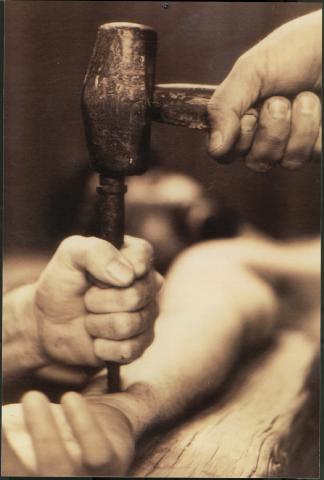
 During this time of the year when many people are thinking about the death, burial, and resurrection of Jesus, many might read from Isaiah 53, which predicts the Christ’s ordeal on the cross. Have you ever read that account, however, and wondered about just what it says? In verse 4 we read that Christ was, “Smitten by God, and afflicted” (Isaiah 53:4, NKJV). Later it declares, “And the Lord has laid on Him the iniquity of us all” (Isaiah 53:6). “He was cut off from the land of the living; For the transgressions of My people He was stricken” (Isaiah 53:8). On and on we read within Isaiah’s prophecy about how Jesus was going to be mistreated by mankind. But then we read the statement, “Yet it pleased the Lord to bruise Him; He has put Him to grief” (Isaiah 53:10, emphasis added). Just how could this bloody sacrifice of His one and only unique Son be pleasing to God?
There are many events recorded in the Bible, with which God was not pleased. He was not pleased with the idolatry of the Israelites. Whether at the base of Mount Sinai during their exodus from Egypt, in the high places during the time of the divided kingdom, or in the temple during the reign of Manasseh, God was not pleased with idolatry. There were times when the Israelites did not offer their best in sacrifice to God, but instead brought the lame and sick as a sacrifice (Malachi 1:8; 3:8-9). In this God was not pleased, because their heart was not in what they were doing, and they were not showing God the proper respect. “Therefore, when He [Jesus] came into the world, He said: ‘Sacrifice and offering You did not desire, But a body You have prepared for Me. In burnt offerings and sacrifices for sin You had no pleasure’” (Hebrews 10:5-6). Here Jesus is saying to the Father that the Father did not desire or have pleasure in burnt offerings and sacrifices.
So what are we to make of this? God did not have pleasure or desire for burnt offerings and sacrifices, which He commanded, but it pleased the Lord to bruise Christ. Even though God commanded the children of Israel to make burnt offerings and sacrifices, He did not take pleasure in them. Their sacrifices represented failure on their part to keep His law. They were required because of the sins of the people. They were necessary because mankind will always fall short. God takes no pleasure in man’s sin. This is why God through the prophet Samuel says, “Has the Lord as great delight in burnt offerings and sacrifices, As in obeying the voice of the Lord? Behold, to obey is better than sacrifice” (1 Samuel 15:22). God would rather that man obey Him than to make the best animal sacrifice he could offer. God also did not have pleasure in burnt offerings and sacrifices because they could not get the job done. Just before stating that God has no desire for nor pleasure in those offerings, the Hebrew account tells us plainly, “For it is not possible that the blood of bulls and goats could take away sins” (Hebrews 10:4). Those animal sacrifices could not take sin away and could not make those who offered them perfect with regards to the conscience (Hebrews 9:9; 10:1-3). There was still a remembrance of those sins, and so year after year the High Priest would enter the Most Holy Place with the blood of the sacrifice (Hebrews 9:7). God was not pleased because the reconciliation between God and man was not complete.
By contrast then, God was pleased with the sacrifice of Christ. Because of what Jesus did for mankind by dying on the cross as our perfect offering, there is a cleansing of the conscience and the sins of man are remembered no more (Jeremiah 31:31-34; Hebrews 8:12). The sacrifice of Jesus was perfect and complete. There no longer remains a need for another sacrifice, because Jesus offered Himself for us once for all (Hebrews 9:11-15). Because of the redemptive work of Christ, man and God are reconciled to one another (Ephesians 2:16). In this the Lord is pleased. This is how God can say that He was pleased to bruise Jesus for our transgressions. It is not that He was pleased by Christ having to endure the cross and the pain and the shame. But God was pleased in the result in that mankind has a path back to the Father. Will you follow God’s Path to Salvation? Will you take the only way that we can go to find eternal life (John 14:6)? God has done His part by offering His one and only unique Son for our behalf (John 3:16). In this He was pleased. Will you do your part to accept His sacrifice and apply the blood to cover your sins through simple obedience to the Gospel? If you want to be pleasing to God, you will.
 If someone were to ask you if you love Jesus, what might your response be? Some may want to know who Jesus is. Others may inquire as to what is meant by “love.” There might be those who would want to know why such a question is being asked of them. Yet it is likely that many would say that, yes, they love Jesus. How many of those who say that they love Jesus would also say that they are obeying His commands?
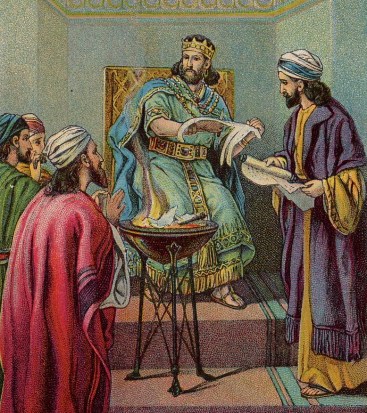 Near the end of the kingdom of Judah, the word of the Lord came to the prophet Jeremiah and he was told to put all the accusations against Israel in Judah into a scroll. The hope of the Lord was that the people in Judah would hear about all the wrong things that were done, which offended God, and that they would repent before it was too late. The scroll was dictated by Jeremiah and written by the hand of Baruch, who was a scribe. After being read in the temple, the scroll was taken to king Jehoiakim, the son of Josiah (Jeremiah 36:1-4, 16).
 Start discussing the biblical requirement to be baptized with someone and see how long it takes before they mention the thief on the cross. Odds are it will not take too long. That is because there is a widespread doctrine in the religious world that tries to eliminate the need for baptism by appealing to the example of this particular individual, whom Jesus told would be with Him in paradise on the day they both died (Luke 22:43). Just what does this example tell us about salvation? Does the example of the thief on the cross really mean that one does not need to be baptized in order to be saved? Let us look at this issue by noticing three things about this man being forgiven by Christ.
 Is it acceptable for each of us to do that which is right in our own sight? Are we free to make our own rules for what is right and wrong? Toward the latter section of the book of Judges, we find that there are two phrases that that are oft repeated for emphasis. The first of these is a reminder that there was no king in Israel in those days, and the second is that everyone did what was right in their own sight (Judges 17:6; 18:1; 19:1; 21:25). In these examples we can find the answer to our questions.
 salvation's path