
In life, we often find ourselves playing the game of “Follow the Leader.” When the leader is trustworthy and wise, this can be a comfort. However, if the leader is unreliable, following can quickly become a problem. Thankfully, as Christians, we have a perfect leader to follow—Jesus, our Good Shepherd. The Bible reminds us in Isaiah 53:6 that we all, like sheep, go astray. We are prone to wander and make mistakes without guidance. Psalm 23, perhaps the most beloved Psalm, is often read during times of loss, but its message is rich for everyday life. It reveals who our Shepherd is and describes three incredible blessings He offers His sheep.
I. The Good Shepherd Provides
Psalm 23:1-3 assures us, “The Lord is my shepherd; I shall not want.” This means we will lack nothing essential. Jesus provides for our physical and spiritual needs, as echoed in Matthew 6:25-26, where He teaches not to worry because God cares for us.
- Rest and Nourishment: The Shepherd leads His sheep to green pastures—places of abundance, not scarcity. He ensures we are well fed and have time to rest and be renewed.
- Peace and Comfort: He leads us beside still waters. Sheep are afraid of rushing water, so the Shepherd provides calm, safe places for us to drink and be refreshed. With Him, we find peace and comfort.
- Spiritual Wholeness: God supplies all we need to be spiritually complete (2 Timothy 3:16-17; James 1:4; 2 Peter 1:3). He restores our souls, offering forgiveness and reconciliation with the Father through Jesus’ sacrifice.
- Right Paths: The Good Shepherd leads us in paths of righteousness, guiding us in the right way, unlike bad shepherds who mislead their flocks (Ezekiel 34:1-6; John 10:1-2, 7-9). We cannot live unrighteously and expect to be on the right path.
II. The Good Shepherd Protects
Psalm 23:4-5 describes how the Shepherd’s presence removes our fear, even in the darkest valleys. The “valley of the shadow of death” is a place we would not choose to walk alone, but with the Shepherd, we have nothing to fear.
- Comfort and Security: The Shepherd’s rod and staff are tools of protection, defending the sheep from danger (1 Samuel 17:34-36). God promises spiritual security, but we must stay close to Him.
- Guidance and Leadership: In John 10:3-5, Jesus explains that the sheep recognize and follow the Shepherd’s voice, not the voice of a stranger. The sheepfold is a place of safety, and Jesus is the only true door to salvation and spiritual nourishment.
- Knowing the Shepherd’s Voice: We must learn to discern the voice of Jesus through His word, so we are not misled by false teachings. The Good Shepherd does not promise an easy life, but He promises to lead and protect.
- Ultimate Sacrifice: The Good Shepherd goes so far as to lay down His life for the sheep (John 10:11-15).
III. The Good Shepherd Preserves
Psalm 23:5-6 illustrates how the Shepherd preserves and blesses His sheep. He anoints their heads with oil to protect them from pests and disease, ensuring their health and well-being. This act is also a symbol of honor and care.
- Abundant Blessings: The Psalmist says, “My cup runs over” (2 Corinthians 9:8-10). God not only meets our needs but provides in abundance.
- Goodness and Mercy: By following Jesus, we experience God’s goodness. Without obedience, we face His severity (Romans 11:22). For those who obey, mercy triumphs over judgment, and salvation is our reward (John 10:14-15).
- Eternal Security: The promise to “dwell in the house of the Lord forever” points to our eternal reward in heaven (1 Peter 1:3-4).
Conclusion
Jesus, the Good Shepherd, provides, protects, and preserves His sheep. Yet, these blessings are not automatic. We must be attentive sheep—listening for His voice, discerning His word, and following Him closely. If we don’t listen, we miss out on His blessings. If we hear but don’t recognize or obey, we risk going astray, just as the demons recognize Jesus but do not submit to Him.
The Good Shepherd offers all we need for a spiritually full and abundant life. The question is: Who is your shepherd today? Are you following the Good Shepherd, or have you wandered away? The invitation is open—choose to follow Jesus and experience the blessings and security only He can provide.



 Recent research has suggested that the consumption of grape juice is an aid in either avoiding Alzheimer’s, or that it can slow the process of memory loss in those with the brain disease. Alzheimer’s is thought to be brought on by stress and free radicals in a person’s physiology. Since antioxidants combat free radicals, and since grape juice is rich in antioxidants, the thought is that grape juice can help combat one of the causes of the disease (
 There is an old Stevie Wonder song where he sings about someone being the apple of his eye. The descriptive “apple of his eye” is used to denote that person who is most precious to him. The one that he cannot do without. We might consider how we look at God, and whether He is the apple of our eye, but instead let us consider who or what is the apple of God’s eye.
 During this time of the year when many people are thinking about the death, burial, and resurrection of Jesus, many might read from Isaiah 53, which predicts the Christ’s ordeal on the cross. Have you ever read that account, however, and wondered about just what it says? In verse 4 we read that Christ was, “Smitten by God, and afflicted” (Isaiah 53:4, NKJV). Later it declares, “And the Lord has laid on Him the iniquity of us all” (Isaiah 53:6). “He was cut off from the land of the living; For the transgressions of My people He was stricken” (Isaiah 53:8). On and on we read within Isaiah’s prophecy about how Jesus was going to be mistreated by mankind. But then we read the statement, “Yet it pleased the Lord to bruise Him; He has put Him to grief” (Isaiah 53:10, emphasis added). Just how could this bloody sacrifice of His one and only unique Son be pleasing to God?
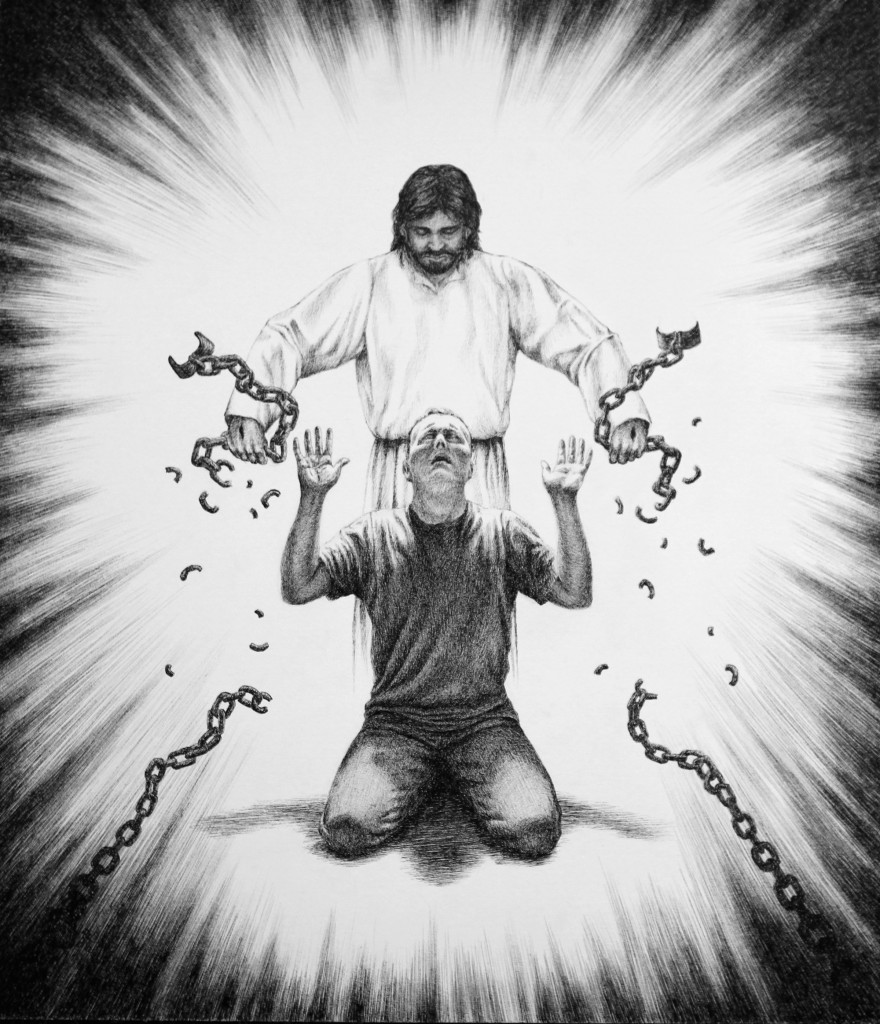 Have you ever wondered just why Jesus came to earth, especially at this time of the year when the world is thinking about Him? Consider for a moment what Jesus already knew before He ever left heaven. He knew that men would seek to kill Him as a toddler (Mat. 2:16). He knew that He would not be received by His own people (John 1:10-11). He knew that He would be rejected by men (Isaiah 53:3-5). He knew that He would be put to death on the cross, not for any wrong that He had done, but for the sins of mankind (Isaiah 53:9; 2 Pet. 2:22-25). And, yet, He came anyway. Why?
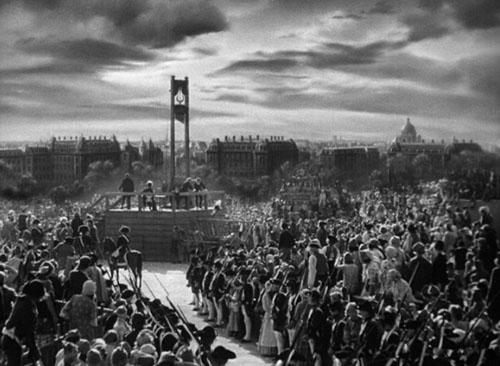 In Charles Dickens’ novel, A Tale of Two Cities, there comes a point where one of the main characters, Charles Darnay, is arrested by the mob during the French Revolution and is sentenced to death. Because of the love that he has for Charles’ wife, Lucie, another character, Sydney Carton, takes Darnay’s place at the guillotine instead. As Carton goes to his death, he utters the most famous line of the novel, “It is a far, far better thing that I do, than I have ever done; it is a far, far better rest that I go to than I have ever known.”
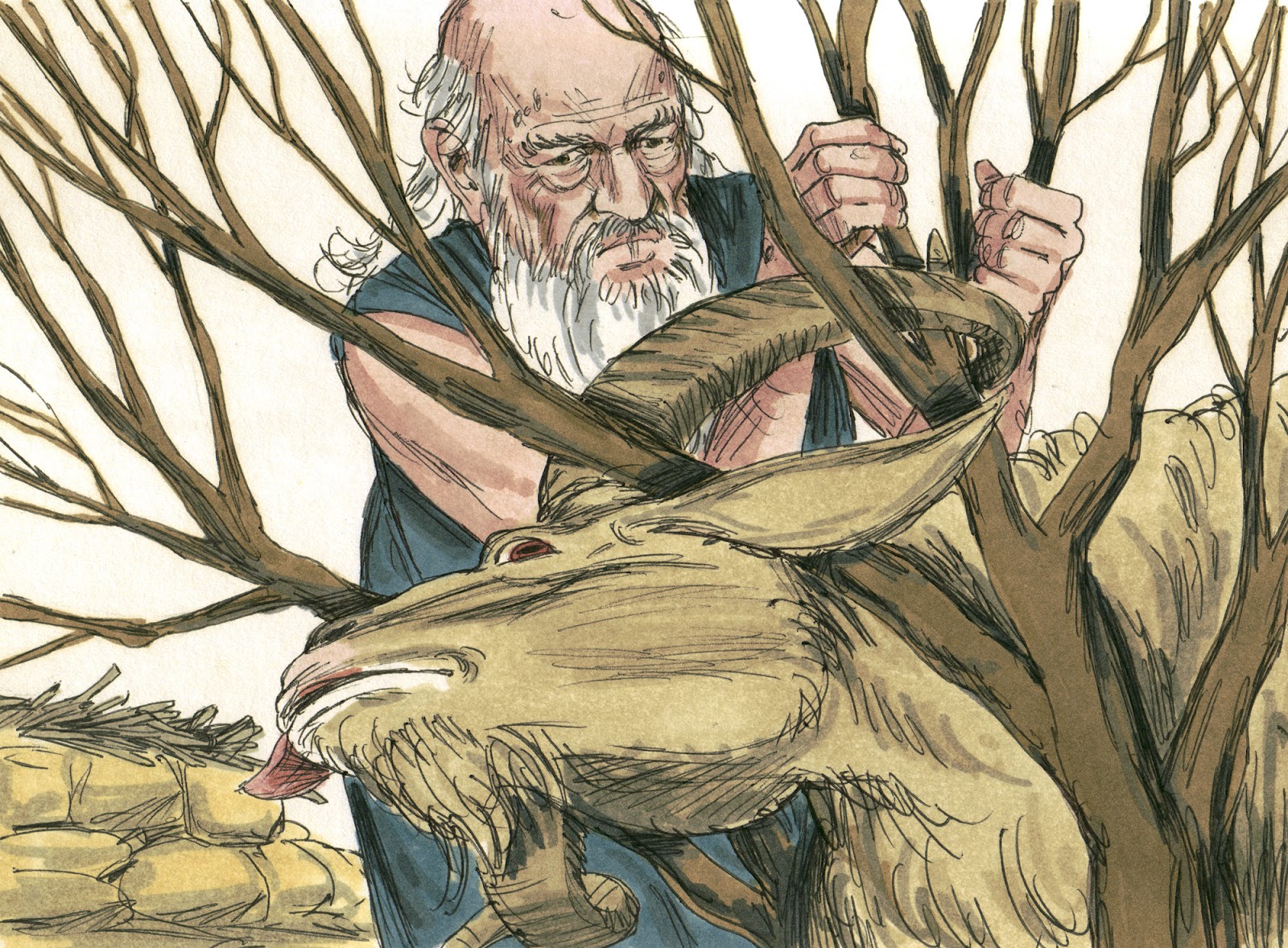 This is significant in that it shows the attitude of Abraham that he had faith in God, and he believed that God would provide for him that which is necessary. The name Yaweh-jireh ties in with the thought expressed earlier in the chapter when Isaac inquires of his father about the lamb for the sacrifice (Genesis 22:8). Abraham’s answer to Isaac is “well-nigh prophetic” in answering him that they would be provided for by God Himself. This comes to fruition when Abraham is halted from his sacrifice of Isaac and a ram is provided by God for their sacrifice. Thus in the name Yaweh-jireh we find that the Lord has provided or seen to the needs of Abraham and Isaac.
