Render Unto Caesar

Desk calendar showing April 2024 with April 15 circled for Tax Day, tax forms, pen, glasses, plant, and coffee mug

April 15, Tax Day, is here.  Very few dates on the calendar are met with less enthusiasm. It is not celebrated like holidays. For most people, it is a reminder of an obligation they would rather avoid. Complaints about taxes are universal, politicians know how unpopular they are, and many campaigns are built on promises to lower them. Some people go further, arguing that what the government does with tax money justifies refusing to pay.

That raises an important question for Christians: Is it ever acceptable before God to refuse to pay taxes? Did Jesus actually address this issue?

That question is at the heart of a well-known exchange recorded in Matthew 22:15–22, a passage often summarized by the phrase “Render unto Caesar.” But the wisdom of Jesus’ answer goes far deeper than a simple command about taxes. In fact, what He says confronts both our civic responsibilities and our spiritual loyalties.

The Trap

The question put to Jesus was not sincere. Matthew tells us that “the Pharisees plotted to trap Him in what He said.” This was not an off‑the‑cuff debate but a calculated ambush. They met together, consulted together, and devised a question they believed would force Jesus into a no‑win situation. Mark and Luke both emphasize the same point: they were trying to entangle Him—to set a snare.

To make the trap even more devious, the Pharisees allied themselves with the Herodians. Politically, these groups were enemies. The Pharisees despised Roman occupation and longed for independence. The Herodians, on the other hand, cooperated with Rome and benefited from its power. Yet politics often makes strange bedfellows, and their shared desire to discredit Jesus brought them together.

They began with flattery, appealing to Jesus’ commitment to truth and His reputation for impartiality. Then they asked the question they believed would ruin Him: “Is it lawful to pay taxes to Caesar, or not?”

If Jesus answered yes, He risked alienating the Jewish people, especially the zealots, who viewed Roman taxation as oppressive and idolatrous. If He answered no, He could be accused of rebellion against Rome. Either answer, they assumed, would destroy Him.

But Jesus recognized their hypocrisy immediately.

Render Unto Caesar

Instead of answering directly, Jesus asked for the coin used to pay the tax, a Roman denarius. That detail mattered. The coin bore the image of Tiberius Caesar, along with inscriptions declaring him “son of the divine Augustus” and “high priest.” To devout Jews, the coin itself was offensive, associating political power with religious claims and violating their sensitivities about images.

Yet when Jesus asked for the coin, His questioners produced one instantly. In doing so, they exposed themselves. They were already using Caesar’s money and participating in his economic system.

Jesus then asked a simple question: “Whose image and inscription is this?” When they answered, “Caesar’s,” Jesus responded, “Render to Caesar the things that are Caesar’s.”

The word render is crucial. It means to give back, to settle a debt, to return what belongs to someone else. By using Caesar’s currency, benefiting from his system, and living under his rule, they owed him the tax he required. The demonstration dismantled their trap completely. Matthew tells us that they marveled and walked away.

Jesus was not endorsing Roman tyranny, nor was He suggesting that Caesar ultimately owned everything. God alone is sovereign. But Jesus firmly established that participation in a civil system carries real obligations, including taxes.

Render Unto God

What is often missed is that Jesus did not stop with Caesar. He said, “Render to Caesar the things that are Caesar’s, and to God the things that are God’s.”

Paying taxes does not interfere with loyalty to God. Being God’s people does not exempt us from civic duties. The New Testament reinforces this truth elsewhere, including in Romans 13. Jesus was not appealing to some higher law to cancel out taxes, nor was He excusing disobedience under the banner of spirituality.

Instead, Jesus was redirecting the conversation to something far more important.  If Caesar’s image on a coin determines ownership, then what bears God’s image?

Genesis 1:27 gives the answer: mankind. We—our lives, our hearts, our obedience—belong to God. Taxes are not what God is seeking. Coins with Caesar’s face are not what God claims. He is calling for the one thing no government can collect and no force can compel: your willing obedience.

You can pay your taxes on time and still fail to give God what is rightfully His. The IRS will never show up if you refuse to serve God. Angels will not drag you into obedience. God allows you to choose. But Scripture is clear that obedience to the gospel is required, and it must come sincerely, from the heart, not as religious play‑acting.

Conclusion

So yes, Christians must pay taxes—even when they are unpopular, even when government is imperfect. That issue is settled by Jesus Himself.  But the greater question remains: Have you rendered to God what belongs to Him?

Caesar’s image covers his coins. God’s image marks you. The only thing God cannot give Himself is your voluntary obedience. Jesus’ answer not only silenced His enemies, but it also still challenges us today.

Render to Caesar what is his, and render to God what truly belongs to Him.

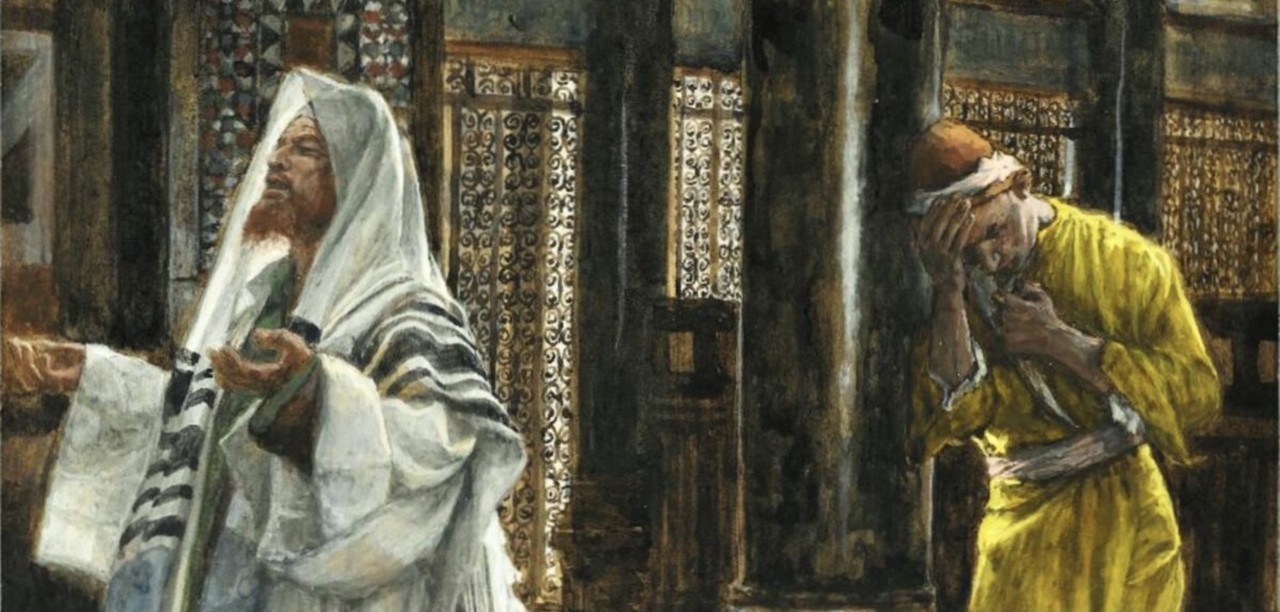
The Pharisee and the Tax Collector

Can we earn our way to heaven? Is it enough to just be a good person in the world? Will we be saved by our good deeds alone? These are questions that have puzzled many throughout history. Some of the Jews believed they could earn their way to heaven through their actions. The Law was supposed to lead them to Christ, but it was not going to bring them salvation by their own merit.

In this parable, Jesus illustrates the truth by contrasting two people: a Pharisee and a Tax Collector. The Pharisees were a sect of the Jews who became organized in the intertestamental period. They were very orthodox in their religious practices and very demanding of the Jewish people at that time. Dedicated as they were, they soon became so caught up with their desire to be righteous that they began to add their own requirements to the law rather than learning from the law that they needed a Savior.

Some religious groups today still teach works-based salvation, but salvation doesn’t work that way. It is not based on works of merit. This parable looks at the prayers of these two men, focusing on their hearts and intentions. We, like them, must put our trust in the right place.

The Pharisee

 The Pharisee in this parable stood to pray, which was a normal posture for prayer (Mark 11:25). However, in this context, it seems to indicate something more. The Pharisee saw himself as independent, able to stand on his own two feet. He prayed within himself (Luke 18:11-12), not a public prayer, but just between him and God. He was thankful, but his attitude was all wrong. The Pharisee had an “I” problem, focusing on himself rather than God. He mentioned God once at the beginning and used the word “I” five times. Instead of praising God for His goodness, he boasted about his own righteousness.

The Pharisee thanked God that he was not like others, using the wrong standard to measure himself. It was easy to look good when compared to the worst dregs of society. He listed his virtues: not an extortioner, not unjust, not an adulterer, and not like the Tax Collector. He looked down on others, showing no interest in helping them come to God. His prayer revealed his pride and self-righteousness, as if he had earned something. He missed the point of the law (Romans 3:20).

The Pharisee boasted about fasting twice a week and giving tithes of all he possessed. While the Law of Moses commanded fasting only once a year on the Day of Atonement, the Pharisees went beyond the law, being stricter and requiring more devotion. They even tithed the smallest spices and herbs (Luke 11:42). This kind of prayer, uttered in a spirit of pride, was not unknown. Somewhat later, according the Talmud, Rabbi Nehunia used to pray in a similar manner, thanking God for setting his portion with those who study Torah rather than those who engage in frivolous talk.

The Pharisee did not see himself as he truly was (Revelation 3:17). Do we see ourselves in the Pharisee? Is it okay to thank God for being born in a certain place? Are we like the Pharisee in thanking God for our superiority? Is it okay to look down on others because they are not like us? Jesus told this parable to those who trusted in themselves and despised others (Luke 18:9). Sometimes we may trust in ourselves too much or trust in others who are good people but give nothing to God. The Pharisees trusted in themselves, believing they were superior to others.

The Tax Collector

In contrast, the Tax Collector stood afar off, likely realizing he was not welcome near the Pharisee. Tax collectors were a despised class, seen as traitors for collecting taxes for the Roman Empire. They were viewed as collaborators with their oppressors. Despite this, the Tax Collector showed humility before God. He would not raise his eyes, bowing his head in sorrow. He beat his breast, a sign of ongoing sorrow and repentance. Unlike the Pharisee, he did not boast about his virtues. Instead, he acknowledged his sins and begged for God’s mercy and grace.

The Tax Collector’s prayer was short and simple, without excuses for his sins. He recognized his need for God’s forgiveness and mercy (Romans 3:23). When we come to God, it must be in humility, recognizing who He is. Consider the model prayer (Matthew 6:9-13), which praises God for His greatness, prays for His will to be done, asks for daily needs, seeks forgiveness, and prays for deliverance. It is not about us, but about God.

Conclusion

In Luke 18:14, Jesus concludes the parable by stating that the Tax Collector went home justified before God. This does not mean that God condones sin, but rather that the Pharisee was guilty of the sin of pride. The Tax Collector was justified because he humbled himself before God, acknowledging his need for God’s grace. The Pharisee exalted himself, trusting in his own righteousness and comparing himself to others. God will humble those who exalt themselves and exalt those who humble themselves.

None of us have anything to boast about before God. It is important that we do not trust in ourselves, but in God. We must not despise others, thinking we are superior. Let us be like the Tax Collector, admitting our faults and praying for forgiveness.

Isn’t That Convenient

In today’s fast-paced world, convenience has become a significant aspect of our daily lives. The definition of convenience often involves little trouble or effort, and we tend to favor it because it allows us to avoid going out of our way and makes it easier to be lazy. However, convenience is not always beneficial.

While convenience can make our lives easier, it can also lead to negative consequences. For instance, it can cause us to overspend. Imagine needing something that costs $10, but you end up spending $50 to get free shipping, thinking you saved $4.99 in shipping fees. Additionally, convenience can lead to loneliness. With apps that allow us to order food and complete transactions without speaking to anyone, our electronic devices have made things easier but at what cost?

There was a time in the history of Israel when convenience became a significant problem. Solomon’s sins, as mentioned in 1 Kings 11:29-33, led to the division of the kingdom into Israel and Judah. Jeroboam took ten tribes to the North and, in an attempt to make worship easier for his subjects, he built and fortified a new capital city, Shechem, in the tribal area of Ephraim. He was more concerned about maintaining his power than the well-being of his subjects, fearing they would return to the house of David if they went to Jerusalem to offer sacrifices.

Jeroboam’s solution was to make worship easy for his subjects by setting up two golden calves, with one in Bethel and one in Dan. This act was reminiscent of the golden calf incident in Exodus 32. The people, preferring the convenience, accepted this new form of worship. However, this was not the worship the Lord desired. It was in the wrong place, in the wrong manner, with the wrong priests, and directed towards the wrong subject.

Choosing convenience over what God wants can lead to dire consequences. Jeroboam’s actions led to punishment in the days of Josiah, as prophesied in 1 Kings 13:1-2 and fulfilled in 2 Kings 23:15-16. Amos was sent to Israel with a message that they would be led away captive, as mentioned in Amos 7:10-13. If we choose convenience over God’s commands, our worship becomes vain and useless.

God desires what He wants, and it might not always be convenient for us. It may not be a convenient time or place, and there may be other things we would rather be doing. However, convenience does not please the Lord. Our heart and desire must be for Him, and we should want to do what pleases the Lord, even if it requires effort. Choosing convenience over God’s commands can lead to consequences we do not want to face. Instead, we should desire to be with Him in eternity.

Once We Are Saved, Are We Always Saved?

            There are a significant number of people in the religious world today who believe that once we are saved from our sins, that we will always be saved.  In other words, once we are saved, we can never be lost again.  Within Calvinism, this doctrine is known as the perseverance of the saints.  To bolster their belief, several passages of scripture are used to ‘prove’ their case.  One such passage reads, “For I am persuaded that neither death nor life, nor angels nor principalities nor powers, nor things present nor things to come, nor height nor depth, nor any other created thing, shall be able to separate us from the love of God which is in Christ Jesus our Lord” (Romans 8:38-39).  Does this passage really teach that once we are saved, we are always saved and can never fall away?

            These two verses of scripture are in a larger context where Paul is explaining to the brethren in Rome that there is nothing that can separate us from the love of God.  God is always going to love us.  We need not think that any tribulation or persecution that we might suffer is evidence that God has stopped loving us (Romans 8:35-37).  None of these things can separate us from God.  Even our great adversary, the Devil, cannot separate us from God, though he will certainly accuse us and try to condemn us.  If we belong to the Lord, then we have Jesus to intercede for us with the Father (Romans 8:31-34).  So, there is no external force that can separate the believer from God.

            But does this mean that we are always saved no matter what?  While no external force can keep us from God, we can.  No one else can pluck us out of the hand of God (John 10:29), but we can lose our salvation if we give it up.  Notice in Hebrews 2:1 that we need to give heed to what Jesus has said so we will not drift away.  Drift away from where?  We cannot drift away from a place we have never been.  The book is written to Hebrew Christians who have been saved.  Why warn them about drifting away if that is an impossibility?  One might say they were never really saved since they have drifted away, but Hebrews 6:4-6 shows someone who has definitely been saved who then falls away.  Peter also speaks of those who were saved who then went back into the world and were lost (2 Peter 2:20-22).  Paul says, “let him who thinks he stands take heed lest he fall” (1 Cor. 10:12). Again, why the warning if we cannot fall from grace?

            The Bible has many examples of those who had lost their salvation.  Judas, who was handpicked by Jesus to be an Apostle fell.  Demas fell, having loved this present world (2 Tim. 4:10).  Alexander and Hymeneus suffered shipwreck regarding their faith (1 Tim. 1:19-20).  You cannot suffer shipwreck if you were never on the boat!  Even Paul, an inspired Apostle, could lose his salvation (1 Cor. 9:27). 

While no one else can take it from us, it is important for us to remain faithful, so that we will not lose our salvation.  For, “how shall we escape if we neglect so great a salvation, which at the first began to be spoken by the Lord, and was confirmed to us by those who heard Him?” (Heb. 2:3).  We will not escape the wrath of God that is to come if we neglect, or count as worthless, the great salvation that God has given to those who obey Him.

What About The Rapture?

The concept of the Rapture, a time when Jesus would come to secretly remove His saints from the world, was first postulated in the early to mid 1800’s.  According to those who buy into the idea of Premillennialism, Jesus is going to snatch away the church prior to a seven-year period of tribulation.  The idea has sold books and movies about what they imagine will happen to those who have been left behind.  It has led to many trying to predict a date for the return of Christ.  There is just one main problem with this idea/teaching.  It is not biblical.

The Bible does not teach any of this.  The Bible indicates that when Jesus returns there will be great noise.  The Lord will descend from heaven with a shout, there will be the voice of an archangel, and the trumpet of God will sound (1 Thes. 4:16).  Furthermore, Peter states that the earth and all that is in it will be burned up (2 Peter 3:9).  That does not appear to be very quiet! 

The Bible indicates that when Jesus returns it will not be in secret.  Those Apostles who watched Jesus ascend into heaven were told that Jesus would return in like manner (Acts 1:11).  That means He will be coming with the clouds, and they will be able to watch it happen.  Additionally, John indicates in Revelation 1:7 that every eye will see Him when He returns, including those who pierced Him (not just the righteous).  Every eye means everyone will see this happen.  That does not correspond to a secret return.

The Bible indicates that when Jesus returns that there will be one resurrection of the dead.  The doctrine of Premillennialism and the Rapture teaches that there will be two resurrections separated by 1,007 years.  Jesus said, “Do not marvel at this; for the hour is coming in which all who are in the graves will hear His voice and come forth—those who have done good, to the resurrection of life, and those who have done evil, to the resurrection of condemnation” (John 5:28-29).  Paul, in speaking of the resurrection stated that there is a singular resurrection of both the just and the unjust (Acts 24:15).

When Jesus returns time will end, the earth will be destroyed, and Judgment Day will occur.  This is what the Bible teaches about the end time.  There will be no warnings or signs.  Jesus Himself indicated this when He declared that even He did not know when it would take place (Mat. 24:36).  It is futile for man to try to set a date.  Do we know more than Jesus?  While these false doctrines may seem to be fascinating, and may sell books, they are not biblical.  Read and study your Bible, like the Bereans, to see if these things are so.

The Lord and Me, We Have a Deal

Photo by Pixabay on Pexels.com

            Perhaps you have tried to share the gospel with someone or encouraged them to come to the worship service of the church, only to have them quote the title above as if they are separate from God’s requirements.  Don’t get me wrong, we can have a covenant relationship with the Lord, but that relationship can only be had according to His stipulations and requirements.  Let’s explore . . .

            In the Old Testament covenant that God made with the nation of Israel, God gave all of the stipulations and requirements to Moses on Mt. Sinai.  Moses then relayed the information to the children of Israel.  “So Moses came and told the people all the words of the LORD and all the judgments. And all the people answered with one voice and said, ‘All the words which the LORD has said we will do’” (Exodus 24:3 emphasis added).   Notice the ‘all’ that they said they would do.  The covenant was not negotiable.  The Lord set the stipulations and the people could either accept it or refuse it.  They couldn’t say that they had a special or different deal with the Lord.  Part of those stipulations were that they had to keep three specific feast days to the Lord (Exodus 23:14).  They couldn’t just decide to roll those three into one day for convenience.  The covenant was unilateral and non-negotiable.

            In the New Testament there is a new covenant.  Jeremiah prophesied that this new covenant was coming (Jer. 31:31-34).  The new covenant is the agreement that we can have with the Lord today, however, this deal is also based upon the commandments and stipulations of the Lord.  We can either accept the deal or deny it.  We do not get to negotiate our own deal individually.  Jesus basically says that if we follow Him, we can have the remission of our sins and live with Him forever (Mark 16:16; Mat. 28:19-20; Acts 2:38).  Notice especially in the Matthew passage that in order to be a disciple of Christ that one must be baptized and taught to observe all things that Jesus has commanded.

   Both the Hebrew and Greek words that are used for covenant in the Bible mean a contract or agreement of some kind.  So, we can have an agreement with God.  That agreement or covenant relationship can only be had, however, if we will accept all that God has told us to do.  God’s salvation is not a buffet where we get to pick and choose.  We must do all that He commands us to do!

By What Authority?

Image by ha11ok from Pixabay

            In the religious world today, there is no shortage of worship styles and services, all of which differ in mode and operation.  It begs the question as to whether they are all approved of by God.  Some will say that the details of their worship to God do not matter, that anything is acceptable.  I wonder if those same folks would be okay with animal sacrifices being done in a voodoo ritual, or snake handling being done by some fringe group, however.  It would seem that we all would draw a line somewhere.

            The question then becomes where do you draw that line?  If we are all going to do something different in our worship to God, who determines if that is acceptable or not?  The root of the issue really boils down to authority.  Do we have the authority to make our own decisions when it comes to worshiping God?

            In the New Testament of the Bible the subject of authority comes up often.  In one such instance, the chief priests and elders are questioning Jesus in the temple and asking where His authority comes from to do what He was doing.  Jesus responded with a question of His own.  “But Jesus answered and said to them, ‘I also will ask you one thing, which if you tell Me, I likewise will tell you by what authority I do these things: The baptism of John—where was it from? From heaven or from men?” (Mat. 21:24-25 NKJV).  Notice that Jesus only gave two options for the source of authority.  Authority either comes from heaven or from men.

            Everything that is done in religion today is done by one of those two sources of authority.  Either what we do is done with the authority of God Almighty, or what we do is by our own authority.  God has a preference.  In rebuking the Pharisees and scribes, Jesus referred to them as hypocrites and stated, “And in vain they worship Me, teaching as doctrines the commandments of men” (Mark 7:7, Mat. 15:9).  Worship that is vain is useless.  God will not accept useless worship.  God wants to be worshipped as He has commanded.

            We need to have biblical authority for what we teach and practice.  Paul explained in Colossians 3:17 that whatever we do in word or in deed needs to be done in the name of the Lord.  That doesn’t mean we do what we want and slap the name of Jesus on it.  That means that we do it according to His authority.  Let us examine our own selves to see that we are doing what the Lord wants when it comes to our worship of Him.  By what authority do you do these things?

God’s Family

Pontus_Greek_family     If we are like most people, somewhere amongst all of our belongings there is a family photo album or two. From time to time we like to take out that photo album and relive the memory of lost loved ones or special times and events in our life. Maybe we gather around with others in our family and share stories from the past. Family is important and makes us feel like we belong to a group with a common background, common experiences, and a shared heritage. Just imagine for a moment what it would be like if God had a family photo album. Whose pictures would be in that album?

     We see that family was important to Jesus, but maybe not in the way that we think. There was an occasion where Jesus was teaching His disciples, and while He was still speaking to them He was told that his physical mother and brothers were waiting outside to speak with Him (Mark 3:31-2). Then Jesus said, “’Who is My mother, or My brothers?’  And He looked around in a circle at those who sat about Him, and said, ‘Here are My mother and My brothers!  For whoever does the will of God is My brother and My sister and mother’” (Mark 3:33-35 NKJV). Jesus stated that His spiritual family was more important to Him than His physical family.

     If we want to be a part of God’s family, if we want for our pictures to be in His “photo album,” then we need to do what Jesus says to do. Notice He said “whoever does the will of God” is His family. It is important then, that we do the will of God. Compare this to what Jesus said in the Sermon on the Mount, “Not everyone who says to Me, ‘Lord, Lord,’ shall enter the kingdom of heaven, but he who does the will of My Father in heaven” (Matthew 7:21). It is not enough for us to just call Him Lord, we must be willing to do the will of the Father to be in the family of God and to enter into the kingdom of heaven. Have you obeyed God’s will? Is your picture in God’s photo album? We invite you to come and see what God’s word has to say about the will of the Lord, so that all of us can be in God’s family!

Do You Love Jesus?

Love     If someone were to ask you if you love Jesus, what might your response be? Some may want to know who Jesus is. Others may inquire as to what is meant by “love.” There might be those who would want to know why such a question is being asked of them. Yet it is likely that many would say that, yes, they love Jesus. How many of those who say that they love Jesus would also say that they are obeying His commands?

     There is a false dilemma that occurs when one begins asking if you are a lover of God and Jesus or if you are a commandment keeper, as if you cannot be both. They might refer to God’s word and state that the keeping of the law is no longer our basis for justification, but that justification comes through the grace of God. “For by grace you have been saved through faith, and that not of yourselves; it is the gift of God, not of works, lest anyone should boast” (Ephesians 2:8, NKJV). That is certainly true with regards to the Mosaic Law of the Old Testament. However, there is a law of Christ that we are to adhere to. Paul, who penned the Ephesian letter, also says in the Galatian letter, “Bear one another’s burdens, and so fulfill the law of Christ” (Galatians 6:2).

     Perhaps we can understand this best by looking at what the Bible actually says about love and commandments. “Therefore you shall love the Lord your God, and keep His charge, His statutes, His judgments, and His commandments always” (Deuteronomy 11:1). Jesus said, “If you love Me, keep My commandments. . . He who has My commandments and keeps them, it is he who loves Me. And he who loves Me will be loved by My Father, and I will love him and manifest Myself to him” (John 14:15, 21).

     If we love the Lord Jesus Christ, we will follow and obey His commandments. That includes His commands to love one another, to put God first in our lives, to seek first His kingdom, to be baptized for the remission of our sins, and to assemble with the saints upon the first day of the week. So, do you love Jesus?

The Thief on the Cross

cross-671379_960_720     Start discussing the biblical requirement to be baptized with someone and see how long it takes before they mention the thief on the cross. Odds are it will not take too long.  That is because there is a widespread doctrine in the religious world that tries to eliminate the need for baptism by appealing to the example of this particular individual, whom Jesus told would be with Him in paradise on the day they both died (Luke 22:43). Just what does this example tell us about salvation? Does the example of the thief on the cross really mean that one does not need to be baptized in order to be saved? Let us look at this issue by noticing three things about this man being forgiven by Christ.

First, the argument is made that the thief was never baptized, and yet Jesus tells him that they will be together in paradise. Is it the case that he was never baptized? How would you prove that? The thief obviously knew something about Jesus and His ministry, for he confesses, ‘. . . we receive the due reward of our deeds; but this Man has done nothing wrong.’ Then he said to Jesus, ‘Lord, remember me when You come into Your kingdom’” (Luke 22:41b-42, NKJV). He knew that Jesus had done nothing wrong, and he had faith in that even though Jesus was hanging on the cross, death would not keep Jesus from receiving His kingdom. How did he know that? Was he a disciple of Christ, perhaps? Had he been baptized by John in the Jordan? It was said of John that, “Then Jerusalem, all Judea, and all the region around the Jordan went out to him and were baptized by him in the Jordan, confessing their sins” (Matthew 3:5-6). Was the thief on the cross in this crowd that John was baptizing? It cannot be proven from scripture that the thief was baptized, but it equally cannot be proven by scripture that he was not.

Second, it should be noted that Jesus had the power to forgive sins while he was on this earth. If Jesus wanted to forgive the thief on the cross based upon his confession of faith, He had the ability to do so. Just look at the example of the paralytic, whom Jesus healed in Mark 2. Unable to reach Jesus in the house because of the crowd that had gathered, the friends of the paralytic man lowered him through the roof so that he could get to Jesus. “When Jesus saw their faith, He said to the paralytic, ‘Son, your sins are forgiven you’” (Mark 2:5). The scribes accused Jesus of blasphemy, since only God could forgive sins. To show that He had the power and authority on earth to forgive sins, Jesus healed the man of his paralysis (Mark 2:6-12). Notice that the text says nothing about whether this man was baptized or not either!

This brings us to the third thing that we want to take notice of regarding both the thief on the cross and any others, whom Jesus forgave while on the earth. While Jesus lived on the earth, the Mosaic Law was in effect. The New Covenant had not yet been offered to anyone. There was a new covenant that was coming, but it did not go into effect until the death of Christ. Jeremiah prophesied about this new covenant between man and God.

Behold, the days are coming, says the Lord, when I will make a new covenant with the house of Israel and with the house of Judah— not according to the covenant that I made with their fathers in the day that I took them by the hand to lead them out of the land of Egypt, My covenant which they broke, though I was a husband to them, says the Lord.  But this is the covenant that I will make with the house of Israel after those days, says the Lord: I will put My law in their minds, and write it on their hearts; and I will be their God, and they shall be My people.  No more shall every man teach his neighbor, and every man his brother, saying, ‘Know the Lord,’ for they all shall know Me, from the least of them to the greatest of them, says the Lord. For I will forgive their iniquity, and their sin I will remember no more (Jeremiah 31:31-34).

This new covenant is the last will and testament of Jesus Christ. As with our own wills, no will or testament is enforced while the one who willed it is alive. A will is only in force after the death of the testator. That is exactly what is said about the new covenant in the Holy Scriptures (Hebrews 9:16-17). Just as the covenant, or agreement, between God and man that was offered at Mount Sinai was sealed in blood, so too would the new covenant between man and God be sealed with the blood of Christ (Hebrews 9:18-22; Luke 22:20).

The new covenant was first offered to mankind on the day of Pentecost, as is recorded for us in Acts 2. If we will obey God and do what He commands, then we can have our sins remitted and have the hope of eternal life with Him. That is the agreement. Notice what Peter says they are to do when asked about how they can be saved. “Then Peter said to them, ‘Repent, and let every one of you be baptized in the name of Jesus Christ for the remission of sins; and you shall receive the gift of the Holy Spirit’” (Acts 2:38). Since the thief on the cross lived and died during the old covenant, and since the new covenant was not offered to anyone until the day of Pentecost, the thief on the cross was not subject to the requirements of the new covenant. But guess who is subject to the new covenant. That’s right! We are!

God’s word could not be clearer on the need for baptism for the remission of our sins in order for us to have salvation. Jesus said, “He who believes and is baptized will be saved; but he who does not believe will be condemned” (Mark 16:16). If He didn’t mean it when He said it, then how would He have said it if He meant it? Jesus said exactly what He meant. He who believes AND is baptized will be saved. For more on God’s Path to Salvation, please click on this link. The fact that the thief on the cross received forgiveness and went to paradise that day does nothing to save our souls. We must be obedient to the One who died for us. We must live according to His will and testament. We are no longer under the Mosaic Law. Don’t take my word for it. See what the scriptures have to say about our belief, obedience, and salvation!