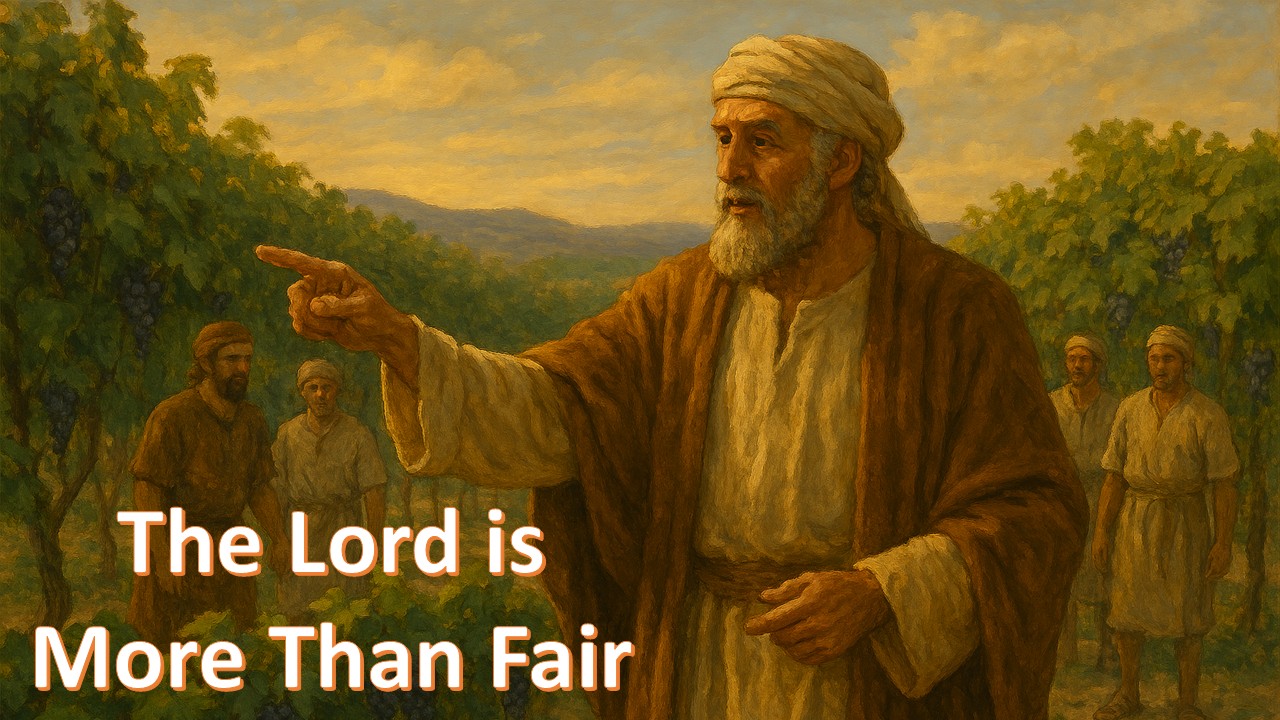
The Lord is More Than Fair

Fairness is a concept that often sparks debate and discontent. People sometimes grumble about perceived injustices, even when their complaints lack real merit. Consider situations where individuals receive generous compensation for minimal effort—like getting paid millions not to coach. Many might wish for such “mistreatment”! This theme of fairness is central to several parables of Jesus, especially the parable of the landowner and the laborers in the vineyard (Matthew 20:1ff). At first glance, the landowner’s actions seem unfair: those who worked hardest received the same as those who worked little. But a deeper look reveals profound lessons about the kingdom of heaven, the workers, their compensation, and the eccentric generosity of the landowner.

The Workers

The workday in biblical times began early, around 6 am, and ended at 6 pm. During harvest, there was a rush to find enough workers. Laborers were hired at various times: the third hour (9 am), sixth hour (noon), and even the eleventh hour (5 pm). Some stood idle not out of laziness, but because no one had hired them. In those days, if you didn’t work, you didn’t eat.

The first group of workers negotiated their wages—a denarius for a day’s work. This group can be seen as representing the Jews, who entered into a covenant with God, agreeing to follow His commands. Later workers, likely representing the Gentiles, did not negotiate; they simply trusted the landowner to “give what is right.” Their willingness to work without a set wage highlights the importance of attitude over entitlement.

Jesus’ parables often challenge hard-heartedness, as seen in the questions: “Why eat with sinners?” “Why help Samaritans?” “Who is my neighbor?” The story prompts us to consider whom we trust to care for us: a doctor focused only on pay, a security team obsessed with bonuses, or a preacher more concerned with free time than service. The first workers expected more, but the story sets up a lesson about grace and generosity.

The Compensation

At the end of the day, the law required that workers be paid promptly (see Leviticus 19:13 and Deuteronomy 24:14-15). Each laborer received a denarius, regardless of hours worked. The early hires assumed they’d get more when they see the others pay. Instead, everyone received equal pay.

The first workers felt devalued and unappreciated. “We worked all day in the hot sun,” they complained. “You have made us equal with those who only worked an hour.” Such situations would likely upset politicians and labor unions today. Discussing salary among coworkers often breeds resentment. Though the workers accepted their pay, they grumbled about perceived unfairness. But is their complaint justified?

The Eccentric Landowner

The landowner responds: “Is this not what you agreed to?” The early workers were happy with their wage at the start—three times what they might expect for vineyard work. The master was more than fair. His generosity extended to the latecomers, not out of obligation, but from the goodness of his heart. “Is he not entitled to do what he wants with what is his?” he asks.

The parable introduces the concept of the “evil eye,” a metaphor for envy and resentment, especially regarding money (see Matthew 6:22-23). Jesus teaches that “the last will be first, and the first last.” Those who put themselves first may end up last, or even left out, as illustrated by the rich young ruler who couldn’t give up his possessions. Peter’s question, “What is in it for us?” is met with assurance: “The Lord will be more than fair with you.” The parable is told to reinforce this point, followed by the sons of Zebedee seeking special treatment. The conclusion is clear: to be first, one must be willing to be last. The Lord’s grace exceeds fairness; He gives more than we have earned to those who trust in Him.

Conclusion

Many stand idle in the marketplace, not working in the vineyard. The landowner does not reward inactivity; the workers trust Him to do what is right. God is gracious with what belongs to Him. In the Christian life, it doesn’t matter how many years one has served—there is no hierarchy or seniority. Both lifelong believers and newcomers will share in heaven. Jealousy and resentment are misplaced; whatever we receive from the Lord is better than we deserve. The invitation remains: “Why are you standing idle?”


Me In The Middle

Happy Birthday, America! As we think about the 250 years of history that have shaped this nation, we recognize that our story is still short compared with many countries around the world. Even so, Americans deeply value independence. We appreciate the power of the people, the ability to govern ourselves, and the freedom to make our own laws, regulations, and decisions.

There is nothing wrong with loving our country. Patriotism can be honorable and meaningful. But love for country can also develop into something unhealthy when it becomes centered only on self. If we are not careful, independence can become an excuse to make everything about us—our desires, our preferences, our rights, and our will. In that way, we begin to want “me in the middle” of everything.

When it comes to who we are and what we stand for, we often discover that “me” is already in the middle. It appears in our attitudes, our focus, our priorities, and the things we consider most important. The question is not whether we will be involved in our lives; of course we will. The question is whether self will rule the center, or whether God will.

With that in mind, let us consider five things that either already have “me” in the middle or need to have “me” in the middle in the right way.

Pride

Pride is one of the clearest examples of self sitting in the center. Pride says, “I can do this by myself. I know best. I do not need correction, help, or guidance.” Scripture warns against that attitude. Proverbs 16:18-19 teaches that pride goes before destruction and that a haughty spirit comes before a fall. If we believe we can succeed entirely on our own, we are already headed toward failure. True success requires humility before the Lord.

Pride also causes us to love the wrong things. In 2 Timothy 3:1-5, Paul describes people who are lovers of self, lovers of money, proud, arrogant, disobedient, ungrateful, and without self-control. That is the attitude that says life is all about me—my money, my desires, my wishes, and my way. When self takes over, love for others and love for God are pushed aside.

To change, ignore, or dismiss what God has said takes pride. It is arrogant to live as if we control everything. James 4:13-17 reminds us that life is a vapor. We may make plans for a year, a business, or a future, but we do not have the power to guarantee even tomorrow. The proper perspective is to say, “If the Lord wills.” When we boast in our own arrogance, James says such boasting is evil. Pride does not merely make us look foolish; it leads us into sin.

Sin

Sin is missing the mark. It is failing to become what God calls us to be and refusing to do what God commands. 1 John 3:4 describes sin as transgression of God’s law. Without law, there can be no sin; but because God has spoken, we are accountable to Him.

Sin is also centered on self. Think about nearly any sin and ask what is at its heart. Again and again, the answer is selfishness: “I want what I want, when I want it, whether God approves or not.” David knew in his heart that his sin with Bathsheba was wrong, but he pursued what he wanted. For a time, he may have thought he had escaped the consequences, but Nathan confronted him, and David came to understand the seriousness of his sin. In Psalm 51:4, he confessed that his sin was ultimately against God.

We may be tempted to think our sin is no big deal. We may tell ourselves that we did not hurt anyone or that we are only doing what we like to do. But all sin harms our relationship with God. Isaiah 59:1-2 teaches that sin separates us from Him. That separation is not what God wants. He desires all people to come to repentance and salvation, as seen in 2 Peter 3:9 and 1 Timothy 2:4.

When we put our wants and desires first—when pride and arrogance rule us—we are led into sin. Yet just as these evil things can have “me” in the middle, there are also good things that require personal involvement. No one else can believe, have faith, or live faithfully for us.

Believe

To believe is to have conviction based on testimony that something is true or that someone is reliable. In this sense, “me” must truly be in the middle. No one else can believe for me. It is not enough that my parents believe, that my congregation believes, or that people around me believe. Belief must become personal.

Joshua 24:14-15 shows that each person must decide whom they will serve. It is not enough to rely on the faith of our fathers, even if they served the true God. Just as we do not inherit sin from our ancestors, we do not inherit belief from them either. Ezekiel 18:19-20 reminds us that each person is accountable for his or her own response to God.

Salvation requires personal belief. John 3:16 emphasizes that whoever believes in the Son may have eternal life. In Acts 16:30-31, the Philippian jailer was told to believe in the Lord Jesus. Even then, it was not enough for one member of the household to believe for everyone else; each person had to respond. Closely connected with belief is faith.

Faith

To have faith in God is to trust Him and take Him at His word. Faith is closely related to belief, but it goes beyond simply knowing that God exists. Hebrews 11:6 teaches that without faith it is impossible to please God. That faith must be our own. It has to have “me” in the middle—not in a selfish way, but in the sense of personal responsibility and personal trust.

Faith directs the way we live. Proverbs 3:5-7 calls us to trust in the Lord with all our heart and not lean on our own understanding. That kind of faith overcomes pride because it refuses to be wise in its own eyes. It trusts God to direct the path.

Habakkuk 2:4 says that the righteous will live by faith. Living by faith means more than saying the right words. The heroes of faith in Hebrews 11 did not merely claim to believe; they acted. Again and again, the chapter says “by faith,” and each example shows faith moving someone to obey God. Faith is not passive. It calls us to act, and no one can do that for us.

Going

One of the things I must do is be going. As I go through life, I need to ask whether I am involved in what God wants me to do. Matthew 28:19-20 gives the charge to go and make disciples. I may not be able to travel everywhere in the world, but as I am going, I can share the gospel with those I meet. For some people, I may be the only Christian they meaningfully interact with.

Going also includes going to the Lord in prayer. Matthew 6:6 reminds us of the personal nature of prayer. Others can pray for us, and we should pray for one another, but God also wants to hear from me. I need to be personally involved in going to Him.

At the same time, we must make sure we are not going astray. Hebrews 2:1 warns that it is possible to drift. Even after being saved, we can begin to move in the wrong direction if we do not pay careful attention. We must stay on the path that leads to God and go forth to Him, as Hebrews 13:13 urges. If we are going to heaven, we must remain faithful to Him.

Conclusion

We love independence. We appreciate freedom, the ability to make choices, and the opportunity to take responsibility for our lives. Freedom is a great blessing. But we must also understand our dependence upon God. We need Him for everything.

We can find ourselves in the middle of pride, living only to fulfill our own desires. We can find ourselves in the middle of sin, doing wrong and refusing to accept responsibility. But we also need to be in the middle of believing, because no one else can believe for us. We need to be in the middle of our faith, because our trust in God must be personal, active, and growing.

So the invitation is simple: where do you find yourself in the middle this day? Is self at the center in pride and sin, or are you personally placing yourself in the middle of belief, faith, and faithfully going with God?

Why Do The Wicked Prosper?

It’s a question that has troubled people for generations: Why does it seem like those who do wrong often get away with it, while those who strive to do right face hardship? Whether it’s seeing others break the rules on the road or watching the wealthy escape justice with the help of top lawyers, the apparent prosperity of the wicked can be confusing. This dilemma is not new, it was pondered by Asaph, a musician appointed by King David, as recorded in Psalm 73. Asaph’s honest struggle with this question provides us with valuable insight.

Asaph observed that the wicked seemed to live lives of luxury and ease, free from the troubles that plagued others. In Psalm 73:2-12, he admits his own envy and discouragement, feeling as though his commitment to God was pointless when the boastful thrived. The wicked appeared to avoid consequences, buying their way out of trouble and living in comfort. Their arrogance and pride were on full display, yet they continued to prosper. This led Asaph—and can lead us—to question whether devotion to God is in vain, especially when suffering seems to be the reward for righteousness.

It’s easy to become discouraged when the world’s values seem upside down. The temptation to envy those who disregard God’s ways is real, especially when their lives look so appealing. Asaph’s pain was not just intellectual; it was emotional, making him question the very purpose of his faith.

However, Asaph’s perspective shifts when he considers the bigger picture—eternity (Psalm 73:17-20). He realizes that the prosperity of the wicked is fleeting. Their foundation is slippery, and their end is destruction. Wealth and abundance, while desirable, can become obstacles to following God if they become the ultimate goal. The laughter and comfort of the wicked will not last; judgment awaits.

In contrast, the destiny of the righteous is secure (Psalm 73:21-26). Asaph admits his own ignorance and grief, but he remembers that God is always with him, guiding and ultimately welcoming him into glory. The true value lies not in temporary success, but in an eternal relationship with God. Jesus is described as our advocate, the ultimate “legal dream team” for eternity (1 John 2:1).

It’s easy to be blinded by the world’s definition of success and comfort. The apparent lack of justice can make us question our values and choices. But Psalm 73 reminds us that the story isn’t over—the wicked will face judgment, and the righteous will be rewarded for their faithfulness. Sometimes, being caught when we do wrong is a blessing, steering us back to the right path.  The real question is: How shall we live? What will we value? The invitation is clear, don’t be on the outside looking in. Trust in God’s testimony and remember that true prosperity is found not in what we gain in this world, but in what awaits us in eternity.

Isn’t That Convenient

In today’s fast-paced world, convenience has become a significant aspect of our daily lives. The definition of convenience often involves little trouble or effort, and we tend to favor it because it allows us to avoid going out of our way and makes it easier to be lazy. However, convenience is not always beneficial.

While convenience can make our lives easier, it can also lead to negative consequences. For instance, it can cause us to overspend. Imagine needing something that costs $10, but you end up spending $50 to get free shipping, thinking you saved $4.99 in shipping fees. Additionally, convenience can lead to loneliness. With apps that allow us to order food and complete transactions without speaking to anyone, our electronic devices have made things easier but at what cost?

There was a time in the history of Israel when convenience became a significant problem. Solomon’s sins, as mentioned in 1 Kings 11:29-33, led to the division of the kingdom into Israel and Judah. Jeroboam took ten tribes to the North and, in an attempt to make worship easier for his subjects, he built and fortified a new capital city, Shechem, in the tribal area of Ephraim. He was more concerned about maintaining his power than the well-being of his subjects, fearing they would return to the house of David if they went to Jerusalem to offer sacrifices.

Jeroboam’s solution was to make worship easy for his subjects by setting up two golden calves, with one in Bethel and one in Dan. This act was reminiscent of the golden calf incident in Exodus 32. The people, preferring the convenience, accepted this new form of worship. However, this was not the worship the Lord desired. It was in the wrong place, in the wrong manner, with the wrong priests, and directed towards the wrong subject.

Choosing convenience over what God wants can lead to dire consequences. Jeroboam’s actions led to punishment in the days of Josiah, as prophesied in 1 Kings 13:1-2 and fulfilled in 2 Kings 23:15-16. Amos was sent to Israel with a message that they would be led away captive, as mentioned in Amos 7:10-13. If we choose convenience over God’s commands, our worship becomes vain and useless.

God desires what He wants, and it might not always be convenient for us. It may not be a convenient time or place, and there may be other things we would rather be doing. However, convenience does not please the Lord. Our heart and desire must be for Him, and we should want to do what pleases the Lord, even if it requires effort. Choosing convenience over God’s commands can lead to consequences we do not want to face. Instead, we should desire to be with Him in eternity.

Rules For Thee, But Not For Me

               It has been reported in the news lately that the now former president of Harvard University has had some issues with plagiarism in her academic career.  Some have made a big deal over this, since Harvard is a very prestigious institution with rigid guidelines for their students.  Others have blown it off or have claimed racism as a reason for unwarranted persecution.  Is this a big deal?  What is plagiarism?  What does this say about the state of morality in our nation as a whole?

               Plagiarism is the lifting of text or ideas from someone else’s writing without giving proper credit for such to the original author.  It is one of those ten-dollar words that we might not be exposed to if we are outside of the realm of academia.  It is not some small thing, however.  Plagiarism is basically the theft of intellectual property.  It is stealing.  As such, if you plagiarize in your term papers in most colleges and universities, you will be asked to leave.  Apparently at Harvard, while students are subject to this rule, faculty members are exempt.  One can even rise to University President after plagiarizing.

               When we see that the rules do not apply to everyone equally, that goes against what we believe is fair.  This is especially so when it is those who are supposed to be enforcing the rules.  There is a scripture for that.  Paul wrote in Romans 2:21, “You, therefore, who teach another, do you not teach yourself? You who preach that a man should not steal, do you steal?”  God’s word does not endorse a policy of do as I say and not as I do. 

               If we are going to be successful in teaching lost souls about the salvation that is in Christ and Christ alone, then we cannot be hypocritical.  Do as I say and not as I do doesn’t work in the home (children will see through this in a moment); it does not work in the school; and it will not work in the church.  We must practice what we preach.  We cannot just talk the talk; we must walk the walk.  “But above all, my brethren, do not swear, either by heaven or by earth or with any other oath. But let your ‘Yes’ be ‘Yes,’ and your ‘No,’ ‘No,’ lest you fall into judgment” (James 5:12). 

    Jesus admonished the religious leaders of His day for basically doing the very same thing as the leaders at Harvard.  “And He said, ‘Woe to you also, lawyers! For you load men with burdens hard to bear, and you yourselves do not touch the burdens with one of your fingers’” (Luke 11:46).  They were good at making difficult requirements that they had no intention of keeping themselves. 

    Let us not be like them!  Let us be genuine so that we will not be a burden to those who are outside (1 Thes. 4:9-12).  Life is difficult enough without us making it harder.  We need to set the right kind of example. We should be one who is not only proclaiming the word of God, but who is also adhering to the commandments of the Lord.  Let us understand that God’s rules apply to all of us, no matter who we are.

When Did God Change His Mind About Homosexuality?

Image by Annett_Klingner from Pixabay

            This week Francis, the Roman Catholic Pope, issued a new document which would allow his priests to bless same sex couples.  This was a reversal of a prior stance in which the Roman Catholic institution stated that they could not bless sin.  That prior stance earned Francis a bit of consternation on the part of those in the gay community.  Now, he says, “that people seeking God’s love and mercy shouldn’t be subject to ‘an exhaustive moral analysis’ to receive it” (https://www.msn.com/en-us/news/world/pope-approves-blessings-for-same-sex-couples-if-they-don-t-resemble-marriage/ar-AA1lGh6Y?ocid=msedgdhp&pc=DCTS&cvid=3ffb240e83214dc9942ffd84c7a63569&ei=35).  So, what happened in between?  Did God change His mind?  Is homosexuality now something to be blessed?

            Let us turn to God’s word for our answer.  In the Old Testament, God’s opinion of homosexuality can be clearly seen.  In Genesis 19 God destroyed the cities of Sodom and Gomorrah because of their same sex practices.  In the Law of Moses, God states, “You shall not lie with a male as with a woman. It is an abomination” (Leviticus 18:22), and “If a man lies with a male as he lies with a woman, both of them have committed an abomination. They shall surely be put to death. Their blood shall be upon them” (Leviticus20:13).  Homosexuality certainly did not have God’s blessing in the Old Testament.

            Homosexuality does not have God’s blessing in the New Testament either.  In Romans 1 beginning in verse 18, the Bible condemns ungodliness and unrighteousness and states that God’s wrath will be poured out on those who practice sexual immorality.  Included in this, is the sin of homosexuality.  “For even their women exchanged the natural use for what is against nature. Likewise also the men, leaving the natural use of the woman, burned in their lust for one another, men with men committing what is shameful, and receiving in themselves the penalty of their error which was due” (Romans 1:26b-27).  Not only does God condemn homosexual activity in this passage, but He also condemns those who approve of such activities (Romans 1:32). 

            So, can we bless that which God condemns?  To give our blessing means that we approve of the activity.  God’s word says, “Do you not know that the unrighteous will not inherit the kingdom of God? Do not be deceived. Neither fornicators, nor idolaters, nor adulterers, nor homosexuals, nor sodomites, nor thieves, nor covetous, nor drunkards, nor revilers, nor extortioners will inherit the kingdom of God” (1 Corinthians 6:9-10, emphasis added).  How cruel would it be for us to know that someone is in a relationship or lifestyle that is going to someday condemn them for all eternity, and then turn around and give them our blessing as if everything is alright?  That passage above in 1 Corinthians goes on to say that some of them were guilty of these sins in the past, but they were sanctified by the blood of Christ. 

            However, to be able to enjoy that blessing of sanctification, they had to repent.  They had to change what they were doing.  They had to be obedient to God.  Jesus is the savior of all those who obey Him (Hebrews 5:9).  God gives His mercy to those who are obedient.  We should welcome all people to come to Jesus and be saved, no matter what their current station in life is, but we cannot bless and embrace their sins.  We should not enable them by suggesting that they are safe in their sinful lifestyles.  We do not have the authority to change what God has said.  If we are to be God’s people, we cannot bless that which God hates and condemns.

Whatever Happened to Truth?

It seems such a long time ago that common sense was more common, and people believed that there were some things that were absolutely true.  Our own Declaration of Independence states that there were certain truths that the population held to be undeniable and self-evident.  Today, however, truth has taken a back seat as our nation has embraced relativism.  In short, relativism is the idea that what is true for you may not be true for me.  It’s all relative and based upon our own experiences.  Modern scholars will declare that there is no absolute truth, to which I would like to ask if they believe that absolutely.

            The Bible paints a different picture of truth.  Jesus prayed in the garden that God the Father would sanctify or set apart His followers in the truth and declared that God’s word is truth (John 17:17).  In his conversation with a Samaritan woman at Jacob’s well, when she stated that she did not currently have a husband, Jesus told her that she was correct in this and proceeded to point out that she had a spiritual problem (John 4:16-18).  She and the Samaritans also had a truth problem in that they were worshipping upon Mt. Gerizim rather than in Jerusalem.  Jesus did not tell her that she needed to live out her own truth.  Instead, He told her that they who would worship God must do so in spirit and in truth (John 4:24).  God wants us to follow the truth of His word, and to not make our own path (Matthew 15:7-9).  That would seem to be absolute.

            Absolute truth means that there are some things that are true for all people and at all times.  Boiled down, truth is always true.  It doesn’t depend on our circumstances or experiences.  Water is always wet, ice is always cold, and fire is always hot.  God has revealed the truth to us in His word, and it is that truth that will set us free (John 8:32).  Nothing from our imagination will compare to the truth.  If we are to escape the eternal fire, then we need to learn, understand, and obey the truth of God’s word and follow His will (Hebrews 2:1-4; Matthew 7:21ff; 2 Thessalonians 1:7-9).  Be a seeker of truth, and follow God’s path to salvation.

But If Not . . .

OXYGEN Volume 10     Back in the days of Daniel, when the children of Israel were exiled in Babylon, King Nebuchadnezzar decided to have a 90 foot tall golden statue constructed. The king then commanded that at the proper time all were to bow down and worship this golden image. There were those among the exiles, however, who were faithful to God and would not bow down to the image even though the penalty was death in a fiery furnace (Daniel 3:1-12). These three men, Meshach, Shadrach, and Abed-Nego, were not going to violate their worship to the one true God by bowing down and paying homage to the image Nebuchadnezzar created. Did they not know that this would cost them their physical lives?
     Meshach, Shadrach, and Abed-Nego knew full well what the penalty was for refusing to bow to the statue, and yet they remained unconcerned. They responded to the king that they need not be worried over the circumstances of their refusal, because their God was able to deliver them (Daniel 3:17). They knew that God had the power to save them from the physical death in the fiery furnace. Then they uttered three words that demonstrated their great faith in the Almighty God, “but if not” (Daniel 3:18). Even if God decided to not save them from the physical trial, they knew that God could still deliver them spiritually.

     How is our faith in times of trouble or trial? Do we have the faith to stand with the one true God, or do we see our trials as too difficult and give in to the rest of the world? Do we take the path of least resistance to avoid trial or persecution? Let us look to these three young men as examples of how we should approach physical trials. God has the power to deliver us from all sorts of physical trials. But if not, He is still the only one who can deliver our souls from everlasting destruction.

What Is Sin?


     If you ever want to bring a conversation to a screeching halt, just talk to someone about the issue of sin! In our politically correct, nothing is ever wrong, who are you to judge me world, the topic of sin or of pointing out that something is morally wrong has been equated with hate speech. Thus we are left with an “if it feels good, do it” society that does not understand the difference between right and wrong.

arrows missing target

     Just what is sin? The first mention of sin in the Bible has to do with Cain’s undesirable sacrifice. God says, “If you do well, will you not be accepted? And if you do not do well, sin lies at the door. And its desire is for you, but you should rule over it” (Genesis 4:7, NKJV). The word ‘sin’ in this passage carries with it the idea of a crouching beast, waiting to pounce on its prey. In archery, the term ‘sin’ is used when the archer misses the mark and fails to hit the target. With regards to us, we sin when we miss the mark and do not live up to God’s desire for us. Sin is breaking the law of God. “Whoever commits sin also commits lawlessness, and sin is lawlessness” (1 John 3:4). These are sins of commission (something that we did). There are also sins of omission (failing to do what is right). “Therefore, to him who knows to do good and does not do it, to him it is sin” (James 4:17).

     How then do we judge between what is right and what is wrong/sinful? It is not according to our own wishes and desires, for we are mere men. Who are we to determine what is right or wrong and to be the judge of it? We need a higher standard than what man deems right or wrong. Solomon has said, “There is a way that seems right to a man, But its end is the way of death” (Proverbs 14:12). Jeremiah prophesied that it is not in man to direct his own steps (Jeremiah 10:23). Thus we need to turn to God’s word, and His Holy Standard in order to see what is right and what is wrong. Paul wrote that he would not have known what was sin had God’s law not revealed that to him (Romans 7:7).

   We have an obligation to check these things out in the Bible. Let us allow God’s word to give us our direction regarding what is right and wrong. Let us not lean upon man’s understanding and end up in sin. Sin leads to death (James 1:12-15; Romans 6:23). Obedience to God will lead us to life (Romans 6:16). Let us reject sin and live!

A Tale of Two Substitutes

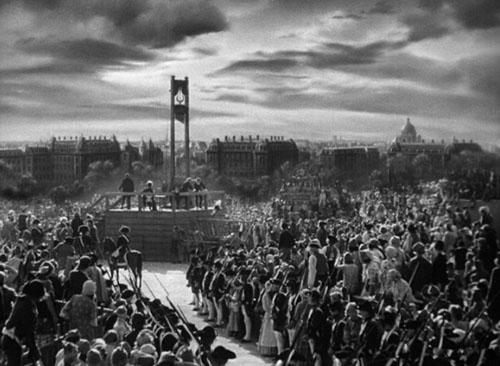
tale-of-two-cities     In Charles Dickens’ novel, A Tale of Two Cities, there comes a point where one of the main characters, Charles Darnay, is arrested by the mob during the French Revolution and is sentenced to death. Because of the love that he has for Charles’ wife, Lucie, another character, Sydney Carton, takes Darnay’s place at the guillotine instead. As Carton goes to his death, he utters the most famous line of the novel, “It is a far, far better thing that I do, than I have ever done; it is a far, far better rest that I go to than I have ever known.”

     Just as Sydney Carton substituted himself for Charles Darnay for the sake of love, there is One who has sacrificed Himself for you, because of the love that He has for you. One of the most famous and well known scriptures in the Bible is found in John 3:16, which states, “For God loved the world in this way: He gave His One and Only Son, so that everyone who believes in Him will not perish but have eternal life” (HCSB). Even though we were undesirable, ungodly, weak, and enemies of God at the time, “God demonstrates His own love toward us, in that while we were still sinners, Christ died for us” (Romans 5:8, NKJV). Mankind had separated themselves from God through the tragedy of sin (Isaiah 59:1-2), but because Jesus came and died in our stead, we can now have that hope of eternal life in heaven.

     Because we commit sin, we have the sentence of death in ourselves (Romans 3:23; 6:23). We can do nothing of ourselves to remedy this situation, for we are unable to pay the price. It takes the sacrifice of a sinless life in order for us to be justified before God. What we could not provide for ourselves, God has provided in His Son, Jesus Christ. A greater love than this cannot be found! “Greater love has no one than this, than to lay down one’s life for his friends” (John 15:13). Jesus substituted His sinless life, to die on the cross, to save us from our own spiritual death. Let us obey what He says to do, in His Holy Bible, so that we can apply the blood He shed and wash away our sins (Acts 22:16; Revelation 1:5).