Love Without Labels

Couple_01     This week we are being told through a public service announcement that love has no labels.  That sounds pleasant, does it not?  Who could disagree that love has no labels?  However, just what is meant by this announcement?  What is being cast upon us is yet another attempt to show that homosexuality is normal and okay.

In an unrelated story, Dr. Ben Carson stated his belief that people choose to be homosexuals.  They are not born that way.  Very shortly after answering a question that exposed his belief, Carson took it back.  He back peddled and tried to explain his answer in a way that would be more acceptable to those of a gay persuasion.  The real question is, are these events really unrelated?

There is and has been a tremendous push in our country to justify, normalize, and force everyone to accept homosexuality as a viable, wholesome, alternative lifestyle.  Anyone who disagrees is instantly labeled as homophobic, hateful, or a bigot.  Let us just take a moment to think about the tactics from a logical standpoint for a moment.

Those of us who disagree with said lifestyle, are no longer allowed to express our opinion without fear of retribution, harassment, loss of employment (if employed within the media), and other labeling by the crowd that is telling us that love has no labels.  It cannot be about tolerance, for tolerance would demand that I can express my opinion as equally as they can theirs.  It is all about acceptance.  We are being forced to accept their opinion and say nothing about it.

I do not say this to be mean spirited, unloving, or otherwise prejudiced against a segment of society.  I merely mean to express another viewpoint with regards to this issue, and that is the viewpoint that God has written for our learning in the Bible.  By expressing what the Bible has to say about the issue, it is not my intention to “force my religion” down anyone’s throat.  God does not operate that way.  He merely tells us what is right, what is righteous, what is wholesome, and what is not.  Then it is up to us to decide if we will follow Him, or go our own way.  It is our choice, Dr. Carson.

Nowhere does God explain this better than in Paul’s letter to the Romans.  “For the wrath of God is revealed from heaven against all ungodliness and unrighteousness of men, who suppress the truth in unrighteousness, because what may be known of God is manifest in them, for God has shown it to them” (Romans 1:18-19 NKJV).  When mankind suppresses the truth, because they do not like it, that is called unrighteous and ungodly.  The creation of man itself is proof that there is a God.  There is no way that the complicated systems that exist within human life could have come about by chance.  Thus the evidence is within man, such that we are without excuse if we fail to believe that there is a God (Romans 1:20).

However, there are those who have not retained God in their knowledge.  They have made a conscious choice to walk away from God.  They do not glorify Him, nor are they thankful.  Instead, they profess to be wise when really they are being foolish for ignoring God (Romans 1:21-22).  Because they have given up on God and walked away from Him, He will also give them up.  They will not be considered to be His children anymore, while they are acting disobedient.

Therefore God also gave them up to uncleanness, in the lusts of their hearts, to dishonor their bodies among themselves. . . For this reason God gave them up to vile passions. For even their women exchanged the natural use for what is against nature.  Likewise also the men, leaving the natural use of the woman, burned in their lust for one another, men with men committing what is shameful, and receiving in themselves the penalty of their error which was due (Romans 1:24, 26-7).

Notice what God calls it when women exchange the natural use of their body to be with other women.  Notice what God says about men who burn in their lust for other men.  He says that they dishonor their bodies.  He calls their passions vile.  He says that their actions are shameful and deserving the penalty of their error.  It sounds like God has put “labels” on their “love.”

The real issue is a misunderstanding of love.  Men are to have brotherly love for one another.  This is the Greek word philos.  It is not the same as the love between a man and his wife that includes the sexual relationship.  This kind of love is eros (where we get the word erotic from).  Mankind has blurred the lines between the kind of love that we are to show toward one another, and the kind of love that is reserved for a married man and his wife.  So when people say, “well what is wrong with loving one another,” they are misunderstanding the difference between brotherly love and lust.

So why make such a big deal about this issue?  What harm is there in accepting what God says is vile, ungodly, unrighteous, and against nature?  Well, just notice what Paul goes on to write at the end of Romans 1:

(They) being filled with all unrighteousness, sexual immorality, wickedness, covetousness, maliciousness; full of envy, murder, strife, deceit, evil-mindedness; they are whisperers, backbiters, haters of God, violent, proud, boasters, inventors of evil things, disobedient to parents, undiscerning, untrustworthy, unloving, unforgiving, unmerciful; who, knowing the righteous judgment of God, that those who practice such things are deserving of death, not only do the same but also approve of those who practice them (Romans 1:29-32).

Not only does God disapprove of the homosexual lifestyle, His judgment is also going to be against those who approve of their behavior.  God says if you are okay with things that He calls evil, then you are deserving of spiritual death just the same as those who are practicing such.  That looks like God is placing many labels on their “love,” and none of those labels are good.

One last point with regards to this issue needs to be made.  The argument that homosexuals are that way because that is how God made them cannot be true if the Bible is to be believed.  Notice that God states the penalty for those who practice such behavior quite clearly in Romans 1.  If God were to make people that way, with that persuasion, then He would be making people to sin and be lost.  That is not God’s nature.  God does not tempt us to do evil.  We are tempted when we are led away by our own desires.  That desire then leads us to sin.  It is our own doing (James 1:13-15).  Indeed, God does not desire that anyone be lost.  He wants for all men to come to a knowledge of the truth (1 Timothy 2:4), and then to repent and follow Him (2 Peter 3:9).  People choose to practice what they practice.  They are not made to sin by God without a choice.

Furthermore, notice what Paul writes to the church in Corinth:

Do you not know that the unrighteous will not inherit the kingdom of God? Do not be deceived. Neither fornicators, nor idolaters, nor adulterers, nor homosexuals, nor sodomites, nor thieves, nor covetous, nor drunkards, nor revilers, nor extortioners will inherit the kingdom of God.  And such were some of you. But you were washed, but you were sanctified, but you were justified in the name of the Lord Jesus and by the Spirit of our God (1 Corinthians 6:9-11 emphasis added).

There were some who were in the church in Corinth who had formerly been homosexuals.  Paul says that they were washed, they were changed, they made a conscious decision to follow God rather than their own lusts.

There is no need to be lost in sin when we can repent, change our sinful lifestyle, and become a child of God again.  This not only applies to the sin of homosexuality, but with any and all sin.  God does not state that one sin is any worse than any other, and neither should we.  Let us only apply the labels that God applies, and strive to walk in His ways each day.

Shoot the Messenger

Lewis_Hine,_A_typical_bike_messenger,_Birmingham,_Alabama,_1914     How do we react when we are given bad news?  Do we want to take it out on the one who is bringing us the report?  Many times, those who bring bad news are ostracized because of the message they carry.  We see that this was the case with Israel and the prophets.

     One such case occurs in 1 Kings 18 when Elijah comes looking for Ahab, the king of Israel, after hiding from him at God’s direction.  Ahab had been looking high and low for Elijah because of the drought in the land (Elijah had told Ahab that it would not rain again for several years 1 Kings 17:1).  When Ahab’s servant Obadiah comes into contact with Elijah, he is afraid to go back and tell Ahab that Elijah is here, for fear that Elijah will be called away and Ahab will kill him (1 Kings 18:9, 12, 14).  Obadiah fears that Ahab will shoot the messenger.

     Once Ahab finally sees Elijah, he greets him by saying “Is that you, O troubler of Israel?” (1 Kings 18:17 NKJV).  Ahab is not happy to see Elijah.  Later Ahab will complain to Jehoshaphat with regards to Macaiah saying, “I hate him, because he never prophesies good concerning me, but always evil” (2 Chron. 18:7).  Ahab was not thrilled with any of the prophets, because they did not hesitate to tell him that what he was doing was wrong.  Ahab had a tendency to shoot the messenger when it came to these men of God bringing him the word of the Lord.

     How is it today?  Are people willing to hear the word of God with an open heart, or are they only concerned with shooting the messenger because they don’t like the message?  We as Christians have a duty to spread the Good News about the death, burial, and resurrection of Christ and the hope of eternal life that comes from that blessed event (Mat. 28:19-20; Mark 16:15-16).  There is a need for us to tell the truth of God’s word just as there was in the time of Ahab.  We should be like Elijah and Macaiah and speak for God, even if others wish to shoot the messenger.

The Choice is Ours

Fork-in-The-Road     Every day we get to make choices.  We make choices about what we eat, where we go, what we see, and what we do.  Many of the choices we make seem to only be for that moment, and then they are gone.  Others affect us for the rest of our lives.

     Consider the choice that was put before the Israelites just before they were to go into the Promised Land.  God through Moses told the people that they had a choice before them.  They could choose life and good, or they could choose death and evil (Deuteronomy 30:15).  God was not going to force them to be good or to choose the right path.  The choice was theirs.

     If they chose to do what was right, “. . . to love the Lord your God, to walk in His ways, and to keep His commandments, His statutes, and His judgments . . .” (Deuteronomy 30:16 NKJV), then they could stay in the land that was promised to their fathers forever.  However, if they chose to do that which was against God’s commands, and decided to worship other gods, then they would not be allowed to remain in that land (Deuteronomy 30:17-18).  Ultimately we know what choice they made.  They constantly went after other gods, and their idolatry led to them being taken away in the Babylonian captivity.  Thus, although a remnant returned to that land, they broke their part of the covenant relationship with God and lost the Promised Land.

     We equally have a choice before us.  Will we choose to follow God and make it to the Promised Land of heaven, or will we go our own way and lose out?  Jesus said, “I am the way, the truth, and the life. No one comes to the Father except through Me” (John 14:6).  In order to go to God, we must go through Jesus.  The choice is ours.  Our choices have consequences.  Let us therefore choose wisely!

Life Is In The Blood

George Washington     In December 1799 George Washington passed from this life.  He had been out taking care of his property in foul weather and had come down with what would appear to be a cold (sore throat, congestion, etc.).  In an effort to save the former president, his doctors took to opening veins and “bleeding” him, which was believed at the time to be the way to get the illness out of his system.  What the doctors of the time failed to realize is that life is in the blood.

     Man cannot sustain his physical life without blood.  This was well known to the Israelites, or should have been, since God forbade the eating of blood because “life is in the blood. . .” (Leviticus 17:11a NKJV).  Human medicine has come to realize the importance of blood in sustaining life in the years following Washington’s death.  Now, much can be done with transfusions to help stabilize patients who have suffered a loss of blood.

     In looking at man’s spiritual life, it can be seen that our spiritual life is also in the blood.  The Scriptures tell us that we have all sinned (Romans 3:23), and that the wages, the anticipated payment, of sin is spiritual death (Romans 6:23).  We know that this is not in reference to physical death, for we must all be subject to that unless the Lord returns first (Hebrews 9:27).  In order to have spiritual life, an eternity in heaven, we must have our sins covered by the blood of Christ (1 John 1:7; Revelation 1:5).

     We make contact with the blood of Christ when we are buried with Him in the act of baptism (Romans 6:3-4).  In obeying the command of Christ to be baptized (Mark 16:16), we can have our sins washed away (Acts 2:38; 22:16).  It is in our obedience to the words of Scripture, that the blood of Christ is applied to us and we are cleansed from our sins.  Thus, we are able to have spiritual life.  Thus, both our physical life and our spiritual life are in the blood!

Nebuchadnezzar’s Wise Men

CrystalBall_thumb      Perhaps you have heard of or seen a magician, who as part of their act reads the mind of a member of the audience.  If so, you know how impressive this seems on the surface.  Just how is it that a man can read the thoughts of another human being?  Later, when you find that there is some sort of trick or gimmick to explain the ‘magic,’ you realize that man just does not have the ability to read minds.  This, however, is not a new discovery.

     In the second chapter of the book of Daniel, we have recorded for us that Nebuchadnezzar, the king of Babylon, had a most troubling dream.  He called for all of his wise men to come to him and tell him what the dream was and what it meant.  The wise men of Babylon were perplexed.  Without any sort of clues, or without Nebuchadnezzar telling them about the dream, there was no way for them to determine what the dream even was, not to mention what it might have meant.  They correctly stated that, “There is not a man on earth who can tell the king’s matter; therefore no king, lord, or ruler has ever asked such things of any magician, astrologer, or Chaldean.  It is a difficult thing that the king requests, and there is no other who can tell it to the king except the gods, whose dwelling is not with flesh” (Daniel 2:10b-11 NKJV).  They understood that the power to know what was in the mind of a man was not something that another man had the ability to discern.

     This same truth holds today as well.  We are told in the New Testament, “For what man knows the things of a man except the spirit of the man which is in him? Even so no one knows the things of God except the Spirit of God” (1 Corinthians 2:11).  Man cannot read the thoughts of another man.  That is what makes Daniel’s description and interpretation of King Nebuchadnezzar’s dream that much more impressive.  Daniel was only able to tell the king of his dream and what it meant, because God made that information known to Daniel in the first place (Daniel 2:19-23).

     This event should prove to us that there is a God who knows all things.  Only such a God could be able to tell Nebuchadnezzar through His servant Daniel the details of his dream.  Likewise, there are things about God Himself that man can only know because God has revealed those things to us.  It is in God’s word, the Holy Bible that we can find out about who God is and what He is like.  Let us not neglect the great volume of information that we have at our fingertips about our God and about our Lord and Savior, Jesus Christ.

Following the Pack

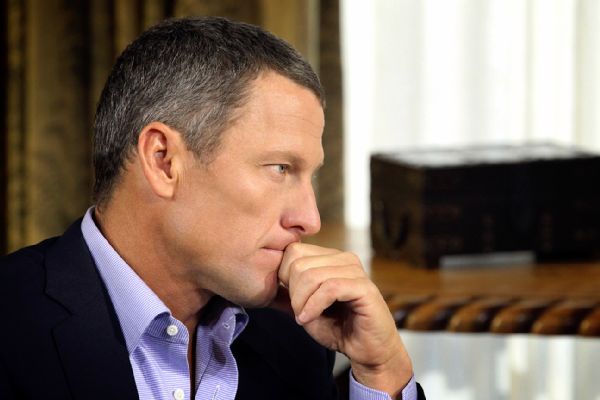
end_a_armstrong_d1_600x400     In a recent interview, Lance Armstrong has reiterated that he would cheat again if he had a chance to do it all over.  Lance Armstrong was revered as one of the greatest cyclists ever.  He won seven consecutive Tour de France titles from 1999 to 2005.  However, all the while Lance was winning those titles; he was also guilty of taking performance enhancing drugs (PEDs).

     Once it became known that Armstrong had been doping, his titles were stripped from him.  After years of denials that he was taking PEDs, he finally came clean in 2013 and admitted to the doping during his illustrious career.  He states in his recent interview that he would do it again to be competitive, because everyone was doing it.  His only regret is that he was put in a place where he had to make the decision to take PEDs, not that he actually gave in and doped to improve his performance.

     So, Lance would make the decision to run with the pack again.  Do you ever remember your mother asking you if you were going to jump off of the bridge just because everyone else was doing it?  Is that a legitimate excuse?  Lance Armstrong’s philosophy reeks of situational ethics.

     What do the words of Scripture have to say about situational ethics?  Is there ever a right time to do a wrong thing?  Paul writes, “Do not be deceived, God is not mocked; for whatever a man sows, that he will also reap.  For he who sows to his flesh will of the flesh reap corruption, but he who sows to the Spirit will of the Spirit reap everlasting life.  And let us not grow weary while doing good, for in due season we shall reap if we do not lose heart” (Galatians 6:7-9 NKJV).  Armstrong has allowed bad company to influence him to also do that which is wrong (1 Corinthians 15:33).  He has given in to running with the pack, rather than standing for what is right and good (competing according to the rules).  In his constant lying about his drug use, he has not let his yes be yes and his no, no (Matthew 5:37; James 5:12).

     Furthermore, James says, “Therefore, to him who knows to do good and does not do it, to him it is sin” (James 4:17).  Lance knew what he was doing was wrong.  He circumvented the rules to gain an advantage.  Many might say they understand.  Who wants to work in a bicycle shop in Plano, Texas when they can be on top of the world?  The problem is that if we do that which is wrong, and say that we would do the same thing again, we show no repentance for our sins.  It does not matter if everyone else is doing it.  Jesus said there was a broad and easy road, that many were traveling, and that this road leads to destruction (Matthew 7:13-14).

     God wants us to follow Him, not the pack.  He wants for all men to come to repentance (2 Peter 3:9).  There is never a right time to do a wrong thing.  Ethics are not situational.  Truth is absolute.  Cheating and lying are always wrong.  Will we be like Lance, and do whatever it takes to achieve fame and fortune in this life, only to lose our own souls (Matthew 16:26)?  Or will we be like Jesus and keep our focus on doing right so we can join Him for eternity, even if we have to struggle in a bicycle shop in the meantime?  Who will you follow?

Is Doomsday Approaching?

The Bulletin of Atomic Scientists reported this week that we are now two minutes closer to midnight on their Doomsday Clock, having moved us from five minutes to midnight to just three.  Citing the amount of nuclear weapons in the world and human climate change, they feel that we are close to extinguishing the human race through some sort of doomsday catastrophe.

Kennette BenedictKennette Benedict, the director of the group, says, “The probability of global catastrophe is very high. This is about the end of civilization as we know it” (http://www.usatoday.com/story/news/nation/2015/01/22/doomsday-clock-three-minutes-to-midnight/22158457/).  Interestingly, the clock was once just two minutes to midnight in 1953 following the testing of a new nuclear bomb.  Even though there were no fears of “global warming” and there were not as many nuclear weapons in 1953, we were closer to extinction then than we are now according to this scientific group.

So is this the case?  Are we closing in on Doomsday?  Let us put aside the dubious nature of the “scientific” proof of climate change for the moment.  Instead let us address the question as to whether man is able to bring life on this planet to an end.  Is man able to destroy the planet?  These scientists would answer that question in the affirmative, but is that really the case?

Scripture tells us who is really in control of the planet and all that goes on in it, and it is not man.  In Daniel 2, the prophet tells us that it is God who “changes the times and the seasons; He removes kings and raises up kings; He gives wisdom to the wise And knowledge to those who have understanding.  He reveals deep and secret things; He knows what is in the darkness, And light dwells with Him” (Daniel 2:21-22 NKJV).  Man may desire to know what is going to happen in the future, but to us that is darkness.  It cannot be seen by man.  God, however, is the one who knows what is in the darkness.  Thus we might say that we do not know what the future holds, but we know who holds the future.

Additionally, God made a promise to mankind through Noah that nothing was going to stop the changing of the seasons while the earth remains (Genesis 8:22).  So while we are running around on this planet, to and fro, worrying about when the end will come, we must realize that we are not the ones who are in control of the planet.  It is God, the One who created it all (Psalm 19:1).  God will bring all things to an end when He sees fit to do so.  Jesus reported that of that day and time, no one knows.  Even He did not know when that would be.  Only the Heavenly Father has that answer (Matthew 24:36).

Instead of worrying about Doomsday, what every person on this planet should concern themselves with is whether they are ready to pass from this life into eternity.  What does grow closer everyday is the appointment that we have with eternity.  One day we will all pass from this life to the next, and we need to be ready for that day.  Jesus said, “Watch therefore, for you do not know what hour your Lord is coming.  But know this, that if the master of the house had known what hour the thief would come, he would have watched and not allowed his house to be broken into.  Therefore you also be ready, for the Son of Man is coming at an hour you do not expect” (Matthew 24:42-44).  No one knows when they will die, but we all know that we will someday, unless the Lord returns first.  The question is, are you ready for that day to come?

A Religion of Peace?

niger-church-protest-hebdo     This week in the West African country of Niger, there has been an uprising of Muslims against churches of other faiths.  In the uprising, it has been reported that 45 church buildings have been set afire and many people have been injured or killed as a result of the activity.  All of this was brought on by a French cartoon published by Charlie Hebdo.  It is amazing that all of this violence could be brought about by a cartoon in another country.

     Just what is to be accomplished in attacking those who have no connection to Charlie Hebdo and burning their buildings?  How could anyone call this a normal reaction to a cartoon depicting Mohammed?  Some of those who are calling for calmer heads to prevail are saying that this response does not fit with Islam, since it is a religion of peace.  Is that so?

      According to the beliefs of Islam, the world is divided into two camps.  Those who are in submission to Islam are Dar-al-Salaam (the House of Peace).  Those who are not in submission are Dar-al-Harb (the House of War).  Those who will not submit to Islam are subject to jihad, or holy war, to either convert them at the point of a sword, or to kill them (Sura 2:191; 8:39; 9:123; 47:4).  This hardly sounds like a religion of peace.

     By contrast, the God of the Bible calls on His followers to live at peace with all of mankind.  “Pursue peace with all people, and holiness, without which no one will see the Lord” (Hebrews 12:14 NKJV, emphasis added).  Over and over again we are reminded that God is a God of peace (Romans 14:17; 15:33; 16:20; 1 Cor. 14:33).  Paul wrote to the Corinthians that “God has called us to peace” (1 Cor. 7:15b) and that they should, “Become complete. Be of good comfort, be of one mind, live in peace; and the God of love and peace will be with you” (2 Cor. 13:11).  In His Sermon on the Mount Jesus said that the peacemakers were blessed, because they shall be called the sons of God.

     We should strive to call things as they truly are, and not as we would wish them to be.  We may want for Islam to be a religion of peace.  We may wish for the fundamentalist adherents to the writings of Muhammed to want to live at peace with the rest of mankind and to show tolerance to others.  However, that is not the reality of the situation.  It is our wish that all men would come to God, recognize their sinful nature, realize their lost condition, see the need for Christ, and obey the Gospel and live at peace with all of mankind.  Then, and only then, will we have a peace that transcends all human creeds.  Then, and only then, can we have peace with God.

Don’t I Know You?

who-am-iMaybe this has never happened to you, or maybe it has.  You walk into a store and you see someone who looks familiar to you.  You know that you know them from somewhere, but you cannot recall their name or where you know them from.  Perhaps you walk up to them and say, “Don’t I know you?”

While it is often easy for us to remember faces, remembering names or where we may have seen someone before can sometimes be difficult.  Many times it does not matter that we cannot remember every passing acquaintance in our lives, because most likely they do not remember us either.

 However, if this is a person that we have an intimate relationship with, we had better remember their name and where we know them from!  This leads to the question of whether or not we know God, and if He knows us.  The importance of knowing God, really knowing Him, is seen in Paul’s second letter to the Thessalonians.  Paul writes, “and to give you who are troubled rest with us when the Lord Jesus is revealed from heaven with His mighty angels, in flaming fire taking vengeance on those who do not know God, and on those who do not obey the gospel of our Lord Jesus Christ” (2 Thes. 1:7-8).  Since Jesus will take vengeance on those who do not know God, it is imperative that we know Him.

 It is also important that God knows who we are.  Towards the end of the Sermon on the Mount Jesus declares that those who call Him Lord, but fail to do the will of the Father will be like those He does not know.  They will be told to depart from Him for eternity (Matthew 7:21-23).  We need to know God.  We need for God to know us.  Do you know Him today?

Can You Carry Me?

117-1713_IMG     When my daughter was much younger we all went on a hiking vacation together to Acadia National Park in Maine.  Each day as we hiked, she had little desire to take the easy paths.  She loved to hike the more difficult paths and climb over the rocks, all the while looking for the next trail marker.  At some point in the day, however, her little legs would tire out.  She would turn to me and ask, “Can you carry me, Daddy?”

     There are times when we are walking in our journey of life, where we feel the same way.  We don’t know if our tired legs will hold up any longer, we grow weary, and we want someone to carry us.  It is at those times that we should rely upon the Lord to help carry us along.  The words of scripture tell us that “God is our refuge and strength, A very present help in trouble” (Psalm 46:1 NKJV).  “In God is my salvation and my glory; The rock of my strength, And my refuge, is in God” (Psalm 62:7).  Jeremiah called out to God and said, “O Lord, my strength and my fortress, My refuge in the day of affliction” (Jeremiah 16:19a).

     Jesus offers to help us get through life, if we will choose to follow Him.  He told His disciples, “Come to Me, all you who labor and are heavy laden, and I will give you rest.  Take My yoke upon you and learn from Me, for I am gentle and lowly in heart, and you will find rest for your souls.  For My yoke is easy and My burden is light” (Matthew 11:28-30).  He wants to help us to continue to endure, when we are weary of life and its struggles.  Therefore, why would we hesitate to come to Him?

     As a child of God, we can come to Him and ask Him to help us bear our load.  If we will only do our part, by obeying Him and coming to Him in prayer with our requests, He is faithful to hear us and to come to our aid.  Notice that Jesus said that we are to come to Him when we are heavy laden.  Have you come to Jesus?  If not, why not?  He is waiting for you now!