Following the Pack

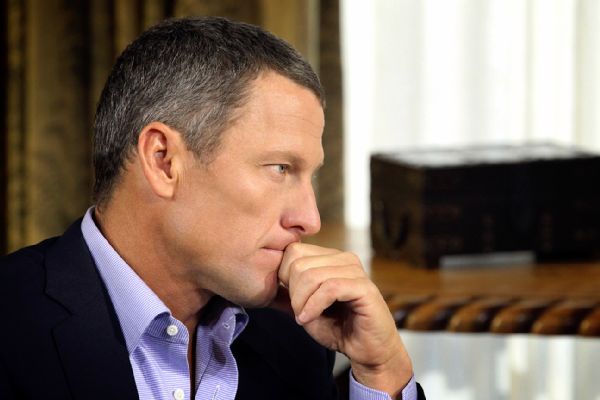
end_a_armstrong_d1_600x400     In a recent interview, Lance Armstrong has reiterated that he would cheat again if he had a chance to do it all over.  Lance Armstrong was revered as one of the greatest cyclists ever.  He won seven consecutive Tour de France titles from 1999 to 2005.  However, all the while Lance was winning those titles; he was also guilty of taking performance enhancing drugs (PEDs).

     Once it became known that Armstrong had been doping, his titles were stripped from him.  After years of denials that he was taking PEDs, he finally came clean in 2013 and admitted to the doping during his illustrious career.  He states in his recent interview that he would do it again to be competitive, because everyone was doing it.  His only regret is that he was put in a place where he had to make the decision to take PEDs, not that he actually gave in and doped to improve his performance.

     So, Lance would make the decision to run with the pack again.  Do you ever remember your mother asking you if you were going to jump off of the bridge just because everyone else was doing it?  Is that a legitimate excuse?  Lance Armstrong’s philosophy reeks of situational ethics.

     What do the words of Scripture have to say about situational ethics?  Is there ever a right time to do a wrong thing?  Paul writes, “Do not be deceived, God is not mocked; for whatever a man sows, that he will also reap.  For he who sows to his flesh will of the flesh reap corruption, but he who sows to the Spirit will of the Spirit reap everlasting life.  And let us not grow weary while doing good, for in due season we shall reap if we do not lose heart” (Galatians 6:7-9 NKJV).  Armstrong has allowed bad company to influence him to also do that which is wrong (1 Corinthians 15:33).  He has given in to running with the pack, rather than standing for what is right and good (competing according to the rules).  In his constant lying about his drug use, he has not let his yes be yes and his no, no (Matthew 5:37; James 5:12).

     Furthermore, James says, “Therefore, to him who knows to do good and does not do it, to him it is sin” (James 4:17).  Lance knew what he was doing was wrong.  He circumvented the rules to gain an advantage.  Many might say they understand.  Who wants to work in a bicycle shop in Plano, Texas when they can be on top of the world?  The problem is that if we do that which is wrong, and say that we would do the same thing again, we show no repentance for our sins.  It does not matter if everyone else is doing it.  Jesus said there was a broad and easy road, that many were traveling, and that this road leads to destruction (Matthew 7:13-14).

     God wants us to follow Him, not the pack.  He wants for all men to come to repentance (2 Peter 3:9).  There is never a right time to do a wrong thing.  Ethics are not situational.  Truth is absolute.  Cheating and lying are always wrong.  Will we be like Lance, and do whatever it takes to achieve fame and fortune in this life, only to lose our own souls (Matthew 16:26)?  Or will we be like Jesus and keep our focus on doing right so we can join Him for eternity, even if we have to struggle in a bicycle shop in the meantime?  Who will you follow?

Is Doomsday Approaching?

The Bulletin of Atomic Scientists reported this week that we are now two minutes closer to midnight on their Doomsday Clock, having moved us from five minutes to midnight to just three.  Citing the amount of nuclear weapons in the world and human climate change, they feel that we are close to extinguishing the human race through some sort of doomsday catastrophe.

Kennette BenedictKennette Benedict, the director of the group, says, “The probability of global catastrophe is very high. This is about the end of civilization as we know it” (http://www.usatoday.com/story/news/nation/2015/01/22/doomsday-clock-three-minutes-to-midnight/22158457/).  Interestingly, the clock was once just two minutes to midnight in 1953 following the testing of a new nuclear bomb.  Even though there were no fears of “global warming” and there were not as many nuclear weapons in 1953, we were closer to extinction then than we are now according to this scientific group.

So is this the case?  Are we closing in on Doomsday?  Let us put aside the dubious nature of the “scientific” proof of climate change for the moment.  Instead let us address the question as to whether man is able to bring life on this planet to an end.  Is man able to destroy the planet?  These scientists would answer that question in the affirmative, but is that really the case?

Scripture tells us who is really in control of the planet and all that goes on in it, and it is not man.  In Daniel 2, the prophet tells us that it is God who “changes the times and the seasons; He removes kings and raises up kings; He gives wisdom to the wise And knowledge to those who have understanding.  He reveals deep and secret things; He knows what is in the darkness, And light dwells with Him” (Daniel 2:21-22 NKJV).  Man may desire to know what is going to happen in the future, but to us that is darkness.  It cannot be seen by man.  God, however, is the one who knows what is in the darkness.  Thus we might say that we do not know what the future holds, but we know who holds the future.

Additionally, God made a promise to mankind through Noah that nothing was going to stop the changing of the seasons while the earth remains (Genesis 8:22).  So while we are running around on this planet, to and fro, worrying about when the end will come, we must realize that we are not the ones who are in control of the planet.  It is God, the One who created it all (Psalm 19:1).  God will bring all things to an end when He sees fit to do so.  Jesus reported that of that day and time, no one knows.  Even He did not know when that would be.  Only the Heavenly Father has that answer (Matthew 24:36).

Instead of worrying about Doomsday, what every person on this planet should concern themselves with is whether they are ready to pass from this life into eternity.  What does grow closer everyday is the appointment that we have with eternity.  One day we will all pass from this life to the next, and we need to be ready for that day.  Jesus said, “Watch therefore, for you do not know what hour your Lord is coming.  But know this, that if the master of the house had known what hour the thief would come, he would have watched and not allowed his house to be broken into.  Therefore you also be ready, for the Son of Man is coming at an hour you do not expect” (Matthew 24:42-44).  No one knows when they will die, but we all know that we will someday, unless the Lord returns first.  The question is, are you ready for that day to come?

A Religion of Peace?

niger-church-protest-hebdo     This week in the West African country of Niger, there has been an uprising of Muslims against churches of other faiths.  In the uprising, it has been reported that 45 church buildings have been set afire and many people have been injured or killed as a result of the activity.  All of this was brought on by a French cartoon published by Charlie Hebdo.  It is amazing that all of this violence could be brought about by a cartoon in another country.

     Just what is to be accomplished in attacking those who have no connection to Charlie Hebdo and burning their buildings?  How could anyone call this a normal reaction to a cartoon depicting Mohammed?  Some of those who are calling for calmer heads to prevail are saying that this response does not fit with Islam, since it is a religion of peace.  Is that so?

      According to the beliefs of Islam, the world is divided into two camps.  Those who are in submission to Islam are Dar-al-Salaam (the House of Peace).  Those who are not in submission are Dar-al-Harb (the House of War).  Those who will not submit to Islam are subject to jihad, or holy war, to either convert them at the point of a sword, or to kill them (Sura 2:191; 8:39; 9:123; 47:4).  This hardly sounds like a religion of peace.

     By contrast, the God of the Bible calls on His followers to live at peace with all of mankind.  “Pursue peace with all people, and holiness, without which no one will see the Lord” (Hebrews 12:14 NKJV, emphasis added).  Over and over again we are reminded that God is a God of peace (Romans 14:17; 15:33; 16:20; 1 Cor. 14:33).  Paul wrote to the Corinthians that “God has called us to peace” (1 Cor. 7:15b) and that they should, “Become complete. Be of good comfort, be of one mind, live in peace; and the God of love and peace will be with you” (2 Cor. 13:11).  In His Sermon on the Mount Jesus said that the peacemakers were blessed, because they shall be called the sons of God.

     We should strive to call things as they truly are, and not as we would wish them to be.  We may want for Islam to be a religion of peace.  We may wish for the fundamentalist adherents to the writings of Muhammed to want to live at peace with the rest of mankind and to show tolerance to others.  However, that is not the reality of the situation.  It is our wish that all men would come to God, recognize their sinful nature, realize their lost condition, see the need for Christ, and obey the Gospel and live at peace with all of mankind.  Then, and only then, will we have a peace that transcends all human creeds.  Then, and only then, can we have peace with God.

Don’t I Know You?

who-am-iMaybe this has never happened to you, or maybe it has.  You walk into a store and you see someone who looks familiar to you.  You know that you know them from somewhere, but you cannot recall their name or where you know them from.  Perhaps you walk up to them and say, “Don’t I know you?”

While it is often easy for us to remember faces, remembering names or where we may have seen someone before can sometimes be difficult.  Many times it does not matter that we cannot remember every passing acquaintance in our lives, because most likely they do not remember us either.

 However, if this is a person that we have an intimate relationship with, we had better remember their name and where we know them from!  This leads to the question of whether or not we know God, and if He knows us.  The importance of knowing God, really knowing Him, is seen in Paul’s second letter to the Thessalonians.  Paul writes, “and to give you who are troubled rest with us when the Lord Jesus is revealed from heaven with His mighty angels, in flaming fire taking vengeance on those who do not know God, and on those who do not obey the gospel of our Lord Jesus Christ” (2 Thes. 1:7-8).  Since Jesus will take vengeance on those who do not know God, it is imperative that we know Him.

 It is also important that God knows who we are.  Towards the end of the Sermon on the Mount Jesus declares that those who call Him Lord, but fail to do the will of the Father will be like those He does not know.  They will be told to depart from Him for eternity (Matthew 7:21-23).  We need to know God.  We need for God to know us.  Do you know Him today?

Can You Carry Me?

117-1713_IMG     When my daughter was much younger we all went on a hiking vacation together to Acadia National Park in Maine.  Each day as we hiked, she had little desire to take the easy paths.  She loved to hike the more difficult paths and climb over the rocks, all the while looking for the next trail marker.  At some point in the day, however, her little legs would tire out.  She would turn to me and ask, “Can you carry me, Daddy?”

     There are times when we are walking in our journey of life, where we feel the same way.  We don’t know if our tired legs will hold up any longer, we grow weary, and we want someone to carry us.  It is at those times that we should rely upon the Lord to help carry us along.  The words of scripture tell us that “God is our refuge and strength, A very present help in trouble” (Psalm 46:1 NKJV).  “In God is my salvation and my glory; The rock of my strength, And my refuge, is in God” (Psalm 62:7).  Jeremiah called out to God and said, “O Lord, my strength and my fortress, My refuge in the day of affliction” (Jeremiah 16:19a).

     Jesus offers to help us get through life, if we will choose to follow Him.  He told His disciples, “Come to Me, all you who labor and are heavy laden, and I will give you rest.  Take My yoke upon you and learn from Me, for I am gentle and lowly in heart, and you will find rest for your souls.  For My yoke is easy and My burden is light” (Matthew 11:28-30).  He wants to help us to continue to endure, when we are weary of life and its struggles.  Therefore, why would we hesitate to come to Him?

     As a child of God, we can come to Him and ask Him to help us bear our load.  If we will only do our part, by obeying Him and coming to Him in prayer with our requests, He is faithful to hear us and to come to our aid.  Notice that Jesus said that we are to come to Him when we are heavy laden.  Have you come to Jesus?  If not, why not?  He is waiting for you now!

New Beginnings

Baby-New-Year     In just two days we begin our journey into a new year, 2015.  With each passing year, time seems to move more swiftly than it did when I was younger.  Still, each year provides us with an unexplored opportunity to make a new resolution for what we hope to accomplish in the coming year.  We tend to be very good at making resolutions for the New Year, but most of the time we fail to follow through on our good intentions.

     As we look towards the 365 days that now lay before us, let us think about some of those important things that we would like to achieve in the coming year.  Perhaps we want to lose weight, or read a book, or be more involved with our families in 2015.  Whatever our goals, it is important that we remember God in our planning.  In Luke 12:13-21 we read the parable of the rich fool.  He had made plans for what he intended to do with all of his goods with a resolution to build bigger barns to store his produce.  Tragically, he failed to include God in his plans, and he is thus called a fool by Jesus.

     The problem with this man was not that he made plans, but that he failed to include God in his planning.  He was laying up treasures for himself, but was not rich toward God (Luke 12:21).  As we plan for the coming year, let us not make the same mistake.  Let us be sure to include God in our plans for 2015.  Let us see if we can draw ourselves closer to Him through this year’s resolutions!

The Greatest Gift!

3703145222_428db0fdbc_z     Christmas morning!  I remember as a child, my brother and I could hardly sleep the night before in anticipation of the gifts that we would find under the tree.  Invariably, there was always one “big” gift each year, which we would open last.  To build the anticipation, my dad would keep egging us on by saying, “I wonder what’s in that big box.”  As a child, I definitely enjoyed receiving gifts on Christmas.

     As I grew older, I came to realize that there was more joy in giving than in receiving.  To witness the merriment in someone else’s face as they open the gift that you have selected for them was a good feeling that far surpassed whatever I might receive.  Paul understood this to be true as well, when he quoted the words of Jesus that it is more blessed to give than to receive (Acts 20:35).

     As we search the stores and websites in our modern age, from Black Friday to Christmas Eve, we are looking for just the right gift, the perfect gift, the greatest gift that we can give our loved ones.  As we live here on earth, we should realize that God has given us that perfect gift.  He has given us the greatest gift.  He has given us His Son.  “For God so loved the world that He gave His only begotten Son, that whoever believes in Him should not perish but have everlasting life” (John 3:16 NKJV).   God has given us a gift to pay our debt of sin; a debt that we could never repay.  By the blood of Jesus, we can have redemption.

     As we gather with our families and friends on this holiday, we should remember the God who gave us that greatest gift.  Indeed we should always remember the God who loved us so much that He sent His Son Jesus to die for us on the cross of cavalry.  It is by Jesus’ blood that we can have the hope of eternal life with Him in heaven.  You won’t find a better gift than that under anybody’s tree this morning!

Speaking in Tongues – Part III

7  Simple  RulesIn the first two lessons of this series we examined the purpose of speaking in tongues and the limited duration of this spiritual gift.  Finally, we want to consider what rules for the use of this particular spiritual gift were put into place by God.  In this lesson, we will answer the question of what rules were to govern the use of the gift of tongue speaking.  Once again we will turn to Paul’s first epistle to the Corinthians for an answer to our question about the rules for tongue speaking.

            Rule #1 – If one speaks in tongues and there is no one to interpret, he is only speaking to God (1 Cor. 14:2).  This is not to be desired in the worship assembly as the church is not edified by the tongue speaker (1 Cor. 14:3-5).  It does no benefit to others if I preach the greatest sermon in the world in Latin and no one can understand what has been said.

            Rule #2 – Tongues could be interpreted (1 Cor. 14:5).  This means that the tongue speaker does not speak some unknown gibberish, but a known language that could be interpreted by others.  Like a missionary to Africa who only can speak English, without one to interpret the message into Swahili, his words will be meaningless to the crowd.  This point is illustrated by Paul in the passage that follows (1 Cor. 14:6-12).  Notice here that Paul makes reference to the many languages of the world, which supports the fact that the tongues being discussed are known languages of the world.

            Rule #3 – Without an interpreter, speaking in tongues was useless (1 Cor. 14:13-19, 27).  Paul asks how anyone can say ‘Amen’ to our blessing if they cannot understand the words of our public prayer (1 Cor. 14:16).  Again, if I pray in Latin and no one can understand what is said, it does them no benefit and they have no opportunity to share in the blessing by being able to say ‘amen’ to the prayer.  We are told to sing and pray with understanding, so to do either without being understood by others does them no benefit.  Paul would rather speak 5 words that are understood than 10,000 words in a foreign tongue that are unknown to the listener (1 Cor.14:19).

            Rule #4 – All things in the worship service were to be done for the edification of the whole body (1 Cor. 14:26).  Once again, we have seen that speaking in a foreign tongue does nothing to edify the rest of the congregation who cannot understand what is said without an interpreter.  All things are to be ruled by the edification that is created for the hearers.

            Rule #5 – Tongue speakers were limited to 2 or 3 per service (1 Cor. 14:27).

            Rule #6 – Tongue speakers were to speak one at a time and not all at once (1 Cor. 14:27).  This comes back to the need for there to be an understanding of what has been said.  One cannot understand if everyone is speaking at the same time.

            Rule #7 – If there was no one to interpret the tongue, the speaker was to keep silent (1 Cor. 14:28).  This means that the tongue speaker had control over their gift.  They did not fall into some sort of a trance.   They were not forced to speak.  They fully had the option to keep silent if they were going to speak in Latin (or any other language that the listeners would not understand) and no one would be able to tell what had been spoken.

            In reviewing the purpose, duration, and rules for use with regards to the spiritual gift of speaking in tongues, we can draw a few conclusions.  First, the purpose of tongue speaking was to confirm the word.  Second, the duration of tongue speaking was limited until the completion of the New Testament writings.  Third, the rules for the use of tongues shows us that tongues were not unknown gibberish, but known languages of the world and there were at least 7 rules for the use of the spiritual gift of tongues.  This can be a difficult subject to understand, but by reviewing God’s holy word we can arrive at the truth of the matter.

Speaking in Tongues – Part II

026_la_times       In lesson one of this series we examined the purpose of speaking in tongues.  It was observed that the apostles spoke in tongues on the day of Pentecost in order to confirm the word of God and to allow each man to hear the word in his native language so he could hear and understand.  Having covered the purpose for tongues let us now move on to the duration of spiritual gifts, most especially the gift of speaking in tongues.  In this lesson, we will answer the question of whether men still speak in tongues today.

      For the answer to this question, we turn back to Paul’s first epistle to the church in Corinth.  In dealing with the importance and longevity of love, Paul states that prophecies will fail, tongues will cease, and knowledge will vanish away (1 Cor. 13:8).  This is all in reference to miraculous gifts of the spirit that were given to the first century Christians to guide them.  These gifts guided them in part, for each prophecy or tongue spoken or gift of miraculous knowledge imparted to them a part of God’s will, but not the full and complete will of God.  These gifts of partial knowledge were to continue until that which is perfect or complete would come, and then they would be done away with (1 Cor. 13:9-10).  Thus, we must consider what is meant by that which is perfect/complete.

       There are some who claim that Jesus is that which is perfect, and that these gifts, which include speaking in tongues, will continue until the second coming of Christ.  How does that idea stand up to the context of the passage?  Paul goes on to give several illustrations to clarify his message of the temporary nature of spiritual gifts (1 Cor. 13:11-12).  The first is the comparison of a child and an adult.  A child knows some things, but does not have the more complete knowledge of an adult.  It is difficult to see how this illustration relates to the coming of Christ.  The second illustration refers to a mirror, which in Paul’s day was a polished piece of metal that did not reflect much detail, and being able to see one’s appearance as if seeing face to face.  The third illustration has to do with having partial knowledge now, but when that which is perfect has come that knowledge will be complete.  Again these illustrations do not make sense if this is the second coming of Christ, because why would we need a more complete knowledge of God’s will after the end of time and the second coming of Jesus?  We need that perfect or complete knowledge of God’s will while we are still alive and able to repent.

       However, the illustrations given by Paul make perfect sense if that which is complete refers to the complete revelation of God’s will in the written New Testament.  These first century Christians did not have the complete written revelation of God, but needed prophecy, tongues, and miraculous knowledge in order to know God’s will in the interim period before the completion of the scriptures.  Once the completed word of God was available in its written form, those things that were done in part were no longer needed.  In Paul’s later writing to Timothy, he tells him that all scripture is given by God so that man may complete, thoroughly furnished for every good work (2 Timothy 3:16-17).  For man to be complete and thoroughly furnished there can be nothing that he still lacks.  Therefore, that which is perfect or complete, which will bring about the end of the partial miraculous gifts including tongue speaking, was the completed revelation of scripture, which we have in the New Testament.

       Because that which is perfect or complete has come in the writing of the New Testament scriptures, that which was done in part was done away with.  Therefore we can know for sure that miraculous prophecy, speaking in tongues, and miraculous knowledge have been done away with since the early part of the second century when the scriptures were completed.  In the third and final part of this series, we will consider God’s rules for the use of speaking in tongues.

Speaking in Tongues – Part 1

thUHU0FK12     There is much confusion in the religious world over the issue of tongue speaking, and there are many questions one could ask about this subject.  Just what is tongue speaking?  How is it a miracle?  What was the purpose for speaking in tongues?  Do people still speak in tongues today?  Did God specify any rules for the use of tongue speaking?  Since this topic is broad and large, let us examine the issue of speaking in tongues in three lessons.  The first lesson will deal with the purpose of tongue speaking.

     We are introduced to tongue speaking in Acts 2.  On the day of Pentecost, when Peter opened the door to the kingdom of the church, we see that the apostles spoke in tongues.  Here the purpose of tongue speaking is two fold.  First, the purpose of this miracle was to confirm that the words spoken by Peter and the other apostles were the words of God.  The purpose of all miracles was to confirm the word (Mark 16:20).  The miracle performed by the apostles was that they spoke in foreign languages, which they had never studied.  The apostles were not learned men; they were simple folk from Galilee.  Indeed their speaking in tongues amazed and astonished the crowd (Acts 2:7, 12).  We might also note here that there were approximately 17 different nationalities present in Jerusalem (Acts 2:9-11), who would have had 11 different native languages.  Therefore, there were just enough apostles to speak these 11 languages.  In this example we can see the wisdom and foresight of God.

     Secondly, the purpose of speaking in tongues was that each was able to hear the word in their own native tongue.  In this way each person present was able to understand what the apostles were saying.  They were all speaking languages that were known to man, and not just speaking gibberish that no one could understand.  We will dive into this issue a bit more in lesson three of this series regarding God’s rules for tongue speaking.  It was important for men to hear and understand the word of God during this time period, because the New Testament had yet to be written.  Paul describes 9 various spiritual gifts in his first letter to the Corinthians (1 Cor. 12:8-10).  These gifts were given so that the early disciples would know the will of the Lord.  One of the problems in Corinth was that they had elevated the gift of tongue speaking above the other more important spiritual gifts, such as prophecy, and they were using their gift to show off in front of others.  This caused a lack of edification of the group, which is also part of the purpose of spiritual gifts so that all can hear and understand.

     We can see that the purpose of tongues was to confirm the words of the apostles and to aid men in their hearing and understanding of God’s will for man.  In the next lesson, we will examine the duration of tongue speaking and spiritual gifts to answer the question of whether men still speak in tongues today.