Speaking in Tongues – Part II

026_la_times       In lesson one of this series we examined the purpose of speaking in tongues.  It was observed that the apostles spoke in tongues on the day of Pentecost in order to confirm the word of God and to allow each man to hear the word in his native language so he could hear and understand.  Having covered the purpose for tongues let us now move on to the duration of spiritual gifts, most especially the gift of speaking in tongues.  In this lesson, we will answer the question of whether men still speak in tongues today.

      For the answer to this question, we turn back to Paul’s first epistle to the church in Corinth.  In dealing with the importance and longevity of love, Paul states that prophecies will fail, tongues will cease, and knowledge will vanish away (1 Cor. 13:8).  This is all in reference to miraculous gifts of the spirit that were given to the first century Christians to guide them.  These gifts guided them in part, for each prophecy or tongue spoken or gift of miraculous knowledge imparted to them a part of God’s will, but not the full and complete will of God.  These gifts of partial knowledge were to continue until that which is perfect or complete would come, and then they would be done away with (1 Cor. 13:9-10).  Thus, we must consider what is meant by that which is perfect/complete.

       There are some who claim that Jesus is that which is perfect, and that these gifts, which include speaking in tongues, will continue until the second coming of Christ.  How does that idea stand up to the context of the passage?  Paul goes on to give several illustrations to clarify his message of the temporary nature of spiritual gifts (1 Cor. 13:11-12).  The first is the comparison of a child and an adult.  A child knows some things, but does not have the more complete knowledge of an adult.  It is difficult to see how this illustration relates to the coming of Christ.  The second illustration refers to a mirror, which in Paul’s day was a polished piece of metal that did not reflect much detail, and being able to see one’s appearance as if seeing face to face.  The third illustration has to do with having partial knowledge now, but when that which is perfect has come that knowledge will be complete.  Again these illustrations do not make sense if this is the second coming of Christ, because why would we need a more complete knowledge of God’s will after the end of time and the second coming of Jesus?  We need that perfect or complete knowledge of God’s will while we are still alive and able to repent.

       However, the illustrations given by Paul make perfect sense if that which is complete refers to the complete revelation of God’s will in the written New Testament.  These first century Christians did not have the complete written revelation of God, but needed prophecy, tongues, and miraculous knowledge in order to know God’s will in the interim period before the completion of the scriptures.  Once the completed word of God was available in its written form, those things that were done in part were no longer needed.  In Paul’s later writing to Timothy, he tells him that all scripture is given by God so that man may complete, thoroughly furnished for every good work (2 Timothy 3:16-17).  For man to be complete and thoroughly furnished there can be nothing that he still lacks.  Therefore, that which is perfect or complete, which will bring about the end of the partial miraculous gifts including tongue speaking, was the completed revelation of scripture, which we have in the New Testament.

       Because that which is perfect or complete has come in the writing of the New Testament scriptures, that which was done in part was done away with.  Therefore we can know for sure that miraculous prophecy, speaking in tongues, and miraculous knowledge have been done away with since the early part of the second century when the scriptures were completed.  In the third and final part of this series, we will consider God’s rules for the use of speaking in tongues.

Speaking in Tongues – Part 1

thUHU0FK12     There is much confusion in the religious world over the issue of tongue speaking, and there are many questions one could ask about this subject.  Just what is tongue speaking?  How is it a miracle?  What was the purpose for speaking in tongues?  Do people still speak in tongues today?  Did God specify any rules for the use of tongue speaking?  Since this topic is broad and large, let us examine the issue of speaking in tongues in three lessons.  The first lesson will deal with the purpose of tongue speaking.

     We are introduced to tongue speaking in Acts 2.  On the day of Pentecost, when Peter opened the door to the kingdom of the church, we see that the apostles spoke in tongues.  Here the purpose of tongue speaking is two fold.  First, the purpose of this miracle was to confirm that the words spoken by Peter and the other apostles were the words of God.  The purpose of all miracles was to confirm the word (Mark 16:20).  The miracle performed by the apostles was that they spoke in foreign languages, which they had never studied.  The apostles were not learned men; they were simple folk from Galilee.  Indeed their speaking in tongues amazed and astonished the crowd (Acts 2:7, 12).  We might also note here that there were approximately 17 different nationalities present in Jerusalem (Acts 2:9-11), who would have had 11 different native languages.  Therefore, there were just enough apostles to speak these 11 languages.  In this example we can see the wisdom and foresight of God.

     Secondly, the purpose of speaking in tongues was that each was able to hear the word in their own native tongue.  In this way each person present was able to understand what the apostles were saying.  They were all speaking languages that were known to man, and not just speaking gibberish that no one could understand.  We will dive into this issue a bit more in lesson three of this series regarding God’s rules for tongue speaking.  It was important for men to hear and understand the word of God during this time period, because the New Testament had yet to be written.  Paul describes 9 various spiritual gifts in his first letter to the Corinthians (1 Cor. 12:8-10).  These gifts were given so that the early disciples would know the will of the Lord.  One of the problems in Corinth was that they had elevated the gift of tongue speaking above the other more important spiritual gifts, such as prophecy, and they were using their gift to show off in front of others.  This caused a lack of edification of the group, which is also part of the purpose of spiritual gifts so that all can hear and understand.

     We can see that the purpose of tongues was to confirm the words of the apostles and to aid men in their hearing and understanding of God’s will for man.  In the next lesson, we will examine the duration of tongue speaking and spiritual gifts to answer the question of whether men still speak in tongues today.

An Awful Lot to Be Thankful For

 mlb_choice_04    On July 4, 1939, then thirty-six year old Lou Gehrig gave one of the most memorable speeches in American sports.  Gehrig had been diagnosed with ALS, a disease that was going to claim his life within two years of his famous speech.  In that speech, Gehrig claimed to be “the luckiest man alive” and said he had “an awful lot to live for.”

     How would we have reacted if we were told that we had a debilitating disease that was sure to claim our lives in a very short time?  Would we feel like the luckiest man alive?  Would we feel like we had a lot to live for or to be thankful for?  Lou Gehrig’s attitude in the face of “a bad break” should serve as a reminder to us all about how we should look at life.

     Rather than focusing our attention on bad news or by the trials that come upon us in life, let us look to all of the blessings that God has bestowed upon us.  He has given us our very lives as our Creator (Gen. 1:26-28; 2:7).  He has given us this planet with all of its wondrous beauty on which to live (Psalm 19:1; Gen. 1:1).  He has given us His word so that we can come to know Him and become His children (John 1:12; Phil. 2:15).  He gave us His one and only unique Son in order that we may have the hope of eternal life (John 3:16).

     At this time of the year, we all take a day to think about being thankful for what we have.  However, not just on this day, but all throughout the year let us count those blessings that we have from God.  Even though life can be difficult, and many times we may have to deal with trials, bad breaks, and bad news, let us all realize that we have an awful lot to be thankful for.

How Many Are There?

one-finger    Have you ever looked around and wondered why there are so many different religious organizations or churches in the world?  It seems that there are new religions popping up everyday in most places around our country.  What is even more confusing is that most of these religious groups are all teaching and preaching a different message.  In many ways the message of one group is a directly opposed to the message of another.  Can all of these be true to the directions of God?  Is God’s message to man really full of oppositions and contradictions?  Is truth relative?

     Consider what we find written in God’s word in Ephesians 4:4-6, “There is one body and one Spirit, just as you were called in one hope of your calling; one Lord, one faith, one baptism; one God and Father of all, who is above all, and through all, and in you all (NKJV).”  Notice in this passage that there are many faiths (one) and as many bodies (one) as there are Lords and Gods (also just one).  We can also see that the body is the church by reading further in the Ephesian letter (Ephesians 5:23) and in the book of Colossians (Colossians 1:18, 24).

     Since we see in God’s word that there is just one body – just one church – then we should do all that we can to make sure that we are in that one church.  This is the church that Jesus promised to establish (Matthew 16:16-19).  This is the church that was established on that day of Pentecost in Jerusalem (Acts 2).  Back in the first century there was only one church that the believers were a part of.  There were not different denominations on every corner or on every street.  Let us strive to belong to that church that was built by God!

All Gave Some. . . Some Gave All

DSCF4430     Today we remember the brave sacrifice that this nation’s veterans have made over the course of our history.  We honor those who stood in the breaches in the defense of freedom both here in the United States and in other foreign lands around the globe.  Many young men and women made that journey for the cause of our freedom and security, and never returned home again.  While we do not want to take anything away from their dedication to this nation and its freedom, there is an even greater sacrifice that has been made on our behalf, which we must not ever forget.

The pages of the Bible are rich in the telling of the story of Jesus.  Many prophets in the Old Testament alluded to His coming to earth and the mission He was charged with completing. Isaiah 53 is especially compelling, as it gives us a glimpse of the suffering that our Savior was going to go through on our behalf.  It was for the cause of our freedom from sin, that Jesus gave His all for mankind.  Paul tells us that while we were sinners and enemies of God, the Father sent His one and only unique Son to die a cruel death on the cross in our place (Romans 5:6-11).

Even though He was innocent, He allowed Himself to be placed on that cross to die, so that our sins could be removed.  We were the ones who had sinned.  We were the ones who had fallen short of the glory of God (Romans 3:23).  We were the ones who deserved death due to our transgressions, which had taken us away from God (Isaiah 59:1-2; Romans 6:23).  Instead, Jesus stood in the breach between us and our transgressions, and by His stripes, we are healed (Isaiah 53:5).

On this day we remember the sacrifices made by our brave men and women and express our gratitude for their service to our nation.  Let us never forget that we have freedom due to their willingness to act, but also because of the selfless sacrifice of Christ.  He came so that we might have life, and have it more abundantly (John 10:10).  Let us strive to do our part and give Him back our all.

Vote Early, Vote Often!

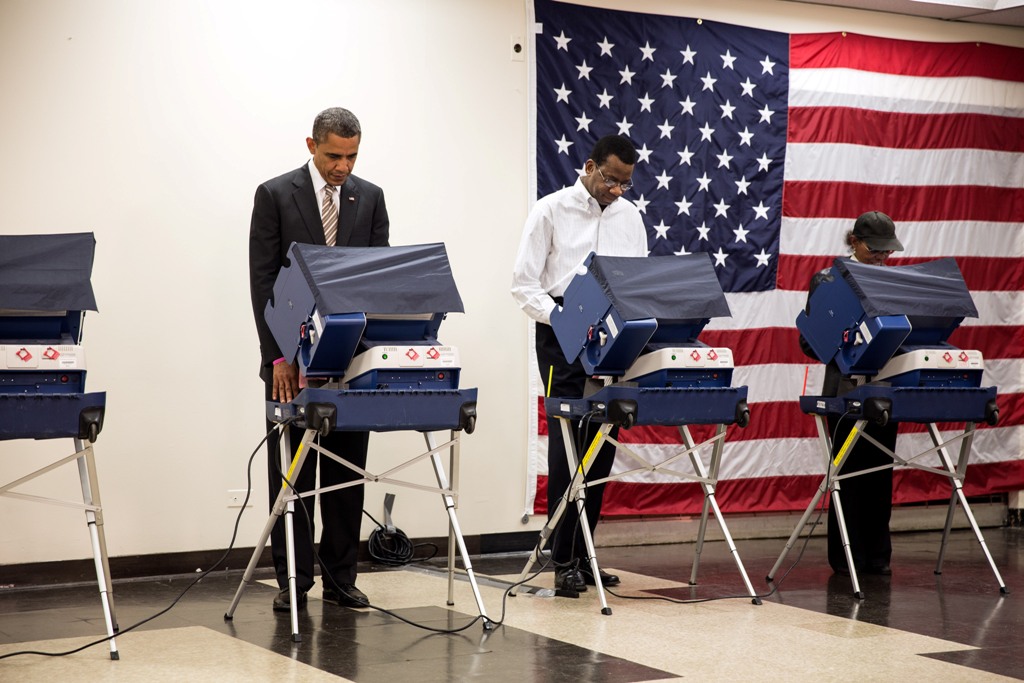
Barack_Obama_votes_in_the_2012_election     I remember an old joke about Election Day and the Chicago way, which said to get out there and vote for the candidate of your choice from just one political party.  The fake advertisement ended with an admonition to vote early and often.  Today, many are turning out at the polls to vote for their choice candidates for sheriff, school boards, state and national congress, and judges.  We as Americans have a long history of democracy and having our say in who our leaders are going to be.

     In the Lord’s kingdom, however, that is not the case.  We already have a head of the kingdom, and that is our King.  He is our Lord as well as our Savior, and He does not have to run for office or have our vote of approval to continue His reign.  We are told that Jesus will continue to reign over His kingdom until the end of time, when He delivers the kingdom up to His Father (1 Corinthians 15:24).  We are told that Jesus is the head of the body, the church (Ephesians 5:23).  It is that spiritual kingdom that He has reigned over ever since He ascended back into heaven and took His place at the right hand of the Father (Heb. 1:1-4; Psalm 110:1-4).

    As such, it is not up to us to decide who the ruler will be.  It is not up to us to decide who will sit in judgment over us.  It is not up to us to decide which religious practices we are to perform and which we are not to partake in.  God makes those decisions, and His kingdom is not a democracy.  Thus, we do not have the right to pick and choose and make decisions about that which God has already legislated.

     As we exercise our freedom to have a voice in our government in the political arena this day, let us not forget that in matters of religion we do not get to make those same decisions.  Let us look to the author and finisher of our faith, Jesus Christ, as our leader, shepherd, ruler, savior, friend, judge, and advocate!

Blisfull Ignorance

Perhaps you’ve heard it said that ignorance is bliss, or that what is not known cannot hurt us. The idea is that if we do not know that something can hurt us, then we will have no need to worry about it.  Therefore, we can be blissful and happy.  But how does this play out in reality?

MINOLTA DIGITAL CAMERA

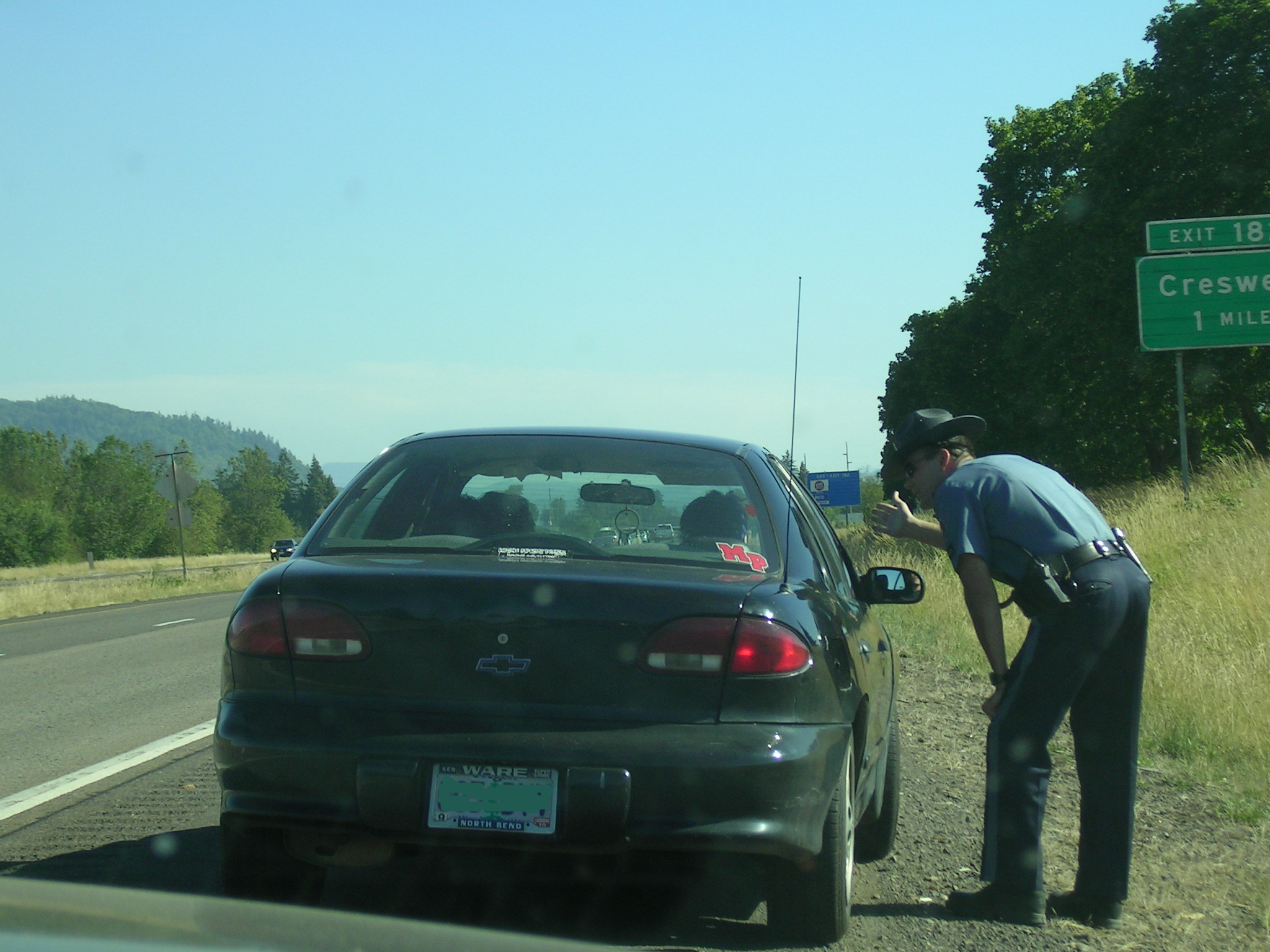
Do you know how fast you were going?

 We can be ignorant of the speed limit and drive as fast as we wish. Will our ignorance of the law be a viable excuse when the police officer pulls us over?  Ignorance of the law will not stand up as a defense.  If we ignore the speed limit, we will pay the price (fine) for that ignorance.  We can be ignorant of the fact that the stove top burners can hurt our hand.  Here again, ignorance will not keep us from coming to harm if we place our hand on a lit stove burner.

 Many in our world today act as if they can be ignorant of God and His requirements, and yet all is well. They go on in blissful ignorance with no care for their future state.  And, indeed, we may see many people who live this way and nothing bad ever befalls them.  Have they somehow found a path that circumvents God’s requirements?  Is there bliss in their ignorance?

 God paints a different picture of ignorance and a lack of knowledge concerning Him. The prophet Hosea spoke for God and lamented the fact that His people were being destroyed by a lack of knowledge (Hosea 4:6).  Paul writes by inspiration to the Romans that God’s power and divine Godhead are evident in the creation, such that they (those who ignore God and walk in ignorance) are without an excuse (Romans 1:18-20).  When Paul stood on Mars’ hill in Athens and addressed the Greeks, he stated that in times past God may have winked at man’s ignorance, but now calls on all men everywhere to repent (Acts 17:30).

 We can ignore God. We can make that choice.  We can claim ignorance is bliss.  However, ignorance of the law is no excuse.  Ignorance can bring us great harm.  Jesus declared that His word would judge us in that last day (John 12:47-48).  Therefore, we must know what His word says for us to do.  God desires that all men seek Him out, repent of what is wrong in their lives, and live in obedience to Him.  That is the true path to bliss.  Are you truly blissful this day?

Hammer Away

nails     My last remodeling project got me thinking.  As we were going through the process of deconstruction and trying to be careful to limit the amount of scratches and bruises, I began to think about installing the new floor.  You see, when we undertake any project where we are going to be using a hammer and nails it has our full attention.  We don’t want to slip up and hit our fingers or worse yet, pierce our flesh with a nail by mistake.

      Now think about Christ and what He did for us.  He had the power to stop anyone from doing any harm to His body, but He did not exercise that power.  At any time during His mockery of a trial, the scourging of His body, or the nailing of His body on that cross of Cavalry Jesus could have simply said the word ‘stop’ and could have brought His torture to an end.  Concerning His life, Jesus said “No one takes it from Me, but I lay it down of Myself. I have power to lay it down, and I have power to take it again. This command I have received from My Father” (John 10:18 NKJV).

      No one had the power to take Jesus’ life unless He allowed it.  The amazing thing about His love for us in that Jesus allowed those Roman soldiers to take His life.  At a time when we were without hope, at a time when we were still sinners, Christ died for our sins (Romans 5:8).  We work hard to make sure that we don’t slip and allow a nail to poke us in the hand by mistake, but Jesus allowed them to drive large nails through His flesh on purpose.  It is hard to comprehend just what Jesus suffered on our behalf.  So then, are we allowing that sacrifice to have an impact on how we live our lives?

Kingdom Come?

Left Behind CageMany of us are looking forward to Jesus’ return with great anticipation. Regarding that return, there are many who expect Christ to set up an earthly kingdom and reign from Jerusalem for 1,000 years. Indeed, later this week a new movie based on the popular “Left Behind” series opens in theaters, which espouses this idea of Jesus’ coming kingdom. Is this really what the Bible teaches, or is it just good fiction?  Let us look at just a few scriptures to ascertain the answer to that question.

Long ago Joel prophesied that in the last days God would pour His Spirit upon mankind (Joel 2:28ff). In Acts 2, Peter makes mention of Joel’s prophecy and says that they were living in those last days that Joel was referring to (Acts 2:16-21).  So we know from this that the last days began some 2,000 years ago on that day of Pentecost.  Additionally, we see that Jesus told those who were listening to Him that some of them would not experience death until they had seen the kingdom come with power (Mark 9:1).  Just prior to Jesus’ ascension He told His disciples to tarry in Jerusalem until they received power from the Holy Spirit (Acts 1:4-5).  About a week later, they received the Holy Spirit on the day of Pentecost in Acts 2.  Therefore, they received the power when the Spirit fell upon them.  When the power came the kingdom came.

Furthermore, in reviewing Daniel 2, and the explanation of Nebuchadnezzar’s dream, Daniel describes four earthly kingdoms. The first of these is Babylon, followed by the Medes and the Persians.  Later would be the Greeks and then the Roman Empire. Then Daniel states that in the days of those kings God would set up a kingdom that would never be destroyed (Dan. 2:44).  This is further confirmation that the kingdom would be established during the days of the Roman Empire and was also fulfilled on the day of Pentecost as described in Acts 2.  Just as Jesus told Pilot, His kingdom was not of this earth but that it was a spiritual kingdom (John 18:36).

So then, what do we learn by putting some of these scriptures together? We see that there were some who lived 2,000 years ago that were not going to die before the kingdom came with power.  We see that power came when the kingdom was established on the day of Pentecost, and we see that the kingdom is a spiritual kingdom which is the church.  Christ came to seek and save the lost and to add them to His kingdom, the church, and He was successful in that mission.  Therefore, the kingdom that we are to seek entry into has been established for the past 2,000 years, and it is the church which Jesus built (Mat.16:18).

Peace and Safety

3828960388_ebf3fe4262_z     Last week my family and I traveled to our nation’s capital on vacation.  While we were in D.C., a man jumped the fence and attempted to gain entry to the White House.  It was not me.  However, it made us think about the security measures we did see while in Washington.  At most of the museums and monuments, there were security screenings and metal detectors in an effort to make us all feel safe.

That feeling of safety is something we all crave, especially in our modern world.  News of attacks and planned attacks seem to dominate the news.  And while the extra security measures are necessary to try to prevent further attacks, do they really make us feel safe?  When the security guard is talking to his buddy about last night’s game instead of watching the x-ray monitor, do you really feel safer?

While we may never be at peace or feel that we are completely safe in a physical sense in this world, there is a peace and safety that comes from the Lord.  This peace allows us to pillow our heads at night and sleep, without having to worry about what will come in the night.  As David wrote, “I will both lie down in peace, and sleep; For You alone, O Lord, make me dwell in safety” (Psalm 4:8 NKJV).

If we are in a right relationship with God, if we are in obedience to His will and His word, if we have put our trust in Him, then we can have peace.  We have a peace of mind, even if we don’t live in a world that provides us with much hope of physical safety (John 14:27).  We can have that peace, because we know that if anything happens to this earthly body, our eternal soul will be in the hands of a God who loves us.  If you want that peace too, you can have it by seeking God and obeying what He has told us to do.