
Isn’t That Convenient

In today’s fast-paced world, convenience has become a significant aspect of our daily lives. The definition of convenience often involves little trouble or effort, and we tend to favor it because it allows us to avoid going out of our way and makes it easier to be lazy. However, convenience is not always beneficial.

While convenience can make our lives easier, it can also lead to negative consequences. For instance, it can cause us to overspend. Imagine needing something that costs $10, but you end up spending $50 to get free shipping, thinking you saved $4.99 in shipping fees. Additionally, convenience can lead to loneliness. With apps that allow us to order food and complete transactions without speaking to anyone, our electronic devices have made things easier but at what cost?

There was a time in the history of Israel when convenience became a significant problem. Solomon’s sins, as mentioned in 1 Kings 11:29-33, led to the division of the kingdom into Israel and Judah. Jeroboam took ten tribes to the North and, in an attempt to make worship easier for his subjects, he built and fortified a new capital city, Shechem, in the tribal area of Ephraim. He was more concerned about maintaining his power than the well-being of his subjects, fearing they would return to the house of David if they went to Jerusalem to offer sacrifices.

Jeroboam’s solution was to make worship easy for his subjects by setting up two golden calves, with one in Bethel and one in Dan. This act was reminiscent of the golden calf incident in Exodus 32. The people, preferring the convenience, accepted this new form of worship. However, this was not the worship the Lord desired. It was in the wrong place, in the wrong manner, with the wrong priests, and directed towards the wrong subject.

Choosing convenience over what God wants can lead to dire consequences. Jeroboam’s actions led to punishment in the days of Josiah, as prophesied in 1 Kings 13:1-2 and fulfilled in 2 Kings 23:15-16. Amos was sent to Israel with a message that they would be led away captive, as mentioned in Amos 7:10-13. If we choose convenience over God’s commands, our worship becomes vain and useless.

God desires what He wants, and it might not always be convenient for us. It may not be a convenient time or place, and there may be other things we would rather be doing. However, convenience does not please the Lord. Our heart and desire must be for Him, and we should want to do what pleases the Lord, even if it requires effort. Choosing convenience over God’s commands can lead to consequences we do not want to face. Instead, we should desire to be with Him in eternity.

Rules For Thee, But Not For Me

               It has been reported in the news lately that the now former president of Harvard University has had some issues with plagiarism in her academic career.  Some have made a big deal over this, since Harvard is a very prestigious institution with rigid guidelines for their students.  Others have blown it off or have claimed racism as a reason for unwarranted persecution.  Is this a big deal?  What is plagiarism?  What does this say about the state of morality in our nation as a whole?

               Plagiarism is the lifting of text or ideas from someone else’s writing without giving proper credit for such to the original author.  It is one of those ten-dollar words that we might not be exposed to if we are outside of the realm of academia.  It is not some small thing, however.  Plagiarism is basically the theft of intellectual property.  It is stealing.  As such, if you plagiarize in your term papers in most colleges and universities, you will be asked to leave.  Apparently at Harvard, while students are subject to this rule, faculty members are exempt.  One can even rise to University President after plagiarizing.

               When we see that the rules do not apply to everyone equally, that goes against what we believe is fair.  This is especially so when it is those who are supposed to be enforcing the rules.  There is a scripture for that.  Paul wrote in Romans 2:21, “You, therefore, who teach another, do you not teach yourself? You who preach that a man should not steal, do you steal?”  God’s word does not endorse a policy of do as I say and not as I do. 

               If we are going to be successful in teaching lost souls about the salvation that is in Christ and Christ alone, then we cannot be hypocritical.  Do as I say and not as I do doesn’t work in the home (children will see through this in a moment); it does not work in the school; and it will not work in the church.  We must practice what we preach.  We cannot just talk the talk; we must walk the walk.  “But above all, my brethren, do not swear, either by heaven or by earth or with any other oath. But let your ‘Yes’ be ‘Yes,’ and your ‘No,’ ‘No,’ lest you fall into judgment” (James 5:12). 

    Jesus admonished the religious leaders of His day for basically doing the very same thing as the leaders at Harvard.  “And He said, ‘Woe to you also, lawyers! For you load men with burdens hard to bear, and you yourselves do not touch the burdens with one of your fingers’” (Luke 11:46).  They were good at making difficult requirements that they had no intention of keeping themselves. 

    Let us not be like them!  Let us be genuine so that we will not be a burden to those who are outside (1 Thes. 4:9-12).  Life is difficult enough without us making it harder.  We need to set the right kind of example. We should be one who is not only proclaiming the word of God, but who is also adhering to the commandments of the Lord.  Let us understand that God’s rules apply to all of us, no matter who we are.

When Did God Change His Mind About Homosexuality?

Image by Annett_Klingner from Pixabay

            This week Francis, the Roman Catholic Pope, issued a new document which would allow his priests to bless same sex couples.  This was a reversal of a prior stance in which the Roman Catholic institution stated that they could not bless sin.  That prior stance earned Francis a bit of consternation on the part of those in the gay community.  Now, he says, “that people seeking God’s love and mercy shouldn’t be subject to ‘an exhaustive moral analysis’ to receive it” (https://www.msn.com/en-us/news/world/pope-approves-blessings-for-same-sex-couples-if-they-don-t-resemble-marriage/ar-AA1lGh6Y?ocid=msedgdhp&pc=DCTS&cvid=3ffb240e83214dc9942ffd84c7a63569&ei=35).  So, what happened in between?  Did God change His mind?  Is homosexuality now something to be blessed?

            Let us turn to God’s word for our answer.  In the Old Testament, God’s opinion of homosexuality can be clearly seen.  In Genesis 19 God destroyed the cities of Sodom and Gomorrah because of their same sex practices.  In the Law of Moses, God states, “You shall not lie with a male as with a woman. It is an abomination” (Leviticus 18:22), and “If a man lies with a male as he lies with a woman, both of them have committed an abomination. They shall surely be put to death. Their blood shall be upon them” (Leviticus20:13).  Homosexuality certainly did not have God’s blessing in the Old Testament.

            Homosexuality does not have God’s blessing in the New Testament either.  In Romans 1 beginning in verse 18, the Bible condemns ungodliness and unrighteousness and states that God’s wrath will be poured out on those who practice sexual immorality.  Included in this, is the sin of homosexuality.  “For even their women exchanged the natural use for what is against nature. Likewise also the men, leaving the natural use of the woman, burned in their lust for one another, men with men committing what is shameful, and receiving in themselves the penalty of their error which was due” (Romans 1:26b-27).  Not only does God condemn homosexual activity in this passage, but He also condemns those who approve of such activities (Romans 1:32). 

            So, can we bless that which God condemns?  To give our blessing means that we approve of the activity.  God’s word says, “Do you not know that the unrighteous will not inherit the kingdom of God? Do not be deceived. Neither fornicators, nor idolaters, nor adulterers, nor homosexuals, nor sodomites, nor thieves, nor covetous, nor drunkards, nor revilers, nor extortioners will inherit the kingdom of God” (1 Corinthians 6:9-10, emphasis added).  How cruel would it be for us to know that someone is in a relationship or lifestyle that is going to someday condemn them for all eternity, and then turn around and give them our blessing as if everything is alright?  That passage above in 1 Corinthians goes on to say that some of them were guilty of these sins in the past, but they were sanctified by the blood of Christ. 

            However, to be able to enjoy that blessing of sanctification, they had to repent.  They had to change what they were doing.  They had to be obedient to God.  Jesus is the savior of all those who obey Him (Hebrews 5:9).  God gives His mercy to those who are obedient.  We should welcome all people to come to Jesus and be saved, no matter what their current station in life is, but we cannot bless and embrace their sins.  We should not enable them by suggesting that they are safe in their sinful lifestyles.  We do not have the authority to change what God has said.  If we are to be God’s people, we cannot bless that which God hates and condemns.

Whatever Happened to Truth?

It seems such a long time ago that common sense was more common, and people believed that there were some things that were absolutely true.  Our own Declaration of Independence states that there were certain truths that the population held to be undeniable and self-evident.  Today, however, truth has taken a back seat as our nation has embraced relativism.  In short, relativism is the idea that what is true for you may not be true for me.  It’s all relative and based upon our own experiences.  Modern scholars will declare that there is no absolute truth, to which I would like to ask if they believe that absolutely.

            The Bible paints a different picture of truth.  Jesus prayed in the garden that God the Father would sanctify or set apart His followers in the truth and declared that God’s word is truth (John 17:17).  In his conversation with a Samaritan woman at Jacob’s well, when she stated that she did not currently have a husband, Jesus told her that she was correct in this and proceeded to point out that she had a spiritual problem (John 4:16-18).  She and the Samaritans also had a truth problem in that they were worshipping upon Mt. Gerizim rather than in Jerusalem.  Jesus did not tell her that she needed to live out her own truth.  Instead, He told her that they who would worship God must do so in spirit and in truth (John 4:24).  God wants us to follow the truth of His word, and to not make our own path (Matthew 15:7-9).  That would seem to be absolute.

            Absolute truth means that there are some things that are true for all people and at all times.  Boiled down, truth is always true.  It doesn’t depend on our circumstances or experiences.  Water is always wet, ice is always cold, and fire is always hot.  God has revealed the truth to us in His word, and it is that truth that will set us free (John 8:32).  Nothing from our imagination will compare to the truth.  If we are to escape the eternal fire, then we need to learn, understand, and obey the truth of God’s word and follow His will (Hebrews 2:1-4; Matthew 7:21ff; 2 Thessalonians 1:7-9).  Be a seeker of truth, and follow God’s path to salvation.

But If Not . . .

OXYGEN Volume 10     Back in the days of Daniel, when the children of Israel were exiled in Babylon, King Nebuchadnezzar decided to have a 90 foot tall golden statue constructed. The king then commanded that at the proper time all were to bow down and worship this golden image. There were those among the exiles, however, who were faithful to God and would not bow down to the image even though the penalty was death in a fiery furnace (Daniel 3:1-12). These three men, Meshach, Shadrach, and Abed-Nego, were not going to violate their worship to the one true God by bowing down and paying homage to the image Nebuchadnezzar created. Did they not know that this would cost them their physical lives?
     Meshach, Shadrach, and Abed-Nego knew full well what the penalty was for refusing to bow to the statue, and yet they remained unconcerned. They responded to the king that they need not be worried over the circumstances of their refusal, because their God was able to deliver them (Daniel 3:17). They knew that God had the power to save them from the physical death in the fiery furnace. Then they uttered three words that demonstrated their great faith in the Almighty God, “but if not” (Daniel 3:18). Even if God decided to not save them from the physical trial, they knew that God could still deliver them spiritually.

     How is our faith in times of trouble or trial? Do we have the faith to stand with the one true God, or do we see our trials as too difficult and give in to the rest of the world? Do we take the path of least resistance to avoid trial or persecution? Let us look to these three young men as examples of how we should approach physical trials. God has the power to deliver us from all sorts of physical trials. But if not, He is still the only one who can deliver our souls from everlasting destruction.

What Is Sin?


     If you ever want to bring a conversation to a screeching halt, just talk to someone about the issue of sin! In our politically correct, nothing is ever wrong, who are you to judge me world, the topic of sin or of pointing out that something is morally wrong has been equated with hate speech. Thus we are left with an “if it feels good, do it” society that does not understand the difference between right and wrong.

arrows missing target

     Just what is sin? The first mention of sin in the Bible has to do with Cain’s undesirable sacrifice. God says, “If you do well, will you not be accepted? And if you do not do well, sin lies at the door. And its desire is for you, but you should rule over it” (Genesis 4:7, NKJV). The word ‘sin’ in this passage carries with it the idea of a crouching beast, waiting to pounce on its prey. In archery, the term ‘sin’ is used when the archer misses the mark and fails to hit the target. With regards to us, we sin when we miss the mark and do not live up to God’s desire for us. Sin is breaking the law of God. “Whoever commits sin also commits lawlessness, and sin is lawlessness” (1 John 3:4). These are sins of commission (something that we did). There are also sins of omission (failing to do what is right). “Therefore, to him who knows to do good and does not do it, to him it is sin” (James 4:17).

     How then do we judge between what is right and what is wrong/sinful? It is not according to our own wishes and desires, for we are mere men. Who are we to determine what is right or wrong and to be the judge of it? We need a higher standard than what man deems right or wrong. Solomon has said, “There is a way that seems right to a man, But its end is the way of death” (Proverbs 14:12). Jeremiah prophesied that it is not in man to direct his own steps (Jeremiah 10:23). Thus we need to turn to God’s word, and His Holy Standard in order to see what is right and what is wrong. Paul wrote that he would not have known what was sin had God’s law not revealed that to him (Romans 7:7).

   We have an obligation to check these things out in the Bible. Let us allow God’s word to give us our direction regarding what is right and wrong. Let us not lean upon man’s understanding and end up in sin. Sin leads to death (James 1:12-15; Romans 6:23). Obedience to God will lead us to life (Romans 6:16). Let us reject sin and live!

A Tale of Two Substitutes

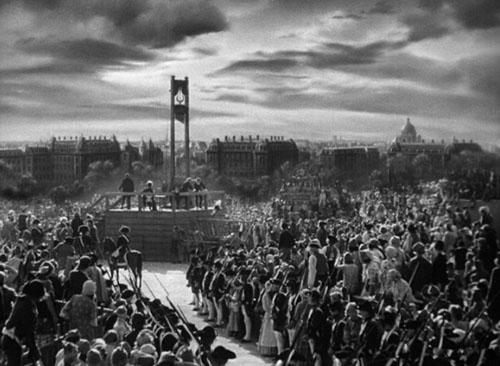
tale-of-two-cities     In Charles Dickens’ novel, A Tale of Two Cities, there comes a point where one of the main characters, Charles Darnay, is arrested by the mob during the French Revolution and is sentenced to death. Because of the love that he has for Charles’ wife, Lucie, another character, Sydney Carton, takes Darnay’s place at the guillotine instead. As Carton goes to his death, he utters the most famous line of the novel, “It is a far, far better thing that I do, than I have ever done; it is a far, far better rest that I go to than I have ever known.”

     Just as Sydney Carton substituted himself for Charles Darnay for the sake of love, there is One who has sacrificed Himself for you, because of the love that He has for you. One of the most famous and well known scriptures in the Bible is found in John 3:16, which states, “For God loved the world in this way: He gave His One and Only Son, so that everyone who believes in Him will not perish but have eternal life” (HCSB). Even though we were undesirable, ungodly, weak, and enemies of God at the time, “God demonstrates His own love toward us, in that while we were still sinners, Christ died for us” (Romans 5:8, NKJV). Mankind had separated themselves from God through the tragedy of sin (Isaiah 59:1-2), but because Jesus came and died in our stead, we can now have that hope of eternal life in heaven.

     Because we commit sin, we have the sentence of death in ourselves (Romans 3:23; 6:23). We can do nothing of ourselves to remedy this situation, for we are unable to pay the price. It takes the sacrifice of a sinless life in order for us to be justified before God. What we could not provide for ourselves, God has provided in His Son, Jesus Christ. A greater love than this cannot be found! “Greater love has no one than this, than to lay down one’s life for his friends” (John 15:13). Jesus substituted His sinless life, to die on the cross, to save us from our own spiritual death. Let us obey what He says to do, in His Holy Bible, so that we can apply the blood He shed and wash away our sins (Acts 22:16; Revelation 1:5).

The Truth is Black and White

Picture1     Rachel Dolezal is not black.  She was born to two white parents, but later bronzed her skin and changed her hairstyle.  After claiming to be black, she was made a local leader in the NAACP.  Recently, her parents have spoken out to say that Rachel is not black.  Rachel responded by saying, “Nothing about being white describes who I am. So, you know, what’s the word for it? The closest thing that I can come to is if you’re black or white, I’m black. . . I’m more black than white. On a level of values, lived experience currently. In this moment, that’s the answer. That’s the accurate answer from my truth” (http://www.msn.com/en-us/news/other/rachel-dolezal-says-theres-no-biological-proof-of-who-her-parents-are/ar-AAbI12V?ocid=ansnewsap11).

     Notice that she says “in this moment” she is black, as if we are able to change our heritage over the course of time.  I can get a suntan, grow dreadlocks, and start to speak with an accent (Hey, mon, don’t ya know it), but that will not make me Jamaican.  The truth is not something that is subject to change over time.  Jesus prayed that God would sanctify or set His people apart by the truth, which is God’s word (John 17:17).  The Bible tells us that “Jesus Christ is the same yesterday, today, and forever” (Hebrews 13:8 NKJV).  We are not to add to or take from God’s word (Deuteronomy 4:2; 12:32).  Jesus said His words would endure forever (Matthew 24:35; Mark 13:31).

     Rachel believes that her answers are according to “her truth,” but truth is not relative.  I cannot have one truth that is different from your truth.  I can have an opinion that is different than yours, but there is only one truth.  If I were to say that the lights are on and you were to say that the lights are off, both of those statements cannot be true at the same time.  The truth does not depend on our environment or our situation in life.  Water is wet.  Jesus is Lord.  There is just one God.  These things are true whether we believe and accept them or not.  The truth is not gray.  The truth is black and white.

     “Your righteousness is an everlasting righteousness, And Your law is truth” (Psalm 119:142). “You are near, O Lord, And all Your commandments are truth” (Psalm 119:151). “The entirety of Your word is truth, And every one of Your righteous judgments endures forever” (Psalm 119:160).  God’s word could not be clearer on this subject.  Yet, there are those who will still ask the question that was on Pilate’s lips as Jesus stood before him, “What is truth?” (John 18:38).  If you want to know more about the truth, read God’s word.  If you want to find eternal life, you must believe it to be true (Romans 10:17; Hebrews 11:6).  If we can help you on your journey, come and see what the Lord has done for us!

The Downward Spiral

Trump Clinton Lies     The cycle is beginning again.  As we prepare to be barraged by political ads and debate after debate, political candidates are preparing for their run for the White House in 2016.  What we will likely hear the most is how all of the other candidates are not qualified to be that right person to lead the nation.  Unfortunately, the negative ads are what seem to give candidates the most bang for their advertising buck.

     In tearing one another down, many will take the opportunity to distort or misrepresent the record of their opponents.  Is this the way it should be?  Should we be okay with this turn of events?  Jesus said, “Therefore, whatever you want men to do to you, do also to them, for this is the Law and the Prophets” (Matthew 7:12 NKJV).  When politicians lie, distort, or misrepresent the deeds of their political opponents, are they treating them in the same way that they in turn wish to be treated?  Hardly!

     We should not try to lift ourselves up by tearing others down.  Why not instead stand upon our own work and our own actions?  Someday, we will be judged by the things that we have done while in our bodies, whether good or bad (Ecclesiastes 12:14).  Yet, voters tend to reward those who tell the grandest stories when it comes to making their opponents disreputable, and thus the cycle continues.

     In addition to tearing each other down, many politicians will promise anything they think will help them to get elected.  However, this is mostly just a game.  Those politicians have no intention of fulfilling their promises.  We voters have no expectation that they will keep their promises either.  Why not just do what the Bible says and allow our yes to be yes and our no to be no (James 5:12)?  Would that not be a better way?

     Just think of how it would be if each candidate was honest; if each candidate stood upon the merits of their own work rather than tearing others down; if each candidate only promised those things that they actually intended to do once they get into office.  Just think if we did things God’s way instead of our way.  Solomon wrote, “There is a way that seems right to a man, But its end is the way of death” (Proverbs 14:12).  By comparison, God’s way leads to eternal life (Proverbs 19:23).  Let us choose that way instead!

Marriage Matters

Panorama_of_United_States_Supreme_Court_Building_at_Dusk     Over the course of the past two weeks there has been much discussion to be found regarding the issue of marriage and the Supreme Court’s decision to legalize gay marriage in all fifty states. Additionally, there has been a wide range of responses offered by the Christian community. There have been some who have embraced the high court’s mandate, others have railed hard against it, and a third group has declined to address the issue. It leads us to wonder just what should the Christian’s reaction be to what is going on?

     If we are to be Christians, then we need to speak where the Bible speaks. If we only looked at Romans 1 we would be able to get a picture of what God says about homosexuality. Paul writes, “For this reason God gave them up to vile passions. For even their women exchanged the natural use for what is against nature.  Likewise also the men, leaving the natural use of the woman, burned in their lust for one another, men with men committing what is shameful, and receiving in themselves the penalty of their error which was due” (Romans 1:26-7 NKJV).  He starts off by saying for this reason.  It is because mankind has ignored God, even though they once knew Him, and even though there is evidence in the creation to point to Him.  Because they have rejected God, He has allowed them to walk away.  They have instead been given over to vile passions.

     In looking at this passage we should notice four things about God’s opinion of homosexuality. First, He calls it a vile, or degrading passion.  This word can also mean dishonorable, disgraceful, or shameful.  This is not something that God sees as desirable. Second, He calls it unnatural.  This is simple science and biology.  Nature itself declares that the union of woman with woman or man with man is unnatural.  Their bodies are not designed to fit together as God intended.  Thus, nature even shows us the compatibility of man’s body with that of woman, and that is the only way to procreate and bring forth a child. Third, God calls homosexuality shameful.  That which is shameful is an indecent act; it is unseemly.  This particular word is never used for anything that is acceptable to God, but instead refers to that which is rejected by God.  Man has acceptable passions, but lust for another man is not one of those. Fourth, He calls homosexuality an error.  The Greek word here also indicates that it is a perversion, a delusion or deceit.  It shows a deviation or leaving of God’s Divine pattern.  It says that they receive “in themselves the penalty of their error.” Could this be a reference to STD’s and particularly the AIDS virus?

     If we are to go by God’s word, then we cannot rejoice or embrace the decision. There are many on Facebook and other social media outlets who are expressing joy over the decision, because now their gay friends can get married. They change their profile pictures to show a rainbow to illustrate their support. This is not Christian behavior. The Christian cannot rejoice or embrace what God has condemned and described as degrading, unnatural, indecent, and error. The Bible is clear that God will punish those who practice such activities, but will also hold those who approve of them just as guilty as those engaged in the act (Romans 1:32).

     While we are called to preach the truth, we are to do it in love. This does not mean that we are to soft peddle the truth. This does not mean that we are to shy away from what we have to say. God said that we are to love one another (see the whole letter of 1 John). But there is a vast difference in that Agape, all encompassing, self-sacrificing, love that God wants us to have, and the erotic love that is only meant to be shared between a husband (male) and his wife (female). Imagine that you saw someone in a burning house. How would you react? Would you call out, “Hey, friend. Maybe sometime we should talk about the danger of fire.” Are we to think that we cannot call out in haste that they need to flee the burning building now? Do we think that we are being hateful by telling them to get out now? Then why would it be hateful to point out to them their lost condition and their need to escape from the eternal flames of hell? If we truly love people the way the God described, then we need to tell them what is best for them to know. If those who claim to love their “partner” really loved them, then they should be willing to change their relationship in order for that person to make it to heaven. God makes it clear that homosexuals will not inherit the kingdom of heaven (1 Corinthians 6:9-10). But then He says, “And such were some of you. But you were washed, but you were sanctified, but you were justified in the name of the Lord Jesus and by the Spirit of our God” (1 Corinthians 6:11). They were able to change their lifestyle and be sanctified and made holy. If they could do it then, people can do it now.

     We cannot just ignore the issue and hope it will go away. Some do not want to address the issue for fear of appearing as if this is all that Christians talk about. We don’t want to single out one sin and ignore all the others. However, no one is trying to force us to accept the lifestyle of murderers as normal. No one is telling our first graders that lying is just an alternate method of communication. No one is mandating that we never speak out against those living in adultery, or else be accused of hate speech. While I would agree that this is not the only sin, and that it is not any more important than any other sin, it is one that the world wants us to accept and embrace as normal, and that does make it different. We have an obligation to speak the truth in love, but sometimes we swing the pendulum too far in one direction or the other. We do need to speak out on this issue. If we do not, then who will warn the world? See Ezekiel 3:17 and Matthew 5:13-16.

     Why does it matter? Many will ask the question of the Christian, “Why do you care if two people get married?” “How does that affect you?” Here is the thing. To be a Christian means that you belong to Christ. He is your Lord and Master. How can we then divorce ourselves from God and act as if something that He has called an abomination has no affect on us? Can we really ignore or rejoice over something that grieves God’s Holy Spirit, and still call ourselves one of His? (Isaiah 63:10; Ephesians 4:30). It matters because of our struggle against the darkness of this world. “For we do not wrestle against flesh and blood, but against principalities, against powers, against the rulers of the darkness of this age, against spiritual hosts of wickedness in the heavenly places” (Ephesians 6:12). Our struggle is for the souls of mankind, and in that struggle we must be on God’s side if we are to be one of His children.

     Additionally, it matters because as a nation we will all be subject to the consequences of God’s wrath. When the Israelites conquered Jericho they were told not to take of the accursed things that were in Jericho. However, Achan took of the spoils and the whole camp was affected by the punishment for that sin (Joshua 7). When God’s patience ran out on the nation of Israel and all of their idolatry, they were taken away into the Babylonian captivity. Not all of the Israelites were guilty of idolatry, but they still suffered the consequences of the sins of that nation. Today, we say, “Well, what affect does it have on me if two men want to get married?” Make no mistake about it, God will punish sin. “Righteousness exalts a nation, But sin is a reproach to any people” (Proverbs 14:34). God’s patience eventually ran out with Babylon, Persia, Greece, Rome, and Israel. You can read about that in the pages of the Old Testament. When God decides that His patience with America has run out, it will affect us all. It is up to us to try to return our nation to the principles of God before it is too late. It would do us well to heed the words of God, “If My people who are called by My name will humble themselves, and pray and seek My face, and turn from their wicked ways, then I will hear from heaven, and will forgive their sin and heal their land” (2 Chronicles 7:14). Marriage matters to us, because marriage matters to God.