
People sometimes fear the dark, especially kids. This fear can make it hard to get them to bed. They might need a night light, or a parent to check the closet, or under the bed. Similarly, David had a dark chapter in his kingship when his throne was being usurped by Absalom, his son (2 Sam. 15:13-14). David had to flee from Jerusalem, and he might have wondered if this was punishment for his sin with Bathsheba. He was told that because of his sin the sword would not depart from his house (2 Sam. 12:10-11). David was in despair, questioning if the Lord had departed from him, but he continued to show resolve. He sent the ark back into Jerusalem, saying that if God was happy with him, he would return (2 Sam. 15:26). Even though we might have dark times, God still rules, and there is peace in God. With God, we can pillow our heads and sleep.
Surpassed by Enemies
David had become outnumbered and surpassed by his enemies (Psalm 3:1-2). Absalom had worked on the people and stole their hearts, even getting one of David’s trusted allies to join him (2 Sam. 15:12). David’s enemies increased, and they rose up against him, declaring Absalom to be king. It may have looked to both these enemies and David that God was not going to help him (Psalm 71:10-11). In 2 Sam. 16:5-8, a man from Saul’s kin, Shimei, mocked David, saying that God was punishing him for seizing the throne from Saul. David did not seize the kingdom from Saul; God made David king once Saul was dead. One of David’s nephews wanted to take Shimei’s head off, but David was in distress and had enough (2 Sam. 16:10-12). It may have looked like this was part of his punishment, but that was not the case. We can feel in despair when the world and worldly people keep increasing, and it might look like a dark hour for us. We need to remember who is in charge.
Protected by God
Things may have looked bleak, but David realized that God was still with him (Psalm 3:3-4). He had God’s protection, as if a shield was around him (Psalm 5:12, Psalm 28:7). The Lord was David’s glory, and David correctly ascertained that it was not all about himself. He wanted to glorify the Lord. He knew that if he glorified the Lord, the Lord would glorify him and lift up his head (2 Sam. 15:30). David’s head would indeed be lifted up again, meaning that Absalom would not be victorious. David was still God’s king, and God heard him from His holy hill (Psalm 2:6). God had made David king, not Absalom. When things look bleak for us, we should remember who is ruling in heaven. He is the one who will save us and lift our heads.
Peace of Mind
David was on the run, but he could lay down and sleep, confident that the Lord had heard him (Psalm 3:5-6). He had peace of mind that allowed him to pillow his head at night and sleep, knowing that God had his back. Even if not physically, if he should die before he wakes, he knew that the Lord sustained him and kept him safe. The Lord lifted his head in the morning and gave him life. We should not say we are going to go here or there, make a year happen, and make a profit. Instead, if the Lord wills, we will live. The Lord allowed us to wake up this morning, and we should not be afraid even if surrounded. We can have peace of mind even if we are surrounded in this world, knowing that the Lord is with us if we are doing His will. If we are in a good relationship with God, we don’t need to worry and can lay down and go to sleep. If we are not right with God, we might have a hard time resting, and it is something that would need to be rectified..
Salvation in the Lord
David called on the Lord to arise and take care of business (Psalm 3:7-8). The battle belongs to the Lord, and He is not going to allow someone to overthrow His king. David trusted in the Lord to save him, as no one else could. God had struck David’s enemies in the past, and thus David could have faith and trust in the Lord. David’s foes had become “toothless” and powerless since salvation belongs to the Lord. He is the only option (John 14:6, Acts 4:12). We must be humble and glorify Him, and He will lift us up. There is no victory worth having that is not rooted in the Lord. The Lord is a blessing not just to David and Israel, but to all His people, including us. The Lord blesses us so we can be a blessing to others.
David was on the run and surrounded, but even so, he could pillow his head and sleep, having peace from the Lord. We can lay down and sleep knowing we belong to the Lord and have peace of mind, even if outnumbered in the world or scared of the dark. None of that matters if we are on the Lord’s side. David was on the Lord’s side, and God sustained him and lifted his head. God can take care of us and lift our heads too. If we are not on His side, we might have trouble sleeping, as our conscience may be bothering us. Soon we will go home and lay down to sleep. What kind of sleep do you want? Will your soul be safe in the arms of Jesus? If not, fix that.
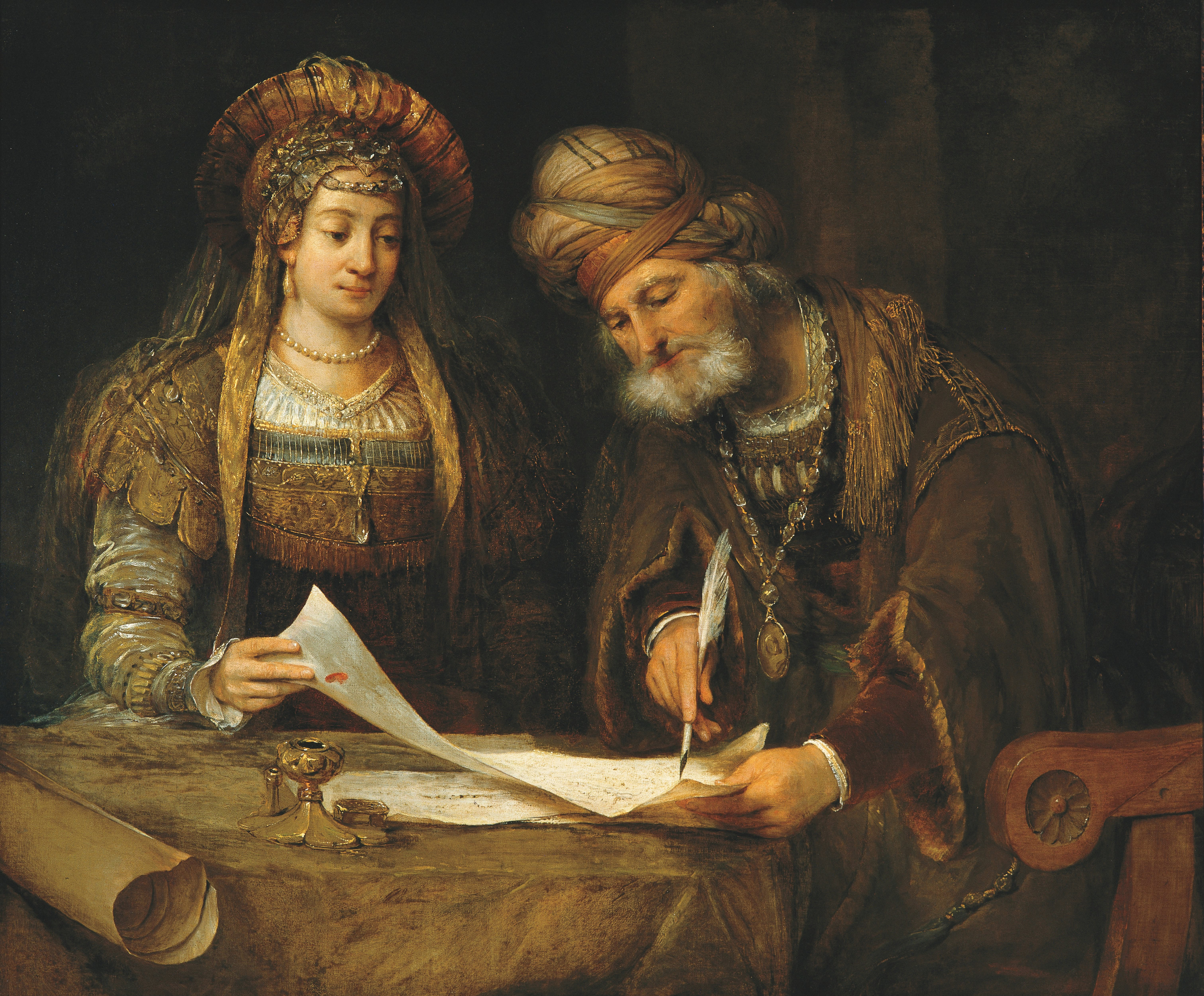 In the twelfth year of the reign of King Ahasuerus of Persia, Haman, the king’s right hand man, issued a decree that in eleven months all of the Jews within the Persian Empire were to be executed. Haman was looking to wipe out the Jews because Mordecai, a Jew living in the Persian capital of Shushan, refused to bow down to him. The decree was sealed with the king’s signet ring, which he had given to Haman. This meant that the decree carried the authority of the king, and under Persian law it could not be rescinded (Esther 3:7-12).
 salvation's path