The book of James often mirrors the Sermon on the Mount and offers much in the way of practical applications and Christian living. James 1:22-25, in particular, challenges believers to achieve a faith that goes beyond just hearing. It is faith marked by action. This section begins with a call to action: “But be doers of the word, and not hearers only, deceiving yourselves” (James 1:22). The difference between hearing and doing is vital. James says that hearing the word without applying it can lead to self-deception. Simply nodding along to sermons or reading Scripture without having it affect our lives creates a false sense of security. One may feel they are in league with God but be mistaken.
In verses 23-24, James uses a well-worn metaphor: hearing the word without doing it is like looking in a mirror, walking away, and forgetting what has just been seen. The mirror symbolizes God’s word, the perfect Law of Liberty, which exposes our spiritual condition. If we fail to act upon this, what results is a lack of spiritual growth. A mirror doesn’t change us; it only shows us what needs attention.
By contrast, the one who looks into the “perfect law of liberty and continues in it, and is not a forgetful hearer but a doer of the work, this one will be blessed in what he does” (James 1:25). This “law of liberty” is the word of God, to which we must adhere. Thus, we need to do by applying God’s holy word to our daily lives. It ought to be the driving force behind who we are and what we choose to do. If we want to grow closer to Christ, don’t just hear what the Lord has to say, do it!
Have you ever spent Christmas Eve feverishly trying to assemble that last gift? Perhaps you waited until the last moment thinking it wouldn’t be a big deal or difficult. It only required some assembly, after all. Then you notice that the instructions are not clearly written, and the diagrams are small and ambiguous as to which side of the frame the screws are supposed to be inserted. Don’t you wish that you had all that pertains to how to put this thing together?
God’s instructions for us are not like that. They are neither unclear, nor ambiguous. Peter tells us that God, through His magnificent ability and divine power, “has given to us all things that pertain to life and godliness, through the knowledge of Him who called us by glory and virtue” (2 Peter 1:3 NKJV). He has given us all the things that we need in order to know how to live a godly life. He has left nothing to chance. He has given us no reason to wonder what it is that He wants. Through God’s written word, the Bible, mankind can have all the information and instruction necessary to live a life that pleases the Lord. We can read and understand what God wants us to know (Ephesians 3:3-5). We can understand the will of the Lord (Ephesians 5:17). We can have the knowledge of Him and His will so that, “you may walk worthy of the Lord, fully pleasing Him, being fruitful in every good work and increasing in the knowledge of God” (Colossians 1:10).
Of course, many choose to ignore the instructions. Sometimes our pride gets in the way. I know how to put this thing together. Hours later, we begin to look for where we laid those instructions. When all else fails, consult the instructions. However, it would be better to start with the instructions so that we can arrive at the desired end. Our desired end ought to be heaven. Our desired end ought to be having a relationship with our Lord and Savior. We can say, “I don’t need the instructions, I know what I am doing,” but that path will not lead us to know God as He wants to be known. He has given us all things for living a godly life in His inspired words. Let us look to those basic instructions before leaving earth so that we will get to be where we want to go.
The concept of the Rapture, a time when Jesus would come to secretly remove His saints from the world, was first postulated in the early to mid 1800’s. According to those who buy into the idea of Premillennialism, Jesus is going to snatch away the church prior to a seven-year period of tribulation. The idea has sold books and movies about what they imagine will happen to those who have been left behind. It has led to many trying to predict a date for the return of Christ. There is just one main problem with this idea/teaching. It is not biblical.
The Bible does not teach any of this. The Bible indicates that when Jesus returns there will be great noise. The Lord will descend from heaven with a shout, there will be the voice of an archangel, and the trumpet of God will sound (1 Thes. 4:16). Furthermore, Peter states that the earth and all that is in it will be burned up (2 Peter 3:9). That does not appear to be very quiet!
The Bible indicates that when Jesus returns it will not be in secret. Those Apostles who watched Jesus ascend into heaven were told that Jesus would return in like manner (Acts 1:11). That means He will be coming with the clouds, and they will be able to watch it happen. Additionally, John indicates in Revelation 1:7 that every eye will see Him when He returns, including those who pierced Him (not just the righteous). Every eye means everyone will see this happen. That does not correspond to a secret return.
The Bible indicates that when Jesus returns that there will be one resurrection of the dead. The doctrine of Premillennialism and the Rapture teaches that there will be two resurrections separated by 1,007 years. Jesus said, “Do not marvel at this; for the hour is coming in which all who are in the graves will hear His voice and come forth—those who have done good, to the resurrection of life, and those who have done evil, to the resurrection of condemnation” (John 5:28-29). Paul, in speaking of the resurrection stated that there is a singular resurrection of both the just and the unjust (Acts 24:15).
When Jesus returns time will end, the earth will be destroyed, and Judgment Day will occur. This is what the Bible teaches about the end time. There will be no warnings or signs. Jesus Himself indicated this when He declared that even He did not know when it would take place (Mat. 24:36). It is futile for man to try to set a date. Do we know more than Jesus? While these false doctrines may seem to be fascinating, and may sell books, they are not biblical. Read and study your Bible, like the Bereans, to see if these things are so.
As we reflect on Veterans Day, we honor those dedicated to their country. This moment invites us to consider a deeper question: Are you dedicated to the Lord? The biblical Nazarite was a powerful example of such dedication. While Jesus was called a Nazarene because of Nazareth (see Matthew 2:23), the Nazarite vow was something entirely different—a voluntary commitment to God, marked by extraordinary devotion. As we seek to grow closer to Christ, let us explore what the Nazarite vow entailed and challenge ourselves to examine our own dedication.
The Nazarite Vow
The Nazarite vow, described in Numbers 6:1-8, was open to both men and women. It was a special, difficult vow—an act of consecration between an individual and God, not a family or tribe. Unlike other Old Testament laws found in Leviticus or Exodus, this vow focused on personal commitment. The Hebrew word nazir means “dedicate,” and appears about ten times in the context regarding a separation or dedication. The vow was a way for an individual to set themselves apart for God for a specific period, giving what was most precious—their “self”—to the Lord.
Three-Fold Stipulations
Abstain from wine and strong drink: This went beyond what was required even of priests.
No razor shall pass over the head: During the vow, the individual would not cut their hair.
Avoid contact with the dead: Even accidental defilement required the person to shave their head and begin the vow anew (see Numbers 6:9-12). This underscores the seriousness of the commitment.
Completion of the vow involved several offerings—a male lamb, an ewe lamb, a ram, a basket of cakes, and the shaving of the dedicated hair, which was burned on the altar. Afterward, the Nazarite was welcomed back into fellowship and could once again partake of the grapevine.
Notable Nazarites
Only three individuals are thought to have been Nazarites from birth:
Samson (Judges 13:2-5)
John the Baptist (Luke 1:15)
Samuel (1 Samuel 1:11)
Historical sources like Josephus and Eusebius note that Nazarite vows were popular in the first century AD, and that figures such as John the Baptist and James (the brother of Jesus) were Nazarites. Even Paul is believed to have taken a Nazarite vow (Acts 18:18; 21:23), sometimes helping others complete theirs due to the expense involved.
How Dedicated Are We?
While Christians are not under the law of Moses and there is no direct equivalent to the Nazarite vow in the New Testament, believers are still called to be dedicated to the Lord—set apart and made holy. The term “saints” means “holy ones,” those who have been set apart (Romans 1:7; 1 Corinthians 1:2; 1 Peter 1:16; 1 Peter 2:9; Galatians 2:20). This dedication is about going beyond a regular relationship with God, giving ourselves to Him fully, and living for Christ.
The Nazarite vow was voluntary, not commanded (Numbers 6:2), much like fasting in the New Testament (Matthew 6:16-18). Both are ways to show dedication to God that go above and beyond what is required. Every week, we have opportunities to demonstrate our dedication.
Conclusion
The Nazarite vow was a difficult, extra step of dedication to the Lord, requiring the individual to remain undefiled. In a sense, becoming a Christian is a similar vow—a commitment to remain set apart and holy (1 John 2:15-17). As we reflect, let’s ask ourselves: Does our dedication need to be ramped up? The invitation is open to deepen our commitment and grow closer to Him.
In my earlier days in the church there was an old hymn, number 728b in most of the older song books, that is still one of my favorite hymns. The chorus states that there is a God and that He is alive! Indeed, the existence of God is one of the central tenants of any religion. As more and more people in our world and in our nation have questioned the existence of an all-knowing, all-powerful being, just what are we to think? Is there really a God?
The short answer is yes, there is a God. He is the God we read about in the Bible. However, since many skeptics that we are likely to encounter do not believe the Bible, let us rather look to science and logic in this moment for our proof.
Science has shown two major issues with regards to what we can see. The first is that matter, stuff, is not eternal. Matter has not always been here. Matter has a born-on date. If that is the case, then where did matter (all that we can see, touch, taste, and smell) come from? This is one thing that science cannot explain. Secondly, if there was once nothing (no matter), how is it that there now is something (the world that we live in)? Matter does not just spontaneously appear. Cars and houses do not magically appear out of nowhere. They must be designed and built by someone. Scripture has an answer for this. The Bible states, “For every house is built by someone, but He who built all things is God” (Hebrews 3:4, NKJV).
In looking at these two scientific facts, let us reason logically about what this means. If there once was nothing, why isn’t there nothing now? Since there is something now (the universe), just how did that come into being? There had to have been a cause. Since matter is not eternal, there had to be a beginning of its existence. Everything that begins to exist must have a cause. The universe began to exist at some point in the past. Therefore, the universe must have had a cause. That cause has to be a superior being who has always existed. Matter is not eternal, but the mind of God is.
Science and logic tell us that there must be a God. Therefore, it is incumbent upon us that we seek Him out and learn about Him. We cannot find God through our feelings or by a blind leap in the dark. That would not be logical nor scientific. We must follow the evidence and go where it leads. Surely, a God who created us and all things would want to communicate with us. He has. “God, who at various times and in various ways spoke in time past to the fathers by the prophets, has in these last days spoken to us by His Son, whom He has appointed heir of all things, through whom also He made the worlds” (Hebrews 1:1-2). Let us not refuse Him who has spoken to us from heaven (Hebrews 12:25).
There was a time when a man’s word was his bond. He would never think of violating that standard to go back on what he had said. Those days seem to be long in the dust. As what may be the longest political campaign for the presidency of these United States begins, one wonders where integrity has gone. Our current batch of politicians will seemingly say anything in order to procure votes for themselves or for their particular brand. One day they will hurl an endless barrage of insults against their opponents only to clap them on the back the next day when they have dropped out and endorsed the mudslinger. Additionally, there are calls to prosecute and lock up opponents when those making the accusations are equally guilty of said offense. Where is the integrity? Where is the honesty? Is it okay to be a total hypocrite and accept what ‘our guy’ is doing and attack ‘their guy’ for the same?
We may wonder what God would think about all this. If we consult His word, however, we wouldn’t have to wonder for long. The principles are there in the Old Testament writings. Integrity, honesty, and righteousness are all to be desired. David wrote, “The LORD judges the peoples; vindicate me, O LORD, for the righteousness and blamelessness that are mine. Let the evil of the wicked come to an end, but establish the righteous; he who probes the mind and conscience is God the righteous” (Psalm 7:9-10). Solomon also penned these words, “The integrity of the upright guides them; The deviousness of the treacherous leads them to ruin” (Proverbs 11:3). God is not pleased when we abandon what He says is right or wrong because we think that it will earn us money, fame, or power. “Better is the poor who walks in his integrity Than one who is perverse in his lips, and is a fool” (Proverbs 19:1).
Our political system has become so convoluted that we just accept that this is the way it is. We expect our leaders to lie to us and stretch the truth. We expect them to promise us what we know in reality they cannot deliver. They too know that they cannot deliver while they are making the promises. We’ve come a long way from letting our ‘yes’ mean yes and our ‘no’ mean no. Then we sit back and wonder why we don’t have any better candidates to choose from. What honest person in their right mind would want to dive into this polluted pool?
So what’s the answer? What should we do? Jesus never taught us to worry about politics per se. To overcome the worries that we might have Jesus says that we must seek first His kingdom and His righteousness (Matthew 6:33). We need to focus on doing what is right. Upholding and defending those who practice iniquity just because they are on our side of the political aisle is not the righteousness of God. We need to pray for our leaders and hope that they will do what is right, no matter what letter is behind their name. ”Therefore I exhort first of all that supplications, prayers, intercessions, and giving of thanks be made for all men, for kings and all who are in authority, that we may lead a quiet and peaceable life in all godliness and reverence. For this is good and acceptable in the sight of God our Savior, who desires all men to be saved and to come to the knowledge of the truth” (1 Timothy 2:1-4).
Before you say that you cannot pray for our leaders because of how evil they might be, just keep in mind that when Paul penned the words above to pray for the authorities Nero was Emperor of Rome. If Paul could pray for that guy, we can pray for our leaders now. God wants for all men to be saved. Let us direct our energy towards that endeavor instead.
Do you remember what it was like to be a teenager, and to have to face the constant peer pressure of those who were around you? Just imagine what it would be like to have to spend those years in a foreign country, where you might have very little say over what you could or could not do. Imagine how difficult that would be in our youthful years.
This was the case with Daniel and his friends, who were taken captive by the Babylonians in 606 – 605 BC, when they were likely only about 14 or 15 years old. Yet, even in a foreign land as a captive, Daniel had a resolve to not defile himself. Notice what is recorded about him, “But Daniel purposed in his heart that he would not defile himself with the portion of the king’s delicacies, nor with the wine which he drank; therefore he requested of the chief of the eunuchs that he might not defile himself” (Daniel 1:8). In this verse, Daniel resolves not to defile himself with the king’s food or wine.
Daniel’s decision to abstain from the king’s food and wine was not just a matter of personal preference. It was a matter of faith. Daniel was committed to following the Mosaic Law, which prohibited the eating of certain food (Leviticus 11). This could not have been an easy decision, but Daniel purposed in his heart ahead of time, before the temptations would have come, to do the Lord’s will. Daniel was in a foreign land surrounded by others who did not share his beliefs. The peer pressure would have been great to go along to get along. However, Daniel remained faithful, and God rewarded him for it (Daniel 1:9, 17).
Daniel’s resolve is a great example for us to remember to stand up for what God wants, even when it may be difficult – even when surrounded by non-believers. When we purpose in our hearts to do what is right, we will be less likely to compromise godly values and beliefs, no matter what it costs us. Remember, it is more important to be Christlike than to be popular.
Perhaps you have tried to share the gospel with someone or encouraged them to come to the worship service of the church, only to have them quote the title above as if they are separate from God’s requirements. Don’t get me wrong, we can have a covenant relationship with the Lord, but that relationship can only be had according to His stipulations and requirements. Let’s explore . . .
In the Old Testament covenant that God made with the nation of Israel, God gave all of the stipulations and requirements to Moses on Mt. Sinai. Moses then relayed the information to the children of Israel. “So Moses came and told the people all the words of the LORD and all the judgments. And all the people answered with one voice and said, ‘All the words which the LORD has said we will do’” (Exodus 24:3 emphasis added). Notice the ‘all’ that they said they would do. The covenant was not negotiable. The Lord set the stipulations and the people could either accept it or refuse it. They couldn’t say that they had a special or different deal with the Lord. Part of those stipulations were that they had to keep three specific feast days to the Lord (Exodus 23:14). They couldn’t just decide to roll those three into one day for convenience. The covenant was unilateral and non-negotiable.
In the New Testament there is a new covenant. Jeremiah prophesied that this new covenant was coming (Jer. 31:31-34). The new covenant is the agreement that we can have with the Lord today, however, this deal is also based upon the commandments and stipulations of the Lord. We can either accept the deal or deny it. We do not get to negotiate our own deal individually. Jesus basically says that if we follow Him, we can have the remission of our sins and live with Him forever (Mark 16:16; Mat. 28:19-20; Acts 2:38). Notice especially in the Matthew passage that in order to be a disciple of Christ that one must be baptized and taught to observe all things that Jesus has commanded.
Both the Hebrew and Greek words that are used for covenant in the Bible mean a contract or agreement of some kind. So, we can have an agreement with God. That agreement or covenant relationship can only be had, however, if we will accept all that God has told us to do. God’s salvation is not a buffet where we get to pick and choose. We must do all that He commands us to do!
If we are like most people, somewhere amongst all of our belongings there is a family photo album or two. From time to time we like to take out that photo album and relive the memory of lost loved ones or special times and events in our life. Maybe we gather around with others in our family and share stories from the past. Family is important and makes us feel like we belong to a group with a common background, common experiences, and a shared heritage. Just imagine for a moment what it would be like if God had a family photo album. Whose pictures would be in that album?
We see that family was important to Jesus, but maybe not in the way that we think. There was an occasion where Jesus was teaching His disciples, and while He was still speaking to them He was told that his physical mother and brothers were waiting outside to speak with Him (Mark 3:31-2). Then Jesus said, “’Who is My mother, or My brothers?’ And He looked around in a circle at those who sat about Him, and said, ‘Here are My mother and My brothers! For whoever does the will of God is My brother and My sister and mother’” (Mark 3:33-35 NKJV). Jesus stated that His spiritual family was more important to Him than His physical family.
If we want to be a part of God’s family, if we want for our pictures to be in His “photo album,” then we need to do what Jesus says to do. Notice He said “whoever does the will of God” is His family. It is important then, that we do the will of God. Compare this to what Jesus said in the Sermon on the Mount, “Not everyone who says to Me, ‘Lord, Lord,’ shall enter the kingdom of heaven, but he who does the will of My Father in heaven” (Matthew 7:21). It is not enough for us to just call Him Lord, we must be willing to do the will of the Father to be in the family of God and to enter into the kingdom of heaven. Have you obeyed God’s will? Is your picture in God’s photo album? We invite you to come and see what God’s word has to say about the will of the Lord, so that all of us can be in God’s family!
Have you ever prayed for God to take care of some problem that you had, and then wondered what the answer to that prayer would be? It is especially difficult for us as Americans to be patient in waiting for a response. We are so accustomed to fast food, microwave ovens, and instant messaging that we expect immediate results. Additionally, it may be that the answer to our prayer is “not now,” and so we have to wait awhile for the result. This is a normal situation, but during the time of Hezekiah, he received an instant response to one of his prayers.
As 2 Kings 20 opens Hezekiah is sick to the point of death. Isaiah the prophet comes to him to instruct him to put his house in order, for he will soon die. This leads to Hezekiah’s prayer, and the text tells us that he prayed with such fervor that he wept bitterly (2 Kings 20:2). His prayer was heard and his tears were seen by the Lord. Before Isaiah could even exit Hezekiah’s house, he was told to return to Hezekiah with an updated message (2 Kings 20:4-5). Hezekiah was not going to die yet. Instead the Lord granted him another 15 years on this earth. God was prepared for Hezekiah’s prayer, because God knows all things even before they occur.
Likewise when we pray to the Lord, He already knows what it is that we will say and what it is that we need (Matthew 6:8). Still, He wants for us to come to Him in prayer. We are no different than Hezekiah in that respect. God knew that He would heal Hezekiah, but yet He waited for Hezekiah’s prayer. God has the power to answer all our prayers in an instant. Whether the answer comes instantly or over the course of time, our part is to pray with the earnest expectation that God will hear and answer our prayers (James 1:6-8).




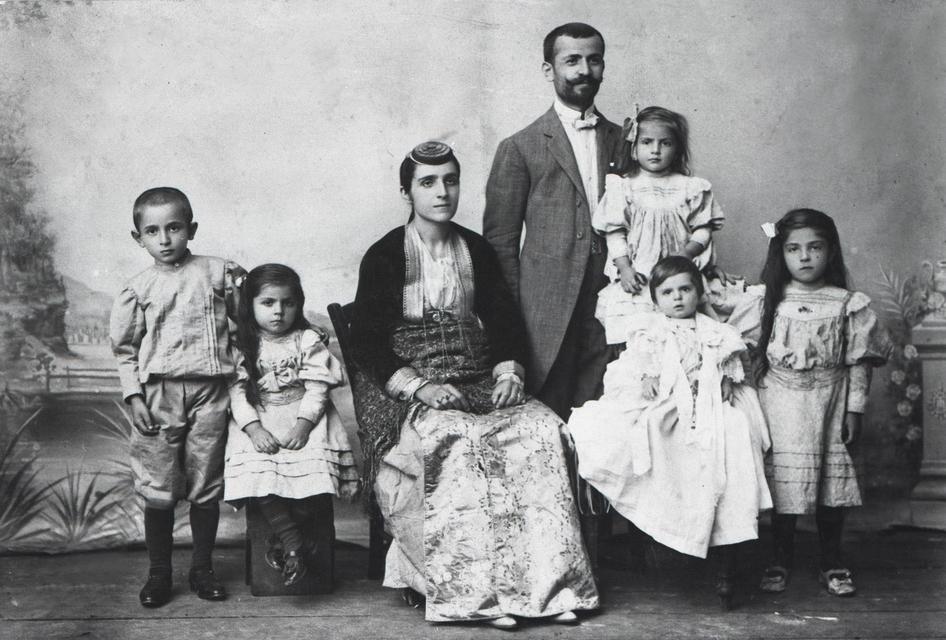 If we are like most people, somewhere amongst all of our belongings there is a family photo album or two. From time to time we like to take out that photo album and relive the memory of lost loved ones or special times and events in our life. Maybe we gather around with others in our family and share stories from the past. Family is important and makes us feel like we belong to a group with a common background, common experiences, and a shared heritage. Just imagine for a moment what it would be like if God had a family photo album. Whose pictures would be in that album?
 Have you ever prayed for God to take care of some problem that you had, and then wondered what the answer to that prayer would be? It is especially difficult for us as Americans to be patient in waiting for a response. We are so accustomed to fast food, microwave ovens, and instant messaging that we expect immediate results. Additionally, it may be that the answer to our prayer is “not now,” and so we have to wait awhile for the result. This is a normal situation, but during the time of Hezekiah, he received an instant response to one of his prayers.
 salvation's path