 I recently came across a news story out of Thailand about a branch of their national airline. Thai Smile Airways had issued a statement that passengers could purchase an additional ticket for their Luk Thep dolls. The doll owners believe that the dolls have supernatural powers, and that they are inhabited with the angels of children who have passed from this life. Dolls with tickets would need to buckle up before takeoff and landing, and would be served snacks and drinks in flight. Owners have been known to pamper the doll with designer clothing and expensive jewelry, so they may receive a better blessing from the dolls, and one buffet restaurant in Bankok caters to the Luk Thep, or Child Angel, dolls (http://www.msn.com/en-us/travel/news/supernatural-dolls-are-treated-like-people-on-thai-smile-airways/ar-BBoIW8A?ocid=ansmsntravel11).
While we think that it is cute and imaginative when children treat their dolls as real people, and perhaps have a tea party with them, it is not the same when we see full grown adults acting the same way. Idolatry can take many forms, however there is one common thread in all idolatry. Whenever we give credit for our “good fortune” or our lives in general to something or someone other than the God of heaven, we have missed the mark. God commanded the Israelites that they were to have no other gods (Exodus 20:3). Joshua, near the end of his life, challenged Israel to put away their other gods that their fathers served, or that they came in contact with in Egypt, so that they could serve the one true God (Joshua 24:14-15). The Israelites had a constant problem with idolatry, which led to them being carried away captive into Babylon (Amos 5:25-27).
This is not just an ancient issue, as can be seen by the Luk Thep dolls. Idolatry exists today in many forms. For some, it is a doll or statue (idol). For others it may be wealth or fame. For many, they have made themselves their own god. Basically anything that we put above God becomes our idol. God’s word says, “Do not be deceived, my beloved brethren. Every good gift and every perfect gift is from above, and comes down from the Father of lights, with whom there is no variation or shadow of turning” (James 1:16-17, NKJV). All that we have comes from God. We do not need some idol to bring us good fortune.
How much sense does it really make to place our trust in idols? They cannot go anywhere unless we carry them. They cannot speak. They do not eat the food that is put before them. What can they do for us? The Bible teaches us to flee from idolatry (1 Corinthians 10:14). Idolatry is called a sin of the flesh. Just notice in the following list what idolatry is included with:
“Now the works of the flesh are evident, which are: adultery, fornication, uncleanness, lewdness, idolatry, sorcery, hatred, contentions, jealousies, outbursts of wrath, selfish ambitions, dissensions, heresies, envy, murders, drunkenness, revelries, and the like; of which I tell you beforehand, just as I also told you in time past, that those who practice such things will not inherit the kingdom of God” (Galatians 5:19-21).
Those who practice idolatry, in any form, shall not inherit the kingdom of God. If we want to get to heaven, then we need to give God His proper place in our lives. We cannot place some idol before God. We need to put our idols to death. “Therefore put to death your members which are on the earth: fornication, uncleanness, passion, evil desire, and covetousness, which is idolatry” (Colossians 3:5). Let us not face God’s wrath for practicing idolatry, but let us instead receive God’s love and grace by making Him first in our lives.
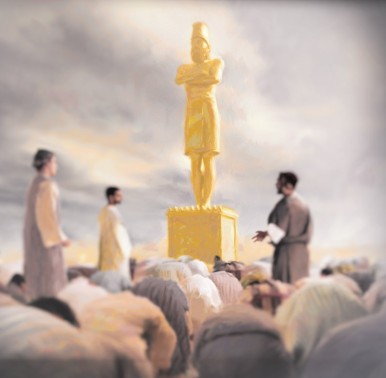 Back in the days of Daniel, when the children of Israel were exiled in Babylon, King Nebuchadnezzar decided to have a 90 foot tall golden statue constructed. The king then commanded that at the proper time all were to bow down and worship this golden image. There were those among the exiles, however, who were faithful to God and would not bow down to the image even though the penalty was death in a fiery furnace (Daniel 3:1-12). These three men, Meshach, Shadrach, and Abed-Nego, were not going to violate their worship to the one true God by bowing down and paying homage to the image Nebuchadnezzar created. Did they not know that this would cost them their physical lives?
 salvation's path