Be Ye Doers of the Word

The book of James often mirrors the Sermon on the Mount and offers much in the way of practical applications and Christian living. James 1:22-25, in particular, challenges believers to achieve a faith that goes beyond just hearing.  It is faith marked by action. This section begins with a call to action: “But be doers of the word, and not hearers only, deceiving yourselves” (James 1:22). The difference between hearing and doing is vital. James says that hearing the word without applying it can lead to self-deception. Simply nodding along to sermons or reading Scripture without having it affect our lives creates a false sense of security. One may feel they are in league with God but be mistaken.

In verses 23-24, James uses a well-worn metaphor: hearing the word without doing it is like looking in a mirror, walking away, and forgetting what has just been seen. The mirror symbolizes God’s word, the perfect Law of Liberty, which exposes our spiritual condition. If we fail to act upon this, what results is a lack of spiritual growth.  A mirror doesn’t change us; it only shows us what needs attention.

By contrast, the one who looks into the “perfect law of liberty and continues in it, and is not a forgetful hearer but a doer of the work, this one will be blessed in what he does” (James 1:25). This “law of liberty” is the word of God, to which we must adhere.  Thus, we need to do by applying God’s holy word to our daily lives.  It ought to be the driving force behind who we are and what we choose to do.  If we want to grow closer to Christ, don’t just hear what the Lord has to say, do it!

Why Was God Pleased to Injure Christ?

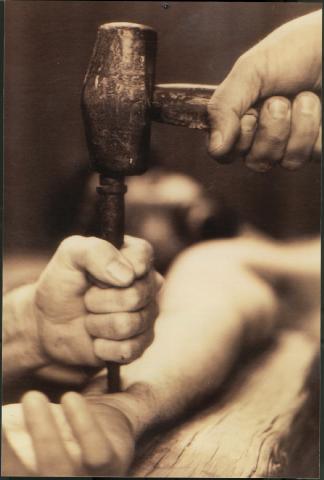
nails     During this time of the year when many people are thinking about the death, burial, and resurrection of Jesus, many might read from Isaiah 53, which predicts the Christ’s ordeal on the cross. Have you ever read that account, however, and wondered about just what it says? In verse 4 we read that Christ was, “Smitten by God, and afflicted” (Isaiah 53:4, NKJV). Later it declares, “And the Lord has laid on Him the iniquity of us all” (Isaiah 53:6). “He was cut off from the land of the living; For the transgressions of My people He was stricken” (Isaiah 53:8). On and on we read within Isaiah’s prophecy about how Jesus was going to be mistreated by mankind. But then we read the statement, “Yet it pleased the Lord to bruise Him; He has put Him to grief” (Isaiah 53:10, emphasis added). Just how could this bloody sacrifice of His one and only unique Son be pleasing to God?

     There are many events recorded in the Bible, with which God was not pleased. He was not pleased with the idolatry of the Israelites. Whether at the base of Mount Sinai during their exodus from Egypt, in the high places during the time of the divided kingdom, or in the temple during the reign of Manasseh, God was not pleased with idolatry. There were times when the Israelites did not offer their best in sacrifice to God, but instead brought the lame and sick as a sacrifice (Malachi 1:8; 3:8-9). In this God was not pleased, because their heart was not in what they were doing, and they were not showing God the proper respect. “Therefore, when He [Jesus] came into the world, He said: ‘Sacrifice and offering You did not desire, But a body You have prepared for Me. In burnt offerings and sacrifices for sin You had no pleasure’” (Hebrews 10:5-6). Here Jesus is saying to the Father that the Father did not desire or have pleasure in burnt offerings and sacrifices.

     So what are we to make of this? God did not have pleasure or desire for burnt offerings and sacrifices, which He commanded, but it pleased the Lord to bruise Christ. Even though God commanded the children of Israel to make burnt offerings and sacrifices, He did not take pleasure in them. Their sacrifices represented failure on their part to keep His law. They were required because of the sins of the people. They were necessary because mankind will always fall short. God takes no pleasure in man’s sin. This is why God through the prophet Samuel says, “Has the Lord as great delight in burnt offerings and sacrifices, As in obeying the voice of the Lord? Behold, to obey is better than sacrifice” (1 Samuel 15:22). God would rather that man obey Him than to make the best animal sacrifice he could offer. God also did not have pleasure in burnt offerings and sacrifices because they could not get the job done. Just before stating that God has no desire for nor pleasure in those offerings, the Hebrew account tells us plainly, “For it is not possible that the blood of bulls and goats could take away sins” (Hebrews 10:4). Those animal sacrifices could not take sin away and could not make those who offered them perfect with regards to the conscience (Hebrews 9:9; 10:1-3). There was still a remembrance of those sins, and so year after year the High Priest would enter the Most Holy Place with the blood of the sacrifice (Hebrews 9:7). God was not pleased because the reconciliation between God and man was not complete.

     By contrast then, God was pleased with the sacrifice of Christ. Because of what Jesus did for mankind by dying on the cross as our perfect offering, there is a cleansing of the conscience and the sins of man are remembered no more (Jeremiah 31:31-34; Hebrews 8:12). The sacrifice of Jesus was perfect and complete. There no longer remains a need for another sacrifice, because Jesus offered Himself for us once for all (Hebrews 9:11-15). Because of the redemptive work of Christ, man and God are reconciled to one another (Ephesians 2:16). In this the Lord is pleased. This is how God can say that He was pleased to bruise Jesus for our transgressions. It is not that He was pleased by Christ having to endure the cross and the pain and the shame. But God was pleased in the result in that mankind has a path back to the Father. Will you follow God’s Path to Salvation? Will you take the only way that we can go to find eternal life (John 14:6)? God has done His part by offering His one and only unique Son for our behalf (John 3:16). In this He was pleased. Will you do your part to accept His sacrifice and apply the blood to cover your sins through simple obedience to the Gospel? If you want to be pleasing to God, you will.

The Thief on the Cross

cross-671379_960_720     Start discussing the biblical requirement to be baptized with someone and see how long it takes before they mention the thief on the cross. Odds are it will not take too long.  That is because there is a widespread doctrine in the religious world that tries to eliminate the need for baptism by appealing to the example of this particular individual, whom Jesus told would be with Him in paradise on the day they both died (Luke 22:43). Just what does this example tell us about salvation? Does the example of the thief on the cross really mean that one does not need to be baptized in order to be saved? Let us look at this issue by noticing three things about this man being forgiven by Christ.

First, the argument is made that the thief was never baptized, and yet Jesus tells him that they will be together in paradise. Is it the case that he was never baptized? How would you prove that? The thief obviously knew something about Jesus and His ministry, for he confesses, ‘. . . we receive the due reward of our deeds; but this Man has done nothing wrong.’ Then he said to Jesus, ‘Lord, remember me when You come into Your kingdom’” (Luke 22:41b-42, NKJV). He knew that Jesus had done nothing wrong, and he had faith in that even though Jesus was hanging on the cross, death would not keep Jesus from receiving His kingdom. How did he know that? Was he a disciple of Christ, perhaps? Had he been baptized by John in the Jordan? It was said of John that, “Then Jerusalem, all Judea, and all the region around the Jordan went out to him and were baptized by him in the Jordan, confessing their sins” (Matthew 3:5-6). Was the thief on the cross in this crowd that John was baptizing? It cannot be proven from scripture that the thief was baptized, but it equally cannot be proven by scripture that he was not.

Second, it should be noted that Jesus had the power to forgive sins while he was on this earth. If Jesus wanted to forgive the thief on the cross based upon his confession of faith, He had the ability to do so. Just look at the example of the paralytic, whom Jesus healed in Mark 2. Unable to reach Jesus in the house because of the crowd that had gathered, the friends of the paralytic man lowered him through the roof so that he could get to Jesus. “When Jesus saw their faith, He said to the paralytic, ‘Son, your sins are forgiven you’” (Mark 2:5). The scribes accused Jesus of blasphemy, since only God could forgive sins. To show that He had the power and authority on earth to forgive sins, Jesus healed the man of his paralysis (Mark 2:6-12). Notice that the text says nothing about whether this man was baptized or not either!

This brings us to the third thing that we want to take notice of regarding both the thief on the cross and any others, whom Jesus forgave while on the earth. While Jesus lived on the earth, the Mosaic Law was in effect. The New Covenant had not yet been offered to anyone. There was a new covenant that was coming, but it did not go into effect until the death of Christ. Jeremiah prophesied about this new covenant between man and God.

Behold, the days are coming, says the Lord, when I will make a new covenant with the house of Israel and with the house of Judah— not according to the covenant that I made with their fathers in the day that I took them by the hand to lead them out of the land of Egypt, My covenant which they broke, though I was a husband to them, says the Lord.  But this is the covenant that I will make with the house of Israel after those days, says the Lord: I will put My law in their minds, and write it on their hearts; and I will be their God, and they shall be My people.  No more shall every man teach his neighbor, and every man his brother, saying, ‘Know the Lord,’ for they all shall know Me, from the least of them to the greatest of them, says the Lord. For I will forgive their iniquity, and their sin I will remember no more (Jeremiah 31:31-34).

This new covenant is the last will and testament of Jesus Christ. As with our own wills, no will or testament is enforced while the one who willed it is alive. A will is only in force after the death of the testator. That is exactly what is said about the new covenant in the Holy Scriptures (Hebrews 9:16-17). Just as the covenant, or agreement, between God and man that was offered at Mount Sinai was sealed in blood, so too would the new covenant between man and God be sealed with the blood of Christ (Hebrews 9:18-22; Luke 22:20).

The new covenant was first offered to mankind on the day of Pentecost, as is recorded for us in Acts 2. If we will obey God and do what He commands, then we can have our sins remitted and have the hope of eternal life with Him. That is the agreement. Notice what Peter says they are to do when asked about how they can be saved. “Then Peter said to them, ‘Repent, and let every one of you be baptized in the name of Jesus Christ for the remission of sins; and you shall receive the gift of the Holy Spirit’” (Acts 2:38). Since the thief on the cross lived and died during the old covenant, and since the new covenant was not offered to anyone until the day of Pentecost, the thief on the cross was not subject to the requirements of the new covenant. But guess who is subject to the new covenant. That’s right! We are!

God’s word could not be clearer on the need for baptism for the remission of our sins in order for us to have salvation. Jesus said, “He who believes and is baptized will be saved; but he who does not believe will be condemned” (Mark 16:16). If He didn’t mean it when He said it, then how would He have said it if He meant it? Jesus said exactly what He meant. He who believes AND is baptized will be saved. For more on God’s Path to Salvation, please click on this link. The fact that the thief on the cross received forgiveness and went to paradise that day does nothing to save our souls. We must be obedient to the One who died for us. We must live according to His will and testament. We are no longer under the Mosaic Law. Don’t take my word for it. See what the scriptures have to say about our belief, obedience, and salvation!

I Am Resolved

new-years-day-1054594_960_720     There is a song that we sing in our assemblies that speaks of being resolved no longer to linger, charmed by the world’s delight. Instead, the song says that I will hasten to Him. It is a song about being resolute in leaving the world’s charms behind and pressing on to be with the Lord. As we look out upon another year ending and a new one just beginning, what resolutions are we making for the New Year? What are we leaving behind in 2015, and what are we pressing on towards?

     In the Philippian letter, Paul writes, “Brethren, I do not count myself to have apprehended; but one thing I do, forgetting those things which are behind and reaching forward to those things which are ahead, I press toward the goal for the prize of the upward call of God in Christ Jesus” (Phil. 3:13-14). We might look back at last year’s resolutions and see how we did. Perhaps our resolution only lasted a couple of weeks or a month. Maybe we were resolved to lose ten pounds last year, and now we are only fifteen pounds away from our goal. But, forgetting those things that are behind us, let us look forward to the opportunities in the New Year to be resolved to do better.

     In 2016 let us then be resolved to:

  • Lose the weight of sin in our lives (Heb. 12:1)
  • Exercise greater discernment between good and evil (Psalm 34:14)
  • Improve our spiritual health (1 Peter 1:13-16)
  • Keep our souls safe and help save the souls of those around us (Mat. 28:19-20)
  • Stop making excuses and abound in the work of the Lord (1 Cor. 15:58)

I am reminded of an old commercial that showed a man at his desk and each year the pile of papers grew higher. Each year he stated that this was the year he was going to hunker down and get something accomplished. Is 2016 the year that we will grow closer to the Lord? Or will 2016 be like every other year? The choice is ours. The next year is ready and waiting. Are we resolved no longer to linger?

A Tale of Two Substitutes

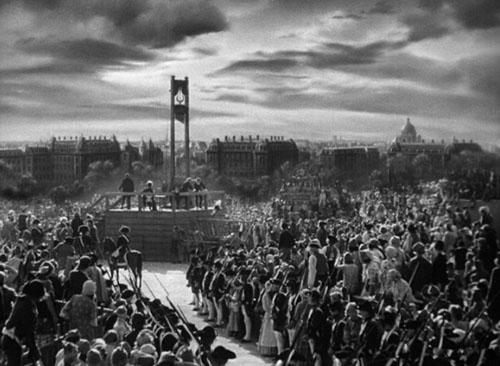
tale-of-two-cities     In Charles Dickens’ novel, A Tale of Two Cities, there comes a point where one of the main characters, Charles Darnay, is arrested by the mob during the French Revolution and is sentenced to death. Because of the love that he has for Charles’ wife, Lucie, another character, Sydney Carton, takes Darnay’s place at the guillotine instead. As Carton goes to his death, he utters the most famous line of the novel, “It is a far, far better thing that I do, than I have ever done; it is a far, far better rest that I go to than I have ever known.”

     Just as Sydney Carton substituted himself for Charles Darnay for the sake of love, there is One who has sacrificed Himself for you, because of the love that He has for you. One of the most famous and well known scriptures in the Bible is found in John 3:16, which states, “For God loved the world in this way: He gave His One and Only Son, so that everyone who believes in Him will not perish but have eternal life” (HCSB). Even though we were undesirable, ungodly, weak, and enemies of God at the time, “God demonstrates His own love toward us, in that while we were still sinners, Christ died for us” (Romans 5:8, NKJV). Mankind had separated themselves from God through the tragedy of sin (Isaiah 59:1-2), but because Jesus came and died in our stead, we can now have that hope of eternal life in heaven.

     Because we commit sin, we have the sentence of death in ourselves (Romans 3:23; 6:23). We can do nothing of ourselves to remedy this situation, for we are unable to pay the price. It takes the sacrifice of a sinless life in order for us to be justified before God. What we could not provide for ourselves, God has provided in His Son, Jesus Christ. A greater love than this cannot be found! “Greater love has no one than this, than to lay down one’s life for his friends” (John 15:13). Jesus substituted His sinless life, to die on the cross, to save us from our own spiritual death. Let us obey what He says to do, in His Holy Bible, so that we can apply the blood He shed and wash away our sins (Acts 22:16; Revelation 1:5).

How Do You “Feel” About That?

2269421     I recently read a blog article by someone who claims to be a Christian about what it takes to be a Christian.  I am sure that there are many blogs out there that address this issue in one way or another, but what was interesting about this particular post is what the author claimed he believed.  Or, to be more accurate, what he claimed to not believe.  The author stated that he does not believe that Jesus is God.  He does not believe that Jesus walked on water, healed the sick, raised Lazarus from the grave, was born of a virgin, was raised Himself after three days in the grave, or that He died for the sins of mankind.  So we may ask the question, why does he consider himself to be a Christian?  Reading on in the article, the author’s beliefs were based purely on what he “feels” about God.

     If the basis of religious truth is nothing more than how we feel about something, how could you ever prove what is true?  I may feel that one thing is true and someone else may feel that the opposite is true, so which one is correct?  Truth has to be based on facts.  I may feel that the water is cold.  Someone else may feel that the water is hot.  But if we take a thermometer and measure the temperature of the water, now we have established the facts.  Now we can know if the water is really cold or hot.

     If we are going to follow Jesus.  If we are going to be one of His.  If we are going to call ourselves Christians (meaning that we belong to Christ).  Then we need to pay attention to what He said and what He did.  Jesus established the basis of truth in His prayer to the Father, “Sanctify them by Your truth. Your word is truth” (John 17:17, NKJV).  What are the facts in this case?  What is it that we are to believe?  Let us look into the truth of God’s word for that answer, for without God’s word we would have no facts at all about who God is, what He is like, or what He desires for us to do.

     Jesus said that He was God. “And He said to them, ‘You are from beneath; I am from above. You are of this world; I am not of this world.  Therefore I said to you that you will die in your sins; for if you do not believe that I am He, you will die in your sins’” (John 8:23-24).  In this particular passage Jesus says that unless you believe that “I am” you will die in your sins.  That “I am” statement should take us back to Moses and the burning bush, where God told Moses to tell the Israelites that I AM had sent him (Exodus 3:14).  If we are going to claim to be followers of Jesus, should we not believe what He said?

     Why claim to follow Jesus if He was not raised from the dead?  This does not make any logical sense.  If He was not raised from the dead then there is no basis for the Christian religion.  Without the resurrection of Christ, there is no foundation for Christianity.  Consider what the apostle Paul wrote by inspiration:

Now if Christ is preached that He has been raised from the dead, how do some among you say that there is no resurrection of the dead?  But if there is no resurrection of the dead, then Christ is not risen.  And if Christ is not risen, then our preaching is empty and your faith is also empty.  Yes, and we are found false witnesses of God, because we have testified of God that He raised up Christ, whom He did not raise up—if in fact the dead do not rise.  For if the dead do not rise, then Christ is not risen.  And if Christ is not risen, your faith is futile; you are still in your sins!  Then also those who have fallen asleep in Christ have perished.  If in this life only we have hope in Christ, we are of all men the most pitiable (1 Corinthians 15:12-19, emphasis added).

If Jesus was just another man, why follow Him rather than anyone else?

     The reason that Christians follow Jesus Christ is because He was not just a man.  Jesus is God (John 1:1-5, 14).  Jesus arose from the dead and was seen by many witnesses, which the people in that day and age were unable to discredit (1 Corinthians 15:3-8).  Because He rose from the grave, His apostles and disciples had a newfound courage to be able to go to martyrdom and not worry about losing their physical lives.  Now they understood that there was something more beyond the grave, and so they no longer turned away or deserted their Savior in times of trouble.  If Jesus had not been resurrected, this would not have been the case.

     If we are going to call ourselves Christians, it would seem logical to suppose that we are going to believe what Jesus said, and that we are going to do what Jesus said to do.  We can claim all day long to be one of His, but if we are not doing what He said, then that claim is false.  I can claim to be the King of Morocco, but claiming it does not make it so.  What is the truth of the matter?  Jesus said,

Not everyone who says to Me, ‘Lord, Lord,’ shall enter the kingdom of heaven, but he who does the will of My Father in heaven.  Many will say to Me in that day, ‘Lord, Lord, have we not prophesied in Your name, cast out demons in Your name, and done many wonders in Your name?’  And then I will declare to them, ‘I never knew you; depart from Me, you who practice lawlessness!’ (Matthew 7:21-23).

We had better know what the will of the Lord is, which is based upon the truth of His word and not upon our feelings.  “And do not be conformed to this world, but be transformed by the renewing of your mind, that you may prove what is that good and acceptable and perfect will of God” (Romans 12:2).  You cannot prove it, if you do not know it!  However, we can know for sure what the Lord requires of us.  Paul wrote in Ephesians, how that by revelation He made known to me the mystery (as I have briefly written already, by which, when you read, you may understand my knowledge in the mystery of Christ)” (Ephesians 3:3-4).  When we read God’s word, we can understand what He requires.  We can know what His will is.  Come and see what God’s word has to say on this subject and many others.  The Holy Bible can help us to cut through the fog of confusion and see the truth for what it really is!

Jesus Is Better

Jesus Footprints     In a good news article the four ‘W’s are usually brought out in the first paragraph.  At least that’s what I remember from my very brief education on journalism from a long ago English course.  Writers want to let the reader know who, did what, when, and where.  In looking at the beginning of the book of Hebrews, we might call the writer a good journalist. “God, who at various times and in various ways spoke in time past to the fathers by the prophets, has in these last days spoken to us by His Son, whom He has appointed heir of all things, through whom also He made the worlds” (Hebrews 1:1-2, NKJV).

     Notice with me some of what is in these two little verses of scripture.  First, in verse one, God is the who.  Spoke is what He did.  The when is in times past, and the where was to the fathers.  The verse also tells us how God did that.  It was at various times and in various ways and through the mouth of the prophets that God spoke to mankind in times past.  Second, in verse two, God is still the one speaking, so the who and the what are the same.  However, now that speaking has been done in these last days, and it has been spoken to us by His Son, Jesus Christ.

     There are many lessons that we can learn from the old law and the Old Testament (Romans 15:4).  However, now we are told to hear God’s Son and pay the more earnest heed to His words (Matthew 17:5; Hebrews 2:1-4).  Indeed the message that comes from the entire book of Hebrews is that Christ is better.  He is better than the angels.  He is better than Moses.  He is better than the human high priests.  He mediates a better covenant, established on better promises, with a better hope (Hebrews 7:19; 8:6).

     It is Jesus Christ, the one and only unique Son of God, who has brought salvation to mankind.  We need to hear what He has to say.  We need to obey His commands.  Otherwise, how shall we escape the punishment for our sins that we deserve? “How shall we escape if we neglect so great a salvation, which at the first began to be spoken by the Lord, and was confirmed to us by those who heard Him” (Hebrews 2:3).

God’s Path to Salvation – Step Three – Confess

IMG_20140614_134736708_HDR     Once we have heard God’s word and have come to believe it to be true, we have to be willing to make a good confession of what we believe.  Just as Paul instructed Timothy to, “Fight the good fight of faith, lay hold on eternal life, to which you were also called and have confessed the good confession in the presence of many witnesses” (1 Timothy 6:12 NKJV), we too are to make a public confession of our faith in Jesus Christ.

     In this confession we are letting others know of our choice to follow Jesus and be obedient to His will.  So then, in our confession, we are stating our belief, but we are also pledging allegiance to God.  There is much more to it than just stating our allegiance, as well.  If all our confession was about just saying that we believe in the existence of God and Jesus as His Son, then all we have done is pay lip service to God.  Satan and the demons know that there is one God, and they know that Jesus Christ is His one and only unique Son.  This is demonstrated in Jesus’ casting out of the demons in Matthew 8.  They called Him by name.  They knew who He was.  They recognized His authority.  Yet they are not among the saved, because they refuse to submit to God.  James wrote, “You believe that there is one God. You do well. Even the demons believe—and tremble!  But do you want to know, O foolish man, that faith without works is dead?(James 2:19-20).

     Therefore, when we confess that we believe in Christ, we are also confessing that we will do all that we can to be faithful and loyal to Him.  It means that we are confessing that we will show by our lives that we are followers of Him.  It means that we are pledging ourselves to Him as a living sacrifice, not being conformed to the world, but trying our best to walk in step with our Savior (Romans 12:1-2).  This style of confession is necessary for us to receive the gift of salvation.  God offers His grace to us, and that grace is free.  There is nothing we can do to pay for it or to earn it somehow, so that God owes it to us.  But we must be willing to lay hold of that salvation that He provides for us.  Confessing Him is part of that.

     Jesus said that whoever would confess Him before men, He would confess before the Heavenly Father (Matthew 10:32).  That is a great deal!  We ought to take hold of that quick, fast, and in a hurry.  You will not find a better deal this side of eternity!  Paul wrote to the Romans, “that if you confess with your mouth the Lord Jesus and believe in your heart that God has raised Him from the dead, you will be saved.  For with the heart one believes unto righteousness, and with the mouth confession is made unto salvation” (Romans 10:9-10).

     Our belief needs to move us to action.  Mental acquiescence of God’s existence only puts us on a level with the demons.  We must act in submission to His will and do what He says to do in order to have salvation.  God says to confess Christ with our mouths, by our actions, and through our lives.  If we do so, we are well on our way to heaven!

God’s Path to Salvation – Step Two – Believe

IMG_20140614_134903975_HDR     Once we have heard the word of God, the next step on God’s path to salvation is to believe the word of God and have faith.  Going back to Paul’s statement to the Romans, faith is to come by hearing the word of God (Romans 10:17).  So we do not hear the word of God just to be hearers of it, but the word of God is to build up our faith in God.  James says that we are to be doers of the word, and not just hearers only (James 1:22).  Therefore, we need to do something about what we hear.  Part of that is having an active faith.

     Notice also that our faith is to be based upon what we hear in God’s word.  It is not a blind faith, which is based upon nothing more than our feelings and emotions.  Faith or belief which is based upon nothing (no evidence) is not really faith, but is irrational.  God has given us a very good definition of faith within His Holy Word.  Consider that, “Now faith is the substance of things hoped for, the evidence of things not seen” (Hebrews 11:1).  Faith has substance.  There is evidence for faith.  John wrote in his gospel that there were many things that Jesus did which he did not record, but what was recorded was done in order that we might read, hear, and believe (John 20:30-31).  In the Roman letter Paul reminds us that there is evidence for God, even His eternal power and Godhead, which has been manifested to all through His creation, so that man is without excuse if he chooses to not believe in God (Romans 1:18-23).

     Additionally, God’s word is clear that we must believe in God in order to come to Him and be saved.  “But without faith it is impossible to please Him, for he who comes to God must believe that He is, and that He is a rewarder of those who diligently seek Him” (Hebrews 11:6).  So we must have faith in order to please Him.  We must believe that God is in order to come to Him, or else why would we?  Who would strive to approach a god that they did not believe in?  We must understand that in order to be rewarded by God with salvation, we must diligently seek Him.  Jesus said that the one who believes and is baptized shall be saved, but the one who does not believe will be condemned (Mark 16:15-16).

     We must have faith in Him.  Faith in Him is much more than believing that He exists.  It requires that we do not just “believe that” He is, but that we “believe in” His promises.  He has promised eternal life to those who will do His will and keep His commandments (Matthew 7:21; John 14:15, 21; 15:10).  John, the apostle whom Jesus loved, wrote the following by inspiration:

Whoever believes that Jesus is the Christ is born of God, and everyone who loves Him who begot also loves him who is begotten of Him.  By this we know that we love the children of God, when we love God and keep His commandments.  For this is the love of God, that we keep His commandments. And His commandments are not burdensome.  For whatever is born of God overcomes the world. And this is the victory that has overcome the world—our faith.  Who is he who overcomes the world, but he who believes that Jesus is the Son of God?  (1 John 5:1-5).

In order to overcome the world and be a child of God and have that salvation that He freely offers to mankind, we must believe in God (have faith in Him and His promises), and love Him by keeping His commandments.

Nebuchadnezzar’s Wise Men

CrystalBall_thumb      Perhaps you have heard of or seen a magician, who as part of their act reads the mind of a member of the audience.  If so, you know how impressive this seems on the surface.  Just how is it that a man can read the thoughts of another human being?  Later, when you find that there is some sort of trick or gimmick to explain the ‘magic,’ you realize that man just does not have the ability to read minds.  This, however, is not a new discovery.

     In the second chapter of the book of Daniel, we have recorded for us that Nebuchadnezzar, the king of Babylon, had a most troubling dream.  He called for all of his wise men to come to him and tell him what the dream was and what it meant.  The wise men of Babylon were perplexed.  Without any sort of clues, or without Nebuchadnezzar telling them about the dream, there was no way for them to determine what the dream even was, not to mention what it might have meant.  They correctly stated that, “There is not a man on earth who can tell the king’s matter; therefore no king, lord, or ruler has ever asked such things of any magician, astrologer, or Chaldean.  It is a difficult thing that the king requests, and there is no other who can tell it to the king except the gods, whose dwelling is not with flesh” (Daniel 2:10b-11 NKJV).  They understood that the power to know what was in the mind of a man was not something that another man had the ability to discern.

     This same truth holds today as well.  We are told in the New Testament, “For what man knows the things of a man except the spirit of the man which is in him? Even so no one knows the things of God except the Spirit of God” (1 Corinthians 2:11).  Man cannot read the thoughts of another man.  That is what makes Daniel’s description and interpretation of King Nebuchadnezzar’s dream that much more impressive.  Daniel was only able to tell the king of his dream and what it meant, because God made that information known to Daniel in the first place (Daniel 2:19-23).

     This event should prove to us that there is a God who knows all things.  Only such a God could be able to tell Nebuchadnezzar through His servant Daniel the details of his dream.  Likewise, there are things about God Himself that man can only know because God has revealed those things to us.  It is in God’s word, the Holy Bible that we can find out about who God is and what He is like.  Let us not neglect the great volume of information that we have at our fingertips about our God and about our Lord and Savior, Jesus Christ.