The Truth is Black and White

Picture1     Rachel Dolezal is not black.  She was born to two white parents, but later bronzed her skin and changed her hairstyle.  After claiming to be black, she was made a local leader in the NAACP.  Recently, her parents have spoken out to say that Rachel is not black.  Rachel responded by saying, “Nothing about being white describes who I am. So, you know, what’s the word for it? The closest thing that I can come to is if you’re black or white, I’m black. . . I’m more black than white. On a level of values, lived experience currently. In this moment, that’s the answer. That’s the accurate answer from my truth” (http://www.msn.com/en-us/news/other/rachel-dolezal-says-theres-no-biological-proof-of-who-her-parents-are/ar-AAbI12V?ocid=ansnewsap11).

     Notice that she says “in this moment” she is black, as if we are able to change our heritage over the course of time.  I can get a suntan, grow dreadlocks, and start to speak with an accent (Hey, mon, don’t ya know it), but that will not make me Jamaican.  The truth is not something that is subject to change over time.  Jesus prayed that God would sanctify or set His people apart by the truth, which is God’s word (John 17:17).  The Bible tells us that “Jesus Christ is the same yesterday, today, and forever” (Hebrews 13:8 NKJV).  We are not to add to or take from God’s word (Deuteronomy 4:2; 12:32).  Jesus said His words would endure forever (Matthew 24:35; Mark 13:31).

     Rachel believes that her answers are according to “her truth,” but truth is not relative.  I cannot have one truth that is different from your truth.  I can have an opinion that is different than yours, but there is only one truth.  If I were to say that the lights are on and you were to say that the lights are off, both of those statements cannot be true at the same time.  The truth does not depend on our environment or our situation in life.  Water is wet.  Jesus is Lord.  There is just one God.  These things are true whether we believe and accept them or not.  The truth is not gray.  The truth is black and white.

     “Your righteousness is an everlasting righteousness, And Your law is truth” (Psalm 119:142). “You are near, O Lord, And all Your commandments are truth” (Psalm 119:151). “The entirety of Your word is truth, And every one of Your righteous judgments endures forever” (Psalm 119:160).  God’s word could not be clearer on this subject.  Yet, there are those who will still ask the question that was on Pilate’s lips as Jesus stood before him, “What is truth?” (John 18:38).  If you want to know more about the truth, read God’s word.  If you want to find eternal life, you must believe it to be true (Romans 10:17; Hebrews 11:6).  If we can help you on your journey, come and see what the Lord has done for us!

God’s Path to Salvation – Step Five – Be Baptized

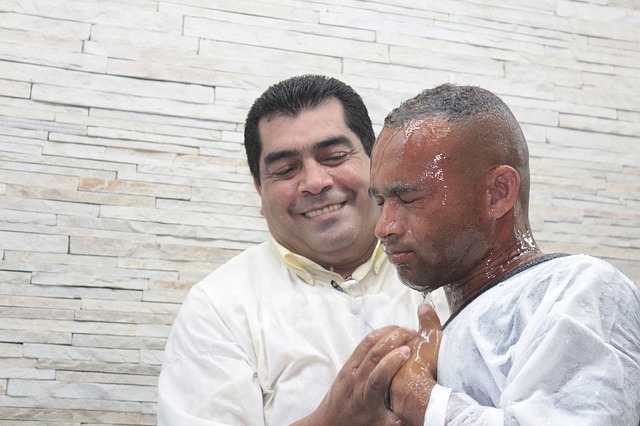
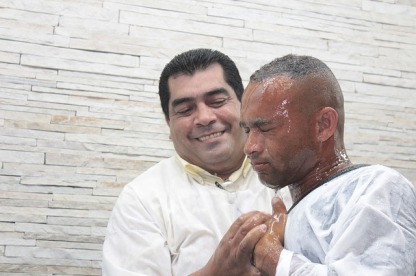
baptism     After hearing and believing the Word, if we are willing to submit to God by confessing our allegiance to Christ and repent of the things we are doing that are wrong, we can become a child of God by being baptized for the remission of our sins.  This step in God’s path to salvation seems to be the most misunderstood and most debated of all of what God requires of us.  Yet, it is a simple step, which the pages of scripture call us to do.  Jesus commands baptism.  The apostles commanded baptism.  Paul was instructed to be baptized.  All of those who converted to Christianity that we can read about in the book of Acts were baptized as part of their conversion.  If you do not believe me, see what God’s Word says about the subject!

     As Jesus was bidding His disciples farewell just before ascending into heaven, He gave them His final instructions.  “And He said to them, ‘Go into all the world and preach the gospel to every creature.  He who believes and is baptized will be saved; but he who does not believe will be condemned’” (Mark 16:15-16NKJV).  Notice here that Jesus states that the one who is a believer and has been baptized will be saved.  It is the same as saying, he who has a ticket and gets into line will be admitted to the game.  We have to have the ticket first in order to get into the game.  If we do not have a ticket, there is no sense in getting into line.  Thus, we have to believe before we are baptized.  If we do not believe, then baptism alone will not affect us.  Additionally, it does us absolutely no good to have a ticket for the game, but to never get into line to enter the building.  Just buying our ticket does not grant us admittance.  Likewise, in order to be saved one must believe and be baptized.

     In Matthew’s recording of the great commission, he writes that Jesus told them to make disciples from all of the nations (Matthew 28:19).  How is it that they were to make disciples?  Jesus tells them how.  He said that they were to baptize them in the name of the Father, Son, and Holy Spirit, and to teach them to observe all of Christ’s commandments (Matthew 28:19-20).  That is how disciples are made.  If you have not been baptized, you are not a disciple (follower) of Jesus Christ.

     It is the act of baptism that washes away our sins.  God did His part in sending His one and only unique Son to die on our behalf, so that our sins might be covered.  Jesus died so that we could be cleansed, sanctified, made holy, and set apart (Romans 5:6-11).  But we also have to do our part in accepting that grace of God.  It is not enough for us to receive a great prize notification, and say that we are rich.  We must claim that prize in order for it to have the intended effect.  It is the act of baptism that puts us in contact with the blood of Christ.  The water has no magical properties, but the act of obedience to what the Lord commanded means that His blood cleanses us from sin.  Paul wrote to the church in Rome, “. . . do you not know that as many of us as were baptized into Christ Jesus were baptized into His death?  Therefore we were buried with Him through baptism into death, that just as Christ was raised from the dead by the glory of the Father, even so we also should walk in newness of life” (Romans 6:3-4).  Being buried with Him in the likeness of His death signifies how we come in contact with the blood He shed, so that our sins can be covered.  Being compared to a burial also tells us of the method of baptism.  It is an immersion, a complete covering.  Otherwise, it is not a burial.

     Peter said that baptism was the act that removes our sins when he preached to the crowd on the day of Pentecost.  On that day the doors of the church were opened for the first time.  Peter explained that those Jews in Jerusalem had been responsible for rejecting Christ and having Him crucified.  They were responsible for His death.  Imagine how they must have felt when Peter showed them that they had put the one and only Son of God to death!  This news pricked them in their hearts.  They were convicted by the word.  They were convinced that they had done wrong.  They wanted to know what they could do to get out of such a terrible predicament (Acts 2:22-37).  “Then Peter said to them, ‘Repent, and let every one of you be baptized in the name of Jesus Christ for the remission of sins; and you shall receive the gift of the Holy Spirit’” (Acts 2:38).  Notice what Peter did not tell them to do.  He did not say to just accept Jesus in your heart and all would be well.  He did not say to repeat a “sinners prayer,” which is not found in Scripture, in order to be saved.  He told them to repent and be baptized.  One is no good without the other.  They were to be baptized for the remission of sins.  Since baptism is the way to remit our sins, if we are not baptized our sins are not remitted.  Later Peter would write that baptism now saves us (1 Peter 3:21).

     One last example to consider is the conversion of Paul.  Paul was a persecutor of the church.  He did not believe in Jesus.  As he was on the way to Damascus to round up more Christians for trial and execution, he saw a bright light and heard the voice of Christ.  Surely that would be enough to save Paul, right?  Notice what Paul was told to do by Jesus.  “Arise and go into the city, and you will be told what you must do” (Acts 9:6b).  So Paul went into Damascus.  There he was told what he must do in order to be saved.  When Ananias came to him, Paul had been praying and fasting for three days (Acts 9:9).  Ananias said to Paul, “And now why are you waiting? Arise and be baptized, and wash away your sins, calling on the name of the Lord” (Acts 22:16).

     Notice that Paul was not saved by seeing Jesus.  He was not saved by speaking to Jesus.  He was not saved by praying and fasting for three days.  If he had been, then why would Ananias have to tell him to be baptized to wash away his sins?  If he had already been saved prior to baptism, there would be no sins that still needed to be washed away.  Notice also that Ananias tells Paul how to call upon the name of the Lord.  You may recall from step one of God’s path to salvation that in Paul’s writing to the Romans in chapter 10 of that letter, Paul told them that those who are saved are those who call upon the name of the Lord.  How do we call upon the name of the Lord?  We do so by obeying Him.  Ananias told Paul that baptism is how we wash away our sins, and how we call upon the name of the Lord.

     The Bible tells us that all of our spiritual blessings are to be found in Christ Jesus (Ephesians 1:3).  Those who are in Christ are no longer condemned (Romans 8:1).  Those who are in Christ are new creatures, having been born again (2 Corinthians 5:17).  Salvation is only to be found in Christ (2 Timothy 2:10).  In Christ, we can have eternal life (1 John 5:11).  So how do we get in Christ in order to receive all of these blessings?  We get in Christ by being baptized into Christ.  “For you are all sons of God through faith in Christ Jesus.  For as many of you as were baptized into Christ have put on Christ” (Galatians 3:26-27, emphasis added).  We must be in Christ to receive the blessings.  We get in Christ by obeying what He has told us to do.  For that, He commanded us to be baptized.
God’s Path to Salvation – Step Three – Confess

IMG_20140614_134736708_HDR     Once we have heard God’s word and have come to believe it to be true, we have to be willing to make a good confession of what we believe.  Just as Paul instructed Timothy to, “Fight the good fight of faith, lay hold on eternal life, to which you were also called and have confessed the good confession in the presence of many witnesses” (1 Timothy 6:12 NKJV), we too are to make a public confession of our faith in Jesus Christ.

     In this confession we are letting others know of our choice to follow Jesus and be obedient to His will.  So then, in our confession, we are stating our belief, but we are also pledging allegiance to God.  There is much more to it than just stating our allegiance, as well.  If all our confession was about just saying that we believe in the existence of God and Jesus as His Son, then all we have done is pay lip service to God.  Satan and the demons know that there is one God, and they know that Jesus Christ is His one and only unique Son.  This is demonstrated in Jesus’ casting out of the demons in Matthew 8.  They called Him by name.  They knew who He was.  They recognized His authority.  Yet they are not among the saved, because they refuse to submit to God.  James wrote, “You believe that there is one God. You do well. Even the demons believe—and tremble!  But do you want to know, O foolish man, that faith without works is dead?(James 2:19-20).

     Therefore, when we confess that we believe in Christ, we are also confessing that we will do all that we can to be faithful and loyal to Him.  It means that we are confessing that we will show by our lives that we are followers of Him.  It means that we are pledging ourselves to Him as a living sacrifice, not being conformed to the world, but trying our best to walk in step with our Savior (Romans 12:1-2).  This style of confession is necessary for us to receive the gift of salvation.  God offers His grace to us, and that grace is free.  There is nothing we can do to pay for it or to earn it somehow, so that God owes it to us.  But we must be willing to lay hold of that salvation that He provides for us.  Confessing Him is part of that.

     Jesus said that whoever would confess Him before men, He would confess before the Heavenly Father (Matthew 10:32).  That is a great deal!  We ought to take hold of that quick, fast, and in a hurry.  You will not find a better deal this side of eternity!  Paul wrote to the Romans, “that if you confess with your mouth the Lord Jesus and believe in your heart that God has raised Him from the dead, you will be saved.  For with the heart one believes unto righteousness, and with the mouth confession is made unto salvation” (Romans 10:9-10).

     Our belief needs to move us to action.  Mental acquiescence of God’s existence only puts us on a level with the demons.  We must act in submission to His will and do what He says to do in order to have salvation.  God says to confess Christ with our mouths, by our actions, and through our lives.  If we do so, we are well on our way to heaven!

The Choice is Ours

Fork-in-The-Road     Every day we get to make choices.  We make choices about what we eat, where we go, what we see, and what we do.  Many of the choices we make seem to only be for that moment, and then they are gone.  Others affect us for the rest of our lives.

     Consider the choice that was put before the Israelites just before they were to go into the Promised Land.  God through Moses told the people that they had a choice before them.  They could choose life and good, or they could choose death and evil (Deuteronomy 30:15).  God was not going to force them to be good or to choose the right path.  The choice was theirs.

     If they chose to do what was right, “. . . to love the Lord your God, to walk in His ways, and to keep His commandments, His statutes, and His judgments . . .” (Deuteronomy 30:16 NKJV), then they could stay in the land that was promised to their fathers forever.  However, if they chose to do that which was against God’s commands, and decided to worship other gods, then they would not be allowed to remain in that land (Deuteronomy 30:17-18).  Ultimately we know what choice they made.  They constantly went after other gods, and their idolatry led to them being taken away in the Babylonian captivity.  Thus, although a remnant returned to that land, they broke their part of the covenant relationship with God and lost the Promised Land.

     We equally have a choice before us.  Will we choose to follow God and make it to the Promised Land of heaven, or will we go our own way and lose out?  Jesus said, “I am the way, the truth, and the life. No one comes to the Father except through Me” (John 14:6).  In order to go to God, we must go through Jesus.  The choice is ours.  Our choices have consequences.  Let us therefore choose wisely!

A Religion of Peace?

niger-church-protest-hebdo     This week in the West African country of Niger, there has been an uprising of Muslims against churches of other faiths.  In the uprising, it has been reported that 45 church buildings have been set afire and many people have been injured or killed as a result of the activity.  All of this was brought on by a French cartoon published by Charlie Hebdo.  It is amazing that all of this violence could be brought about by a cartoon in another country.

     Just what is to be accomplished in attacking those who have no connection to Charlie Hebdo and burning their buildings?  How could anyone call this a normal reaction to a cartoon depicting Mohammed?  Some of those who are calling for calmer heads to prevail are saying that this response does not fit with Islam, since it is a religion of peace.  Is that so?

      According to the beliefs of Islam, the world is divided into two camps.  Those who are in submission to Islam are Dar-al-Salaam (the House of Peace).  Those who are not in submission are Dar-al-Harb (the House of War).  Those who will not submit to Islam are subject to jihad, or holy war, to either convert them at the point of a sword, or to kill them (Sura 2:191; 8:39; 9:123; 47:4).  This hardly sounds like a religion of peace.

     By contrast, the God of the Bible calls on His followers to live at peace with all of mankind.  “Pursue peace with all people, and holiness, without which no one will see the Lord” (Hebrews 12:14 NKJV, emphasis added).  Over and over again we are reminded that God is a God of peace (Romans 14:17; 15:33; 16:20; 1 Cor. 14:33).  Paul wrote to the Corinthians that “God has called us to peace” (1 Cor. 7:15b) and that they should, “Become complete. Be of good comfort, be of one mind, live in peace; and the God of love and peace will be with you” (2 Cor. 13:11).  In His Sermon on the Mount Jesus said that the peacemakers were blessed, because they shall be called the sons of God.

     We should strive to call things as they truly are, and not as we would wish them to be.  We may want for Islam to be a religion of peace.  We may wish for the fundamentalist adherents to the writings of Muhammed to want to live at peace with the rest of mankind and to show tolerance to others.  However, that is not the reality of the situation.  It is our wish that all men would come to God, recognize their sinful nature, realize their lost condition, see the need for Christ, and obey the Gospel and live at peace with all of mankind.  Then, and only then, will we have a peace that transcends all human creeds.  Then, and only then, can we have peace with God.

Don’t I Know You?

who-am-iMaybe this has never happened to you, or maybe it has.  You walk into a store and you see someone who looks familiar to you.  You know that you know them from somewhere, but you cannot recall their name or where you know them from.  Perhaps you walk up to them and say, “Don’t I know you?”

While it is often easy for us to remember faces, remembering names or where we may have seen someone before can sometimes be difficult.  Many times it does not matter that we cannot remember every passing acquaintance in our lives, because most likely they do not remember us either.

 However, if this is a person that we have an intimate relationship with, we had better remember their name and where we know them from!  This leads to the question of whether or not we know God, and if He knows us.  The importance of knowing God, really knowing Him, is seen in Paul’s second letter to the Thessalonians.  Paul writes, “and to give you who are troubled rest with us when the Lord Jesus is revealed from heaven with His mighty angels, in flaming fire taking vengeance on those who do not know God, and on those who do not obey the gospel of our Lord Jesus Christ” (2 Thes. 1:7-8).  Since Jesus will take vengeance on those who do not know God, it is imperative that we know Him.

 It is also important that God knows who we are.  Towards the end of the Sermon on the Mount Jesus declares that those who call Him Lord, but fail to do the will of the Father will be like those He does not know.  They will be told to depart from Him for eternity (Matthew 7:21-23).  We need to know God.  We need for God to know us.  Do you know Him today?

Can You Carry Me?

117-1713_IMG     When my daughter was much younger we all went on a hiking vacation together to Acadia National Park in Maine.  Each day as we hiked, she had little desire to take the easy paths.  She loved to hike the more difficult paths and climb over the rocks, all the while looking for the next trail marker.  At some point in the day, however, her little legs would tire out.  She would turn to me and ask, “Can you carry me, Daddy?”

     There are times when we are walking in our journey of life, where we feel the same way.  We don’t know if our tired legs will hold up any longer, we grow weary, and we want someone to carry us.  It is at those times that we should rely upon the Lord to help carry us along.  The words of scripture tell us that “God is our refuge and strength, A very present help in trouble” (Psalm 46:1 NKJV).  “In God is my salvation and my glory; The rock of my strength, And my refuge, is in God” (Psalm 62:7).  Jeremiah called out to God and said, “O Lord, my strength and my fortress, My refuge in the day of affliction” (Jeremiah 16:19a).

     Jesus offers to help us get through life, if we will choose to follow Him.  He told His disciples, “Come to Me, all you who labor and are heavy laden, and I will give you rest.  Take My yoke upon you and learn from Me, for I am gentle and lowly in heart, and you will find rest for your souls.  For My yoke is easy and My burden is light” (Matthew 11:28-30).  He wants to help us to continue to endure, when we are weary of life and its struggles.  Therefore, why would we hesitate to come to Him?

     As a child of God, we can come to Him and ask Him to help us bear our load.  If we will only do our part, by obeying Him and coming to Him in prayer with our requests, He is faithful to hear us and to come to our aid.  Notice that Jesus said that we are to come to Him when we are heavy laden.  Have you come to Jesus?  If not, why not?  He is waiting for you now!

The Greatest Gift!

3703145222_428db0fdbc_z     Christmas morning!  I remember as a child, my brother and I could hardly sleep the night before in anticipation of the gifts that we would find under the tree.  Invariably, there was always one “big” gift each year, which we would open last.  To build the anticipation, my dad would keep egging us on by saying, “I wonder what’s in that big box.”  As a child, I definitely enjoyed receiving gifts on Christmas.

     As I grew older, I came to realize that there was more joy in giving than in receiving.  To witness the merriment in someone else’s face as they open the gift that you have selected for them was a good feeling that far surpassed whatever I might receive.  Paul understood this to be true as well, when he quoted the words of Jesus that it is more blessed to give than to receive (Acts 20:35).

     As we search the stores and websites in our modern age, from Black Friday to Christmas Eve, we are looking for just the right gift, the perfect gift, the greatest gift that we can give our loved ones.  As we live here on earth, we should realize that God has given us that perfect gift.  He has given us the greatest gift.  He has given us His Son.  “For God so loved the world that He gave His only begotten Son, that whoever believes in Him should not perish but have everlasting life” (John 3:16 NKJV).   God has given us a gift to pay our debt of sin; a debt that we could never repay.  By the blood of Jesus, we can have redemption.

     As we gather with our families and friends on this holiday, we should remember the God who gave us that greatest gift.  Indeed we should always remember the God who loved us so much that He sent His Son Jesus to die for us on the cross of cavalry.  It is by Jesus’ blood that we can have the hope of eternal life with Him in heaven.  You won’t find a better gift than that under anybody’s tree this morning!

Hammer Away

nails     My last remodeling project got me thinking.  As we were going through the process of deconstruction and trying to be careful to limit the amount of scratches and bruises, I began to think about installing the new floor.  You see, when we undertake any project where we are going to be using a hammer and nails it has our full attention.  We don’t want to slip up and hit our fingers or worse yet, pierce our flesh with a nail by mistake.

      Now think about Christ and what He did for us.  He had the power to stop anyone from doing any harm to His body, but He did not exercise that power.  At any time during His mockery of a trial, the scourging of His body, or the nailing of His body on that cross of Cavalry Jesus could have simply said the word ‘stop’ and could have brought His torture to an end.  Concerning His life, Jesus said “No one takes it from Me, but I lay it down of Myself. I have power to lay it down, and I have power to take it again. This command I have received from My Father” (John 10:18 NKJV).

      No one had the power to take Jesus’ life unless He allowed it.  The amazing thing about His love for us in that Jesus allowed those Roman soldiers to take His life.  At a time when we were without hope, at a time when we were still sinners, Christ died for our sins (Romans 5:8).  We work hard to make sure that we don’t slip and allow a nail to poke us in the hand by mistake, but Jesus allowed them to drive large nails through His flesh on purpose.  It is hard to comprehend just what Jesus suffered on our behalf.  So then, are we allowing that sacrifice to have an impact on how we live our lives?

Judge Not?

judge not

Let us take a moment to consider one of the most misquoted scriptures in the entire Bible, which is in the book of Matthew.  Here we read,

 Judge not, that you be not judged. For with the judgment you pronounce you will be judged, and with the measure you use it will be measured to you. Why do you see the speck that is in your brother’s eye, but do not notice the log that is in your own eye?  Or how can you say to your brother, ‘Let me take the speck out of your eye,’ when there is the log in your own eye?  You hypocrite, first take the log out of your own eye, and then you will see clearly to take the speck out of your brother’s eye.  Do not give dogs what is holy, and do not throw your pearls before pigs, lest they trample them underfoot and turn to attack you (Matthew 7:1-6 ESV).

Many will read this passage and immediately say that we are not allowed to make any judgments, based solely on the first verse of Matthew 7 (Judge not).  Is this what Jesus is really saying?  Are we to make no judgments at all based on this?  If, however, we read the rest of the context of this passage, we will find that Jesus is instructing us to not make any rash or unrighteous judgments.  Notice that Jesus tells us to first take care of our own affairs (take the log out of your own eye first), before we take the speck out of someone else’s eye.  It is important for us to realize that He does not say that we should not remove the speck from our brother’s eye.  We need to be able to see clearly in order to do that so that we will judge with righteous judgment.  Elsewhere Jesus tells us, “Do not judge by appearances, but judge with right judgment” (John 7:24).

We should also take special notice of verse 6 of Matthew 7.  How can we be sure to not give to the dogs that which is holy, or to cast our pearls before swine, if we do not make some sort of judgment about our audience?  Perhaps we could think of it this way.  Suppose that we came upon a woman with a flat tire along side of the road, and we stop to help.  Why did we stop?  Did we make a judgment that she is not capable of fixing the problem herself?  What if we come to a dark alley and decide not to venture that way?  Did we judge ourselves as ‘better’ than that alley?  You see, we make dozens of judgments everyday, and there is nothing wrong with that as long as we are judging correctly.