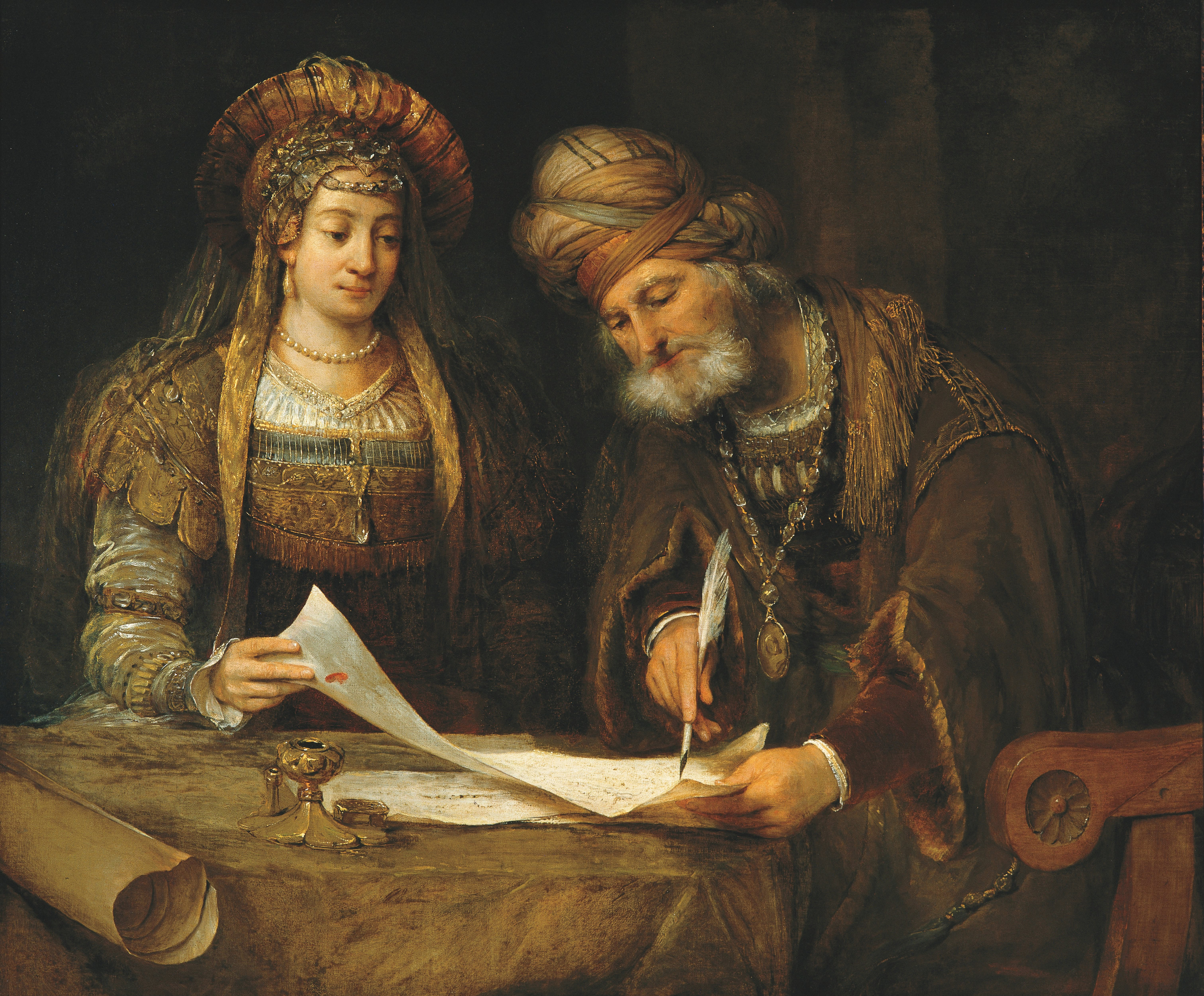
 In the twelfth year of the reign of King Ahasuerus of Persia, Haman, the king’s right hand man, issued a decree that in eleven months all of the Jews within the Persian Empire were to be executed. Haman was looking to wipe out the Jews because Mordecai, a Jew living in the Persian capital of Shushan, refused to bow down to him. The decree was sealed with the king’s signet ring, which he had given to Haman. This meant that the decree carried the authority of the king, and under Persian law it could not be rescinded (Esther 3:7-12).
Unbeknownst to Haman, King Ahasuerus’ wife Esther was the cousin of Mordecai. Thus she was also a Jew. What would become of Esther and her nation? Would they be wiped out by this decree? When news of the planned massacre reached the ears of Mordecai, he pleaded with Esther to appeal to the king (Esther 4:1-9). Esther had not been summoned to appear before the king for some thirty days, however. In Persian law and custom, it was illegal to appear before the king if not summoned. If Esther appeared in the king’s court and did not curry his favor by having him extend his scepter towards her, Esther could be put to death (Esther 4:10-12)! What would Esther do?
Although she was initially reluctant to appear before the king for fear of death, Esther was finally convinced by Mordecai to go before the king. Mordecai urged Esther to go to the king by saying, “[perhaps] you have come to the kingdom for such a time as this” (Esther 4:14b NKJV). Esther showed a great deal of courage and faith in God to go to the king’s court and inquire with the king. Esther’s bold action saved her people and exposed Haman before the king as the bitter, arrogant man that he was. Instead of Mordecai and the Jewish nation being wiped out, Haman and his whole household were destroyed. Mordecai and Esther became prominent members of the ruling class of Persia.
Are we, like Esther, afraid to approach the King? Do we hesitate to come before our Lord and King in prayer due to feelings of fear, inferiority, or hopelessness? Like Esther we should have the courage to boldly come before the throne of God with our prayers and petitions (Hebrews 4:16). Even though God already knows what we need before we ask for it, He still desires that we come before Him (Matthew 6:8). We need not fear that we are “wasting God’s time” with our requests and prayers of thanksgiving. God loves us, and He wants to hear from us. Therefore, let us continue to come before the throne of our Lord and Ruler in prayer.

 Near the end of the kingdom of Judah, the word of the Lord came to the prophet Jeremiah and he was told to put all the accusations against Israel in Judah into a scroll. The hope of the Lord was that the people in Judah would hear about all the wrong things that were done, which offended God, and that they would repent before it was too late. The scroll was dictated by Jeremiah and written by the hand of Baruch, who was a scribe. After being read in the temple, the scroll was taken to king Jehoiakim, the son of Josiah (Jeremiah 36:1-4, 16).
 Is it acceptable for each of us to do that which is right in our own sight? Are we free to make our own rules for what is right and wrong? Toward the latter section of the book of Judges, we find that there are two phrases that that are oft repeated for emphasis. The first of these is a reminder that there was no king in Israel in those days, and the second is that everyone did what was right in their own sight (Judges 17:6; 18:1; 19:1; 21:25). In these examples we can find the answer to our questions.
 Americans across the country are beginning to gather in coffee shops, local burger joints, and neighborhood hangouts and discussing who our next president will be. Those in Iowa, New Hampshire, and other early primary states have made, or are making their choices now. We see it as a great privilege within our political system that we are allowed to choose our choice candidate to be our next leader. While democracy in politics and government is a great system, we must be sure to recognize that we do not get to choose when it comes to the one who is our ultimate ruler.
 salvation's path