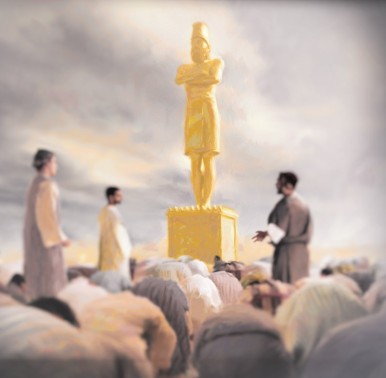
 Back in the days of Daniel, when the children of Israel were exiled in Babylon, King Nebuchadnezzar decided to have a 90 foot tall golden statue constructed. The king then commanded that at the proper time all were to bow down and worship this golden image. There were those among the exiles, however, who were faithful to God and would not bow down to the image even though the penalty was death in a fiery furnace (Daniel 3:1-12). These three men, Meshach, Shadrach, and Abed-Nego, were not going to violate their worship to the one true God by bowing down and paying homage to the image Nebuchadnezzar created. Did they not know that this would cost them their physical lives?
Meshach, Shadrach, and Abed-Nego knew full well what the penalty was for refusing to bow to the statue, and yet they remained unconcerned. They responded to the king that they need not be worried over the circumstances of their refusal, because their God was able to deliver them (Daniel 3:17). They knew that God had the power to save them from the physical death in the fiery furnace. Then they uttered three words that demonstrated their great faith in the Almighty God, “but if not” (Daniel 3:18). Even if God decided to not save them from the physical trial, they knew that God could still deliver them spiritually.
How is our faith in times of trouble or trial? Do we have the faith to stand with the one true God, or do we see our trials as too difficult and give in to the rest of the world? Do we take the path of least resistance to avoid trial or persecution? Let us look to these three young men as examples of how we should approach physical trials. God has the power to deliver us from all sorts of physical trials. But if not, He is still the only one who can deliver our souls from everlasting destruction.

 salvation's path