How Do You “Feel” About That?

2269421     I recently read a blog article by someone who claims to be a Christian about what it takes to be a Christian.  I am sure that there are many blogs out there that address this issue in one way or another, but what was interesting about this particular post is what the author claimed he believed.  Or, to be more accurate, what he claimed to not believe.  The author stated that he does not believe that Jesus is God.  He does not believe that Jesus walked on water, healed the sick, raised Lazarus from the grave, was born of a virgin, was raised Himself after three days in the grave, or that He died for the sins of mankind.  So we may ask the question, why does he consider himself to be a Christian?  Reading on in the article, the author’s beliefs were based purely on what he “feels” about God.

     If the basis of religious truth is nothing more than how we feel about something, how could you ever prove what is true?  I may feel that one thing is true and someone else may feel that the opposite is true, so which one is correct?  Truth has to be based on facts.  I may feel that the water is cold.  Someone else may feel that the water is hot.  But if we take a thermometer and measure the temperature of the water, now we have established the facts.  Now we can know if the water is really cold or hot.

     If we are going to follow Jesus.  If we are going to be one of His.  If we are going to call ourselves Christians (meaning that we belong to Christ).  Then we need to pay attention to what He said and what He did.  Jesus established the basis of truth in His prayer to the Father, “Sanctify them by Your truth. Your word is truth” (John 17:17, NKJV).  What are the facts in this case?  What is it that we are to believe?  Let us look into the truth of God’s word for that answer, for without God’s word we would have no facts at all about who God is, what He is like, or what He desires for us to do.

     Jesus said that He was God. “And He said to them, ‘You are from beneath; I am from above. You are of this world; I am not of this world.  Therefore I said to you that you will die in your sins; for if you do not believe that I am He, you will die in your sins’” (John 8:23-24).  In this particular passage Jesus says that unless you believe that “I am” you will die in your sins.  That “I am” statement should take us back to Moses and the burning bush, where God told Moses to tell the Israelites that I AM had sent him (Exodus 3:14).  If we are going to claim to be followers of Jesus, should we not believe what He said?

     Why claim to follow Jesus if He was not raised from the dead?  This does not make any logical sense.  If He was not raised from the dead then there is no basis for the Christian religion.  Without the resurrection of Christ, there is no foundation for Christianity.  Consider what the apostle Paul wrote by inspiration:

Now if Christ is preached that He has been raised from the dead, how do some among you say that there is no resurrection of the dead?  But if there is no resurrection of the dead, then Christ is not risen.  And if Christ is not risen, then our preaching is empty and your faith is also empty.  Yes, and we are found false witnesses of God, because we have testified of God that He raised up Christ, whom He did not raise up—if in fact the dead do not rise.  For if the dead do not rise, then Christ is not risen.  And if Christ is not risen, your faith is futile; you are still in your sins!  Then also those who have fallen asleep in Christ have perished.  If in this life only we have hope in Christ, we are of all men the most pitiable (1 Corinthians 15:12-19, emphasis added).

If Jesus was just another man, why follow Him rather than anyone else?

     The reason that Christians follow Jesus Christ is because He was not just a man.  Jesus is God (John 1:1-5, 14).  Jesus arose from the dead and was seen by many witnesses, which the people in that day and age were unable to discredit (1 Corinthians 15:3-8).  Because He rose from the grave, His apostles and disciples had a newfound courage to be able to go to martyrdom and not worry about losing their physical lives.  Now they understood that there was something more beyond the grave, and so they no longer turned away or deserted their Savior in times of trouble.  If Jesus had not been resurrected, this would not have been the case.

     If we are going to call ourselves Christians, it would seem logical to suppose that we are going to believe what Jesus said, and that we are going to do what Jesus said to do.  We can claim all day long to be one of His, but if we are not doing what He said, then that claim is false.  I can claim to be the King of Morocco, but claiming it does not make it so.  What is the truth of the matter?  Jesus said,

Not everyone who says to Me, ‘Lord, Lord,’ shall enter the kingdom of heaven, but he who does the will of My Father in heaven.  Many will say to Me in that day, ‘Lord, Lord, have we not prophesied in Your name, cast out demons in Your name, and done many wonders in Your name?’  And then I will declare to them, ‘I never knew you; depart from Me, you who practice lawlessness!’ (Matthew 7:21-23).

We had better know what the will of the Lord is, which is based upon the truth of His word and not upon our feelings.  “And do not be conformed to this world, but be transformed by the renewing of your mind, that you may prove what is that good and acceptable and perfect will of God” (Romans 12:2).  You cannot prove it, if you do not know it!  However, we can know for sure what the Lord requires of us.  Paul wrote in Ephesians, how that by revelation He made known to me the mystery (as I have briefly written already, by which, when you read, you may understand my knowledge in the mystery of Christ)” (Ephesians 3:3-4).  When we read God’s word, we can understand what He requires.  We can know what His will is.  Come and see what God’s word has to say on this subject and many others.  The Holy Bible can help us to cut through the fog of confusion and see the truth for what it really is!

Jesus Is Better

Jesus Footprints     In a good news article the four ‘W’s are usually brought out in the first paragraph.  At least that’s what I remember from my very brief education on journalism from a long ago English course.  Writers want to let the reader know who, did what, when, and where.  In looking at the beginning of the book of Hebrews, we might call the writer a good journalist. “God, who at various times and in various ways spoke in time past to the fathers by the prophets, has in these last days spoken to us by His Son, whom He has appointed heir of all things, through whom also He made the worlds” (Hebrews 1:1-2, NKJV).

     Notice with me some of what is in these two little verses of scripture.  First, in verse one, God is the who.  Spoke is what He did.  The when is in times past, and the where was to the fathers.  The verse also tells us how God did that.  It was at various times and in various ways and through the mouth of the prophets that God spoke to mankind in times past.  Second, in verse two, God is still the one speaking, so the who and the what are the same.  However, now that speaking has been done in these last days, and it has been spoken to us by His Son, Jesus Christ.

     There are many lessons that we can learn from the old law and the Old Testament (Romans 15:4).  However, now we are told to hear God’s Son and pay the more earnest heed to His words (Matthew 17:5; Hebrews 2:1-4).  Indeed the message that comes from the entire book of Hebrews is that Christ is better.  He is better than the angels.  He is better than Moses.  He is better than the human high priests.  He mediates a better covenant, established on better promises, with a better hope (Hebrews 7:19; 8:6).

     It is Jesus Christ, the one and only unique Son of God, who has brought salvation to mankind.  We need to hear what He has to say.  We need to obey His commands.  Otherwise, how shall we escape the punishment for our sins that we deserve? “How shall we escape if we neglect so great a salvation, which at the first began to be spoken by the Lord, and was confirmed to us by those who heard Him” (Hebrews 2:3).

Independence

Washington-DC     Independence is something that most Americans desire.  We want to be our own boss.  We do not like being told what to do.  We want to be the ones in charge of our life and our decisions.  When we go to 7-11, we want the 44 ounce Mountain Dew, and we do not want someone telling us we cannot have it.

     In the time of Jesus there were a good many Jews who also longed for their independence.  They did not like it that Rome was in charge and they had no say over their political affairs.  A faction of the Jews known as the Zealots tried to make things difficult on the Romans.  They assassinated leaders and revolted against Rome, which led to the Roman destruction of Jerusalem in 70 A.D. and the Zealot’s last stand at Masada (Josephus, Wars of the Jews).

   While political independence is something to be desired, we need to realize that we will never be totally independent.  We cannot create our own food out of nothing.  We cannot create the air we breathe in by speaking it into existence.  We cannot make our hearts stop and start beating.  We need to recognize our dependence upon God.

     God, through the pen of Paul, lets us know that we are all slaves to someone.  We are either slaves/servants of God, or we are slaves of the evil one. “Do you not know that to whom you present yourselves slaves to obey, you are that one’s slaves whom you obey, whether of sin leading to death, or of obedience leading to righteousness?” (Romans 6:16 NKJV).  We may think that we are being independent when we choose to walk away from God, but we are only making ourselves slaves to someone/something else.

     If we want true freedom from sin, if we want a reward in heaven when this life is over, then we need to realize our total dependence upon God.  We need to learn of His will, and we need to obey Him (Matthew 7:21ff; 2 Thessalonians 1:7-9).  Jesus said that we could know the truth, and that the truth would make us free from sin (John 8:32).  Thus, we can have independence from the evil one, but only by being dependent upon God!  God will not force us to choose Him.  That is our independent choice.  Who will you choose to depend upon?

Why Can’t I Use Any Wood?

Gopherwood     In today’s modern culture there is an emphasis on self sufficiency. That is, man believes that he is to be the ultimate judge and determiner of his own destiny. He does not need to rely on any one else. In such a spirit, we can imagine a modern day Noah asking the title question when God instructed him to make an ark.

     In the story of Noah, we see that God specified that Noah was to use a particular type of wood for the ark. God said, “Make yourself an ark of gopherwood; make rooms in the ark, and cover it inside and outside with pitch” (Genesis 6:14 NKJV). While we do not know today just exactly what gopherwood was, it is clear that this is the wood that God specified that Noah was to use. It would not do for Noah to use any type of wood. When God specifically told him to use one kind of wood, He expressly eliminated all other types of wood. We see Noah’s righteousness in that he did just what God had commanded him to do (Genesis 6:22). Noah would not have been blessed had he not obeyed what God told him to do and used another type of wood.

     God did not need to provide Noah with a list of all the types of wood that were forbidden. He only needed to specify which wood was acceptable for the task. Today, many want to take the pages of Scripture and say that they are allowed to do whatever God has not specifically condemned. However, this is a misapplication of God’s Holy Word. For instance, God did not command us to make music, but instead told us to sing (Col. 3:16; Eph. 5:19). Had He told us to simply make music, we could do whatever we wished. Instead, He commands us to sing. That command to sing eliminates all other forms of music. He does not need to list all that is forbidden, since He has specified what is acceptable. It is the same as a sign on the restroom that specifies “Men.” That sign does not need to list who is not allowed, since it only authorizes men to enter.

     There are many other examples that can be used to show the same line of reasoning.  The fire that Nadab and Abihu used would be another indication that God specified what He wanted, and it eliminated all other types of fire (Lev. 10:1-3).  Just as Noah could not use any wood that he saw fit to use, we cannot be of the opinion that we can wander from what God has specified with regards to our worship to Him in our singing.  Let us not be guilty of going beyond what God has commanded!

God’s Path to Salvation – Step Four – Repent

14130441997_a4c5a31a2d_o     The next step in God’s path to salvation is to repent of the things that we have done, or are doing, which are not in accordance with God’s word.  Jesus Himself taught that repentance was necessary when He taught His disciples about those Galileans who were killed by Pilate, or about those upon whom the tower of Siloam had fallen upon.  He told them that unless they repented they would all likewise perish (Luke 13:3, 5).

     Similarly, Paul stood upon Mars’ Hill in Athens and preached to those who were listening about the “unknown” God.  In that address, Paul stated that repentance was necessary for salvation.  Regarding their past ignorance of God’s will he told them, “Truly, these times of ignorance God overlooked, but now commands all men everywhere to repent, because He has appointed a day on which He will judge the world in righteousness by the Man whom He has ordained. He has given assurance of this to all by raising Him from the dead” (Acts 17:30-31).  Notice that God calls upon all men, all of mankind to repent.  Notice also that He calls upon all men everywhere.  That means that no one is exempt from the command to repent.

     Later, Paul would tell young Timothy that God wants all men to come to a knowledge of the truth and to be saved (1 Timothy 2:4)  Additionally, Peter explains that God is not willing for anyone to perish spiritually.  He wishes for all men, again that is all of mankind, to repent of what they have done wrong.  Peter writes, “The Lord is not slack concerning His promise, as some count slackness, but is longsuffering toward us, not willing that any should perish but that all should come to repentance” (2 Peter 3:9).  Because it has been almost 2,000 years since the sacrificial death of Jesus upon the cross, men are likely to wonder about the second coming.  It is God who is holding off on the end of the world, because He does not want anyone to perish.  He wants all men everywhere to come to repentance and be obedient to His will.

     Therefore, we need to repent of our sins in order to lay hold of eternal life, but just what is involved in that repentance?  Is it just saying that I am sorry for what I have done?  Is it just saying that I am sorry that I got caught doing something wrong, or is there more to it than that?  We must not be misled into thinking that repentance is just a feeling of momentary sorrow with no change in our actions.  There is much more to repentance than just that feeling of sorrow.  Repentance means that we make a change in our life.  We do not just feel sorry for what we have done, but if we are sinning against God then we change our lifestyle to reflect His wishes, His commands, His will.  Paul explains this difference in writing to the church at Corinth:

Now I rejoice, not that you were made sorry, but that your sorrow led to repentance. For you were made sorry in a godly manner, that you might suffer loss from us in nothing.  For godly sorrow produces repentance leading to salvation, not to be regretted; but the sorrow of the world produces death.  For observe this very thing, that you sorrowed in a godly manner: What diligence it produced in you, what clearing of yourselves, what indignation, what fear, what vehement desire, what zeal, what vindication! In all things you proved yourselves to be clear in this matter (2 Corinthians 7:9-11)

Notice that Paul is not rejoicing in their sorrow, but in the fact that their godly sorrow produced repentance, a change of direction.

     It is our godly sorrow that will lead us to repentance.  Our repentance, our change of mind, our change of direction will then lead us to God and His salvation.  It is not like the sorrow of the world whereby we might just be sorry that we were caught in wrongdoing.  Let us all put our sins behind us, and throw off that weight so that we may run our race unencumbered by sin (Hebrews 12:1).  Let us learn to repent of what we do that does not match God’s will, so that we can have that hope of eternal salvation when our life here is done!

A Desired Result

WaxOnWaxOff     In the 1984 movie The Karate Kid, a young boy who is tired of being bullied comes to Mr. Miyagi to learn karate.  While training him, Mr. Miyagi is shown to have some strange teaching methods.  He has Daniel wash and wax his vehicles, sand the floor of his deck, and paint his fence.  When Daniel doubts that he has learned anything useful, Mr. Miyagi shows him what the motions that his muscles have memorized can do to help him defend himself.

     In the Bible we can read of a similar situation.  Naaman, a commander of the army of Syria, came to Israel to seek out the prophet Elisha in order to be healed of his leprosy (2 Kings 5:1-8).  As he approached Elisha’s house he was met by a messenger who had come from Elisha.  The messenger told Naaman that in order to be cured of his leprosy he must dip in the Jordan seven times (2 Kings 5:9-10).

     Naaman was furious.  He thought that Elisha would wave his hand all over the place and make a great show in calling on the name of God.  Instead, Elisha has sent his word by a messenger.  To top it all off, Naaman was told to dip in the dirty Jordan river, not the much better rivers back home in Syria (2 Kings 5:11-12).  Nevertheless, Naaman did what the prophet instructed him to do, and his leprosy was healed (2 Kings 5:13-14).  Like Daniel with Mr. Miyagi, Naaman learned that simple obedience produced a desired result.

     How is it with us?  Do we expect to be tapped on the shoulder by God and told what to do?  At one time God spoke with man either directly or through the prophets, but now He speaks to us by His Son (Hebrews 1:1-2).  Jesus’ message for salvation is simple, “he who believes and is baptized will be saved” (Mark 16:16a NKJV).  We may be looking for a grander scheme, but why not simply obey what God has said to do.  After all, it worked out pretty well for Naaman!

Blisfull Ignorance

Perhaps you’ve heard it said that ignorance is bliss, or that what is not known cannot hurt us. The idea is that if we do not know that something can hurt us, then we will have no need to worry about it.  Therefore, we can be blissful and happy.  But how does this play out in reality?

MINOLTA DIGITAL CAMERA

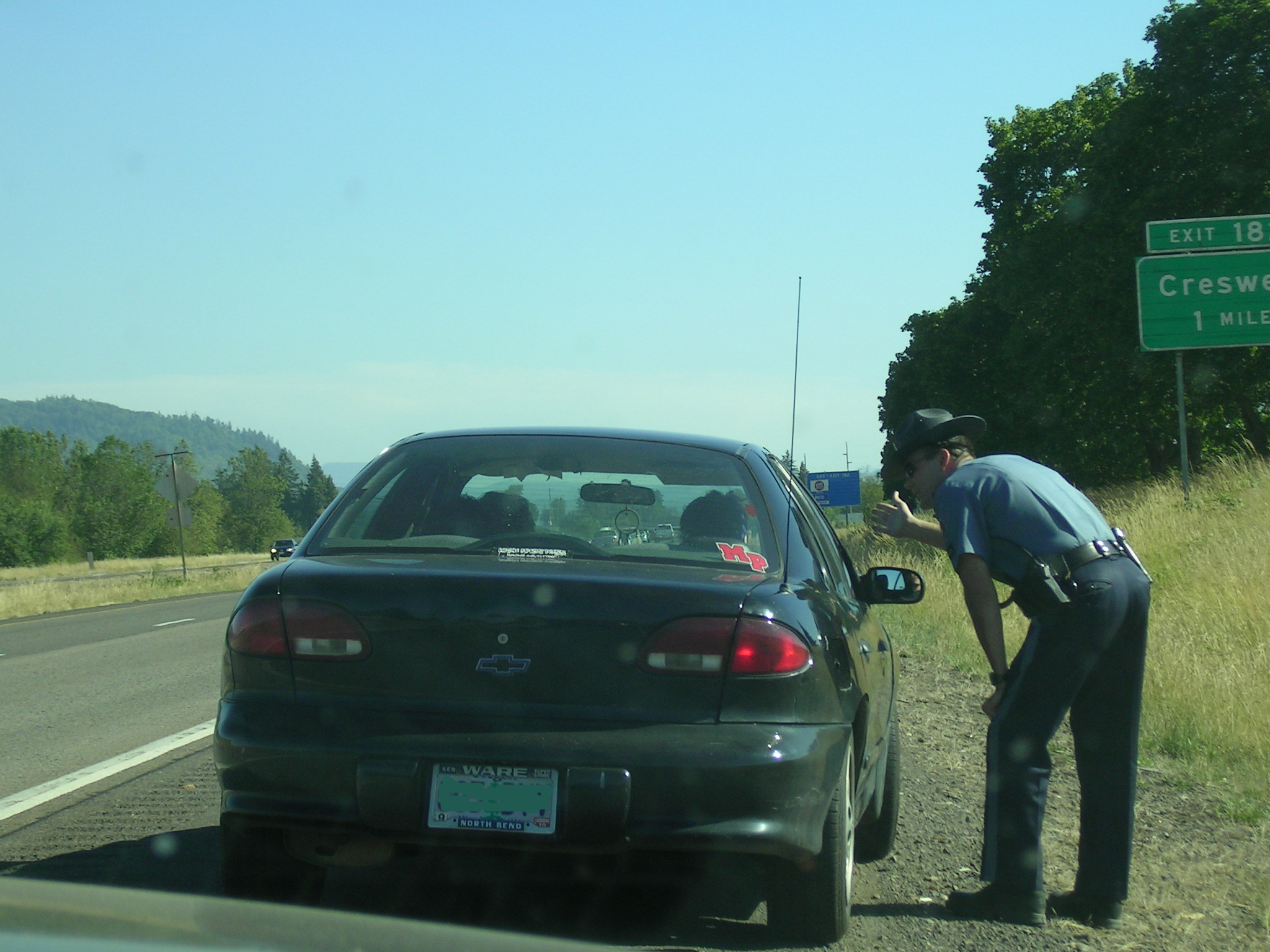
Do you know how fast you were going?

 We can be ignorant of the speed limit and drive as fast as we wish. Will our ignorance of the law be a viable excuse when the police officer pulls us over?  Ignorance of the law will not stand up as a defense.  If we ignore the speed limit, we will pay the price (fine) for that ignorance.  We can be ignorant of the fact that the stove top burners can hurt our hand.  Here again, ignorance will not keep us from coming to harm if we place our hand on a lit stove burner.

 Many in our world today act as if they can be ignorant of God and His requirements, and yet all is well. They go on in blissful ignorance with no care for their future state.  And, indeed, we may see many people who live this way and nothing bad ever befalls them.  Have they somehow found a path that circumvents God’s requirements?  Is there bliss in their ignorance?

 God paints a different picture of ignorance and a lack of knowledge concerning Him. The prophet Hosea spoke for God and lamented the fact that His people were being destroyed by a lack of knowledge (Hosea 4:6).  Paul writes by inspiration to the Romans that God’s power and divine Godhead are evident in the creation, such that they (those who ignore God and walk in ignorance) are without an excuse (Romans 1:18-20).  When Paul stood on Mars’ hill in Athens and addressed the Greeks, he stated that in times past God may have winked at man’s ignorance, but now calls on all men everywhere to repent (Acts 17:30).

 We can ignore God. We can make that choice.  We can claim ignorance is bliss.  However, ignorance of the law is no excuse.  Ignorance can bring us great harm.  Jesus declared that His word would judge us in that last day (John 12:47-48).  Therefore, we must know what His word says for us to do.  God desires that all men seek Him out, repent of what is wrong in their lives, and live in obedience to Him.  That is the true path to bliss.  Are you truly blissful this day?

Hammer Away

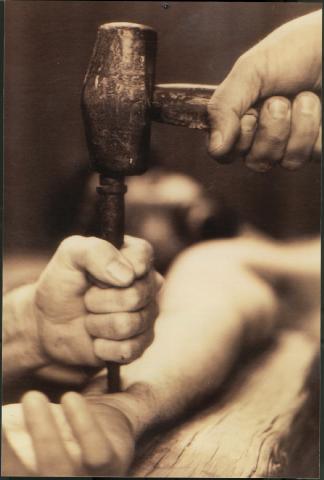
nails     My last remodeling project got me thinking.  As we were going through the process of deconstruction and trying to be careful to limit the amount of scratches and bruises, I began to think about installing the new floor.  You see, when we undertake any project where we are going to be using a hammer and nails it has our full attention.  We don’t want to slip up and hit our fingers or worse yet, pierce our flesh with a nail by mistake.

      Now think about Christ and what He did for us.  He had the power to stop anyone from doing any harm to His body, but He did not exercise that power.  At any time during His mockery of a trial, the scourging of His body, or the nailing of His body on that cross of Cavalry Jesus could have simply said the word ‘stop’ and could have brought His torture to an end.  Concerning His life, Jesus said “No one takes it from Me, but I lay it down of Myself. I have power to lay it down, and I have power to take it again. This command I have received from My Father” (John 10:18 NKJV).

      No one had the power to take Jesus’ life unless He allowed it.  The amazing thing about His love for us in that Jesus allowed those Roman soldiers to take His life.  At a time when we were without hope, at a time when we were still sinners, Christ died for our sins (Romans 5:8).  We work hard to make sure that we don’t slip and allow a nail to poke us in the hand by mistake, but Jesus allowed them to drive large nails through His flesh on purpose.  It is hard to comprehend just what Jesus suffered on our behalf.  So then, are we allowing that sacrifice to have an impact on how we live our lives?

Peace and Safety

3828960388_ebf3fe4262_z     Last week my family and I traveled to our nation’s capital on vacation.  While we were in D.C., a man jumped the fence and attempted to gain entry to the White House.  It was not me.  However, it made us think about the security measures we did see while in Washington.  At most of the museums and monuments, there were security screenings and metal detectors in an effort to make us all feel safe.

That feeling of safety is something we all crave, especially in our modern world.  News of attacks and planned attacks seem to dominate the news.  And while the extra security measures are necessary to try to prevent further attacks, do they really make us feel safe?  When the security guard is talking to his buddy about last night’s game instead of watching the x-ray monitor, do you really feel safer?

While we may never be at peace or feel that we are completely safe in a physical sense in this world, there is a peace and safety that comes from the Lord.  This peace allows us to pillow our heads at night and sleep, without having to worry about what will come in the night.  As David wrote, “I will both lie down in peace, and sleep; For You alone, O Lord, make me dwell in safety” (Psalm 4:8 NKJV).

If we are in a right relationship with God, if we are in obedience to His will and His word, if we have put our trust in Him, then we can have peace.  We have a peace of mind, even if we don’t live in a world that provides us with much hope of physical safety (John 14:27).  We can have that peace, because we know that if anything happens to this earthly body, our eternal soul will be in the hands of a God who loves us.  If you want that peace too, you can have it by seeking God and obeying what He has told us to do.

God Wants You!


070822-N-0807W-233

I can remember being in school gym class as sides were being chosen for a game of kick ball.  Everyone wanted to be picked first to be on the best team.  No one wanted to be picked last, because if you were last, you were not really picked.  As one of my classmates aptly pointed out, being the last player chosen meant that team ended up with you by default.  They did not choose you.

How comforting it is to know that if we are obedient to God’s word that He has chosen us for salvation.  There is no pecking order, and God has not ended up with us by default, but we were chosen by Him to be His children.  Consider what Peter writes in saying,

“Coming to Him as to a living stone, rejected indeed by men, but chosen by God and precious, you also, as living stones, are being built up a spiritual house, a holy priesthood, to offer up spiritual sacrifices acceptable to God through Jesus Christ. . . But you are a chosen generation, a royal priesthood, a holy nation, His own special people, that you may proclaim the praises of Him who called you out of darkness into His marvelous light” (1 Peter 2:4-5, 9 NKJV).

God has chosen those who will obey Him to be His own special people, a royal priesthood, a chosen generation.  He has chosen us to be His, and He has chosen us for His own special mission.  That mission is to proclaim the praises of the One who has called us out of the darkness and into His marvelous light.

God wants you, but you have to come to Him in simple obedience of His word, as a living stone or living sacrifice (Romans 12:1-2) in order to be accepted by Him.   Are you a member of that chosen generation?  Are you one of His own special people?  Are you a part of that royal priesthood?  If not, why not?