
Seeing then that we have a great High Priest who has passed through the heavens, Jesus the Son of God, let us hold fast our confession. For we do not have a High Priest who cannot sympathize with our weaknesses, but was in all points tempted as we are, yet without sin. Let us therefore come boldly to the throne of grace, that we may obtain mercy and find grace to help in time of need (Hebrews 4:14-16).
Oftentimes we may look at prayer as a commanded ritual or a timid request before a distant God. While we must be humble before God, the Hebrews writer paints a different picture with regards to our prayer life. God wants us to draw near to Him with confidence. He wants us to come boldly before His throne to receive grace and mercy. Our confidence in so doing doesn’t come from ourselves or what we have merited by our own actions. It is only because of the work of Jesus upon the cross that we have this access through our High Priest (Hebrews 10:19-22).
Jesus is a High Priest who understands us. He came down from heaven and dwelt among us (John 1:14). While He had no faults or sins of His own, He has been tempted in all ways like we have. There is no temptation that we face that Jesus has not overcome Himself. When we speak to the Father through Jesus, we have a mediator who can empathize with our struggles.
Prayer for us should never be a burden. It is a magnificent lifeline direct to the throne of God. Men living before the cross of Jesus did not have this kind of access to God. However, since Jesus shed His blood for us, and since we can make contact with that blood through baptism (being buried with Him – Romans 6:3-4), we can now approach the throne of God 24 hours a day 7 days a week.
We don’t have to come with timidity, like the human high priests did once a year on the Day of Atonement (Leviticus 16). We can draw near to God with confidence, knowing that we are His beloved children, and that He longs to hear from us.
 Have you ever prayed for God to take care of some problem that you had, and then wondered what the answer to that prayer would be? It is especially difficult for us as Americans to be patient in waiting for a response. We are so accustomed to fast food, microwave ovens, and instant messaging that we expect immediate results. Additionally, it may be that the answer to our prayer is “not now,” and so we have to wait awhile for the result. This is a normal situation, but during the time of Hezekiah, he received an instant response to one of his prayers.
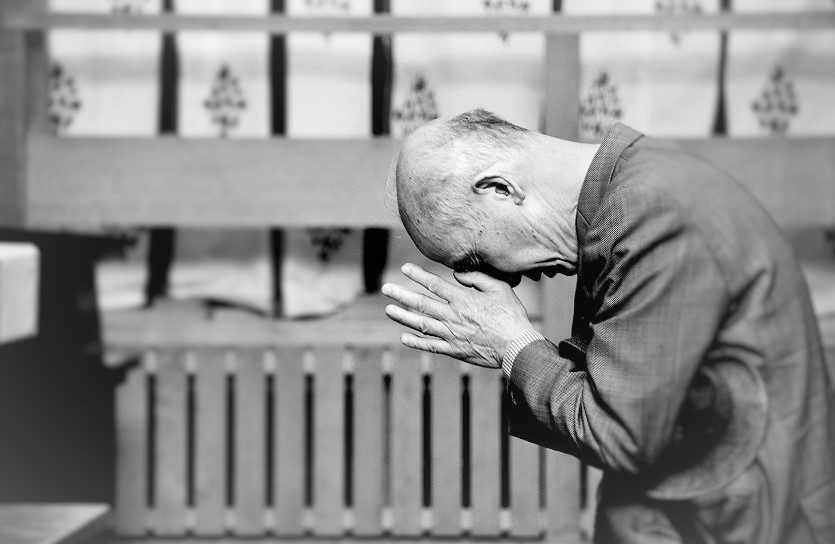 Many times we may hear those in the world refer to salvation by simply praying Jesus into our hearts, or by reciting the ‘sinner’s prayer.’ Is this really all there is to salvation? Is this all that God requires of man for accepting His grace? While there are many places in scripture we could look for the answer to this question, let us consider just one example.
 In the twelfth year of the reign of King Ahasuerus of Persia, Haman, the king’s right hand man, issued a decree that in eleven months all of the Jews within the Persian Empire were to be executed. Haman was looking to wipe out the Jews because Mordecai, a Jew living in the Persian capital of Shushan, refused to bow down to him. The decree was sealed with the king’s signet ring, which he had given to Haman. This meant that the decree carried the authority of the king, and under Persian law it could not be rescinded (Esther 3:7-12).
 In this day and age we see and hear much on the TV, the radio, and on the internet regarding our political leaders on both sides of the aisle. Most of the time, the information is a negative comment or complaint about one party or the other. While our politicians may leave much to be desired and give us many opportunities to complain, the question we should ask is are we praying for these people?

 In this day and age we see and hear much on the TV, the radio, and on the internet regarding our political leaders on both sides of the aisle. Most of the time, the information is a negative comment or complaint about one party or the other. While our politicians may leave much to be desired and give us many opportunities to complain, the question we should ask is are we praying for these people?
 salvation's path