A Tale of Two Substitutes

tale-of-two-cities     In Charles Dickens’ novel, A Tale of Two Cities, there comes a point where one of the main characters, Charles Darnay, is arrested by the mob during the French Revolution and is sentenced to death. Because of the love that he has for Charles’ wife, Lucie, another character, Sydney Carton, takes Darnay’s place at the guillotine instead. As Carton goes to his death, he utters the most famous line of the novel, “It is a far, far better thing that I do, than I have ever done; it is a far, far better rest that I go to than I have ever known.”

     Just as Sydney Carton substituted himself for Charles Darnay for the sake of love, there is One who has sacrificed Himself for you, because of the love that He has for you. One of the most famous and well known scriptures in the Bible is found in John 3:16, which states, “For God loved the world in this way: He gave His One and Only Son, so that everyone who believes in Him will not perish but have eternal life” (HCSB). Even though we were undesirable, ungodly, weak, and enemies of God at the time, “God demonstrates His own love toward us, in that while we were still sinners, Christ died for us” (Romans 5:8, NKJV). Mankind had separated themselves from God through the tragedy of sin (Isaiah 59:1-2), but because Jesus came and died in our stead, we can now have that hope of eternal life in heaven.

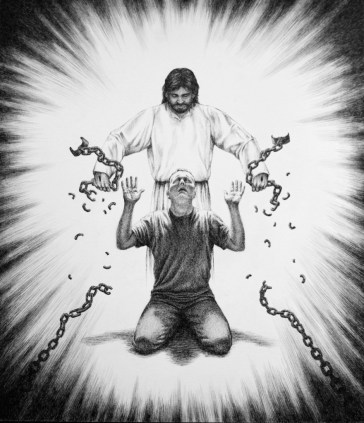
     Because we commit sin, we have the sentence of death in ourselves (Romans 3:23; 6:23). We can do nothing of ourselves to remedy this situation, for we are unable to pay the price. It takes the sacrifice of a sinless life in order for us to be justified before God. What we could not provide for ourselves, God has provided in His Son, Jesus Christ. A greater love than this cannot be found! “Greater love has no one than this, than to lay down one’s life for his friends” (John 15:13). Jesus substituted His sinless life, to die on the cross, to save us from our own spiritual death. Let us obey what He says to do, in His Holy Bible, so that we can apply the blood He shed and wash away our sins (Acts 22:16; Revelation 1:5).

Yaweh-jireh – The Lord will Provide

     There are eight various names or descriptions that are used to characterize God within the book of Genesis. One such name is Yaweh-jireh, which translated means God will provide. This name for God is found only once in Genesis 22:14.

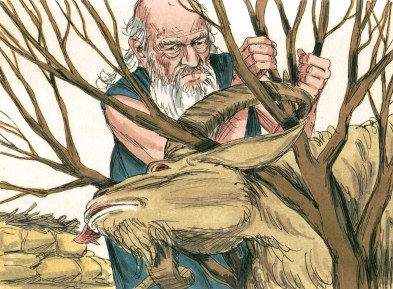
     Abraham gives this name to God and to the location where he was to offer his only begotten son Isaac in Genesis 22. eightThis is significant in that it shows the attitude of Abraham that he had faith in God, and he believed that God would provide for him that which is necessary. The name Yaweh-jireh ties in with the thought expressed earlier in the chapter when Isaac inquires of his father about the lamb for the sacrifice (Genesis 22:8). Abraham’s answer to Isaac is “well-nigh prophetic” in answering him that they would be provided for by God Himself. This comes to fruition when Abraham is halted from his sacrifice of Isaac and a ram is provided by God for their sacrifice. Thus in the name Yaweh-jireh we find that the Lord has provided or seen to the needs of Abraham and Isaac.

     Additionally, there are other implications that can be drawn from the use of the name Yaweh-jireh at this particular location geographically. Here Abraham is calling this place upon the mountain where he purposed to offer Isaac, the mountain where the Lord provides, and in this mount of the Lord it shall be seen or provided (Genesis 22:14). It is speculated that this may be the mountain that would later be the location of the Temple, where God would be worshipped, and where Jesus would later appear in person.   This may also be the mountain upon which Jesus would later be offered as a sacrifice, which has many parallels to the intended offering of Isaac. Adam Clarke, in his commentary on Genesis, says that it, “appears that the sacrifice offered by Abraham was understood to be a representative one, and . . . that Jehovah should be seen in a sacrificial way on this mount.” In this sense the Lord certainly did provide for man in this mountain. We all should be thankful for Jesus’ willingness to be that sacrifice for each of us!

Who Are You Listening To?

          After reigning over Israel for forty years, King Solomon died and rested with his fathers (1 Kings 11:42-43). The next in line to the throne was his son Rehoboam, but he had a test presented to him by the nation of Israel. How would he handle this challenge? Would he be able to win the hearts of the people? In order to face this great challenge, Rehoboam consulted with two groups of advisors before making his decision, which would shape the history of Israel for years to come.

            After calling the nation of Israel to Shechem, Rehoboam2191408271_3408b3e46c_o was presented with their challenge. They asked to have their burden reduced from what had been required by Solomon. Rehoboam asked for three days to consider their proposal. During that time he first consulted with the wise elders, who had advised his father. These men gave Rehoboam sound advice. They told him to lighten the burden on the people and they would serve him forever, but this was not what Rehoboam wanted to hear (1 Kings 12:1-8a).

            After hearing the advice of the wise elders, Rehoboam turned to the young men that made up his peer group. Their advice was to make the burden on the people heavier than what they had endured under Solomon. This was what Rehoboam wanted to hear, and perhaps this stroked his ego in that he could show that he was greater than his father. When the nation came back together to hear Rehoboam’s response, he told them that he would make his little finger thicker than his father’s loins (1 Kings 12:8b-11). This rude response did not set well with the Israelites.

            After hearing Rehoboam’s response, ten of the tribes of Israel went north with Jeroboam and formed the kingdom of Israel. Rehoboam lost out on the majority of the nation and the kingdom was divided, fulfilling the prophecy of the Lord as punishment for Solomon’s sins (1 Kings 12:15). Because Rehoboam heeded bad advice, his legacy was tarnished. He lost out on ruling over all the tribes of Israel except for Judah. The history of the Israelites was forever changed by Rehoboam’s decision to heed bad advice.

            After considering this lesson from the life of Rehoboam, what application can we make in our lives? When we have a major decision to make in our lives, to whom do we turn? Do we only want to have our ears scratched and hear what we want, or are we willing to hear the truth from wise men? We have the opportunity each day to heed the good words of God and to follow His statutes and His commandments. Or we can choose to listen to those around us, whose advice may sound good at the time, but the end of their path leads to ruin and misery. Whose advice will you heed this day?

Running Away From God

3633230337_6e4f9c4f0a_b     Imagine that you were told by your elders that you needed to travel to the Middle East and preach the gospel to members of a terrorist group that was responsible for terrible attacks upon your people. Would you be willing to go? Would you be eager to make that trip?

     In the days of Jeroboam II, king of Israel, God spoke to His prophet Jonah and instructed him that he was to travel to the great city of Nineveh (Jonah 1:1-2). Nineveh was one of three main cities in the Assyrian empire, and they were great enemies of Israel at the time. Additionally, they were Gentiles, and the Jews felt some exclusivity with regards to being God’s chosen people. Thus there was no love for the Assyrians within Israel, but animosity.

     We know that instead of traveling towards Nineveh that Jonah instead ran the other way, boarding a ship headed for Tarshish at the end of the known world at the time (Jonah 1:3). Jonah tried to run and hide from God, but God knew exactly where Jonah was, being that He is the creator of the land and the sea (Jonah 1:9). Jonah was not interested in the salvation of the Assyrians. After three days in the belly of a great fish, Jonah reluctantly went to Nineveh to preach repentance to the people.

     How is our attitude when it comes to preaching the gospel to others? Are we being selective in who we approach, because they are not like us? We should not allow our prejudice or bias keep us from sharing the truth of God’s word with anyone. God wishes for all men to come to the knowledge of the truth, to repent, and to be saved (1 Timothy 2:4). It is not up to us to limit the power of God. We are to be but simple messengers, carrying the story of the cross to this lost and dying world.

A Quiet Life

In our current political climate, it seemed appropriate to me to re-post this article from 3 years ago. Not much seems to have changed since then . . .

Dale Babinsky's avatarsalvation's path

quiet lifeIn this day and age we see and hear much on the TV, the radio, and on the internet regarding our political leaders on both sides of the aisle. Most of the time, the information is a negative comment or complaint about one party or the other. While our politicians may leave much to be desired and give us many opportunities to complain, the question we should ask is are we praying for these people?

To understand why we should pray for them we should look into God’s word. Paul writes that we are to pray for all men, but then calls special attention to kings and all who are in positions of authority (1 Timothy 2:1-2). God’s divine directions are that we are to pray for our leaders. The admonition to pray for all men (1 Tim 2:1) and to pray for our enemies (Mat. 5:44) would mean that…

View original post 173 more words

How Do You “Feel” About That?

2269421     I recently read a blog article by someone who claims to be a Christian about what it takes to be a Christian.  I am sure that there are many blogs out there that address this issue in one way or another, but what was interesting about this particular post is what the author claimed he believed.  Or, to be more accurate, what he claimed to not believe.  The author stated that he does not believe that Jesus is God.  He does not believe that Jesus walked on water, healed the sick, raised Lazarus from the grave, was born of a virgin, was raised Himself after three days in the grave, or that He died for the sins of mankind.  So we may ask the question, why does he consider himself to be a Christian?  Reading on in the article, the author’s beliefs were based purely on what he “feels” about God.

     If the basis of religious truth is nothing more than how we feel about something, how could you ever prove what is true?  I may feel that one thing is true and someone else may feel that the opposite is true, so which one is correct?  Truth has to be based on facts.  I may feel that the water is cold.  Someone else may feel that the water is hot.  But if we take a thermometer and measure the temperature of the water, now we have established the facts.  Now we can know if the water is really cold or hot.

     If we are going to follow Jesus.  If we are going to be one of His.  If we are going to call ourselves Christians (meaning that we belong to Christ).  Then we need to pay attention to what He said and what He did.  Jesus established the basis of truth in His prayer to the Father, “Sanctify them by Your truth. Your word is truth” (John 17:17, NKJV).  What are the facts in this case?  What is it that we are to believe?  Let us look into the truth of God’s word for that answer, for without God’s word we would have no facts at all about who God is, what He is like, or what He desires for us to do.

     Jesus said that He was God. “And He said to them, ‘You are from beneath; I am from above. You are of this world; I am not of this world.  Therefore I said to you that you will die in your sins; for if you do not believe that I am He, you will die in your sins’” (John 8:23-24).  In this particular passage Jesus says that unless you believe that “I am” you will die in your sins.  That “I am” statement should take us back to Moses and the burning bush, where God told Moses to tell the Israelites that I AM had sent him (Exodus 3:14).  If we are going to claim to be followers of Jesus, should we not believe what He said?

     Why claim to follow Jesus if He was not raised from the dead?  This does not make any logical sense.  If He was not raised from the dead then there is no basis for the Christian religion.  Without the resurrection of Christ, there is no foundation for Christianity.  Consider what the apostle Paul wrote by inspiration:

Now if Christ is preached that He has been raised from the dead, how do some among you say that there is no resurrection of the dead?  But if there is no resurrection of the dead, then Christ is not risen.  And if Christ is not risen, then our preaching is empty and your faith is also empty.  Yes, and we are found false witnesses of God, because we have testified of God that He raised up Christ, whom He did not raise up—if in fact the dead do not rise.  For if the dead do not rise, then Christ is not risen.  And if Christ is not risen, your faith is futile; you are still in your sins!  Then also those who have fallen asleep in Christ have perished.  If in this life only we have hope in Christ, we are of all men the most pitiable (1 Corinthians 15:12-19, emphasis added).

If Jesus was just another man, why follow Him rather than anyone else?

     The reason that Christians follow Jesus Christ is because He was not just a man.  Jesus is God (John 1:1-5, 14).  Jesus arose from the dead and was seen by many witnesses, which the people in that day and age were unable to discredit (1 Corinthians 15:3-8).  Because He rose from the grave, His apostles and disciples had a newfound courage to be able to go to martyrdom and not worry about losing their physical lives.  Now they understood that there was something more beyond the grave, and so they no longer turned away or deserted their Savior in times of trouble.  If Jesus had not been resurrected, this would not have been the case.

     If we are going to call ourselves Christians, it would seem logical to suppose that we are going to believe what Jesus said, and that we are going to do what Jesus said to do.  We can claim all day long to be one of His, but if we are not doing what He said, then that claim is false.  I can claim to be the King of Morocco, but claiming it does not make it so.  What is the truth of the matter?  Jesus said,

Not everyone who says to Me, ‘Lord, Lord,’ shall enter the kingdom of heaven, but he who does the will of My Father in heaven.  Many will say to Me in that day, ‘Lord, Lord, have we not prophesied in Your name, cast out demons in Your name, and done many wonders in Your name?’  And then I will declare to them, ‘I never knew you; depart from Me, you who practice lawlessness!’ (Matthew 7:21-23).

We had better know what the will of the Lord is, which is based upon the truth of His word and not upon our feelings.  “And do not be conformed to this world, but be transformed by the renewing of your mind, that you may prove what is that good and acceptable and perfect will of God” (Romans 12:2).  You cannot prove it, if you do not know it!  However, we can know for sure what the Lord requires of us.  Paul wrote in Ephesians, how that by revelation He made known to me the mystery (as I have briefly written already, by which, when you read, you may understand my knowledge in the mystery of Christ)” (Ephesians 3:3-4).  When we read God’s word, we can understand what He requires.  We can know what His will is.  Come and see what God’s word has to say on this subject and many others.  The Holy Bible can help us to cut through the fog of confusion and see the truth for what it really is!
The Compassion of Christ

Jesus Heals Leper     Many of us cannot imagine what it would be like to have to live as a leper in ancient times.  Just take a moment to consider what our mental and emotional state would be if we knew we had a disease that could not be cured and that mandated that we be isolated.  Lepers could not live among their loved ones, due to the disease being contagious.  They had to live in separate colonies.  They had to pass by people on the other side of the street and yell out “unclean,” so no one would come near them.  Certainly, no one would ever touch a leper.

     Now notice what Matthew records for us with regards to one who was a leper in ancient times. “And behold, a leper came and worshiped Him, saying, ‘Lord, if You are willing, You can make me clean.’ Then Jesus put out His hand and touched him, saying, ‘I am willing; be cleansed.’ Immediately his leprosy was cleansed” (Matthew 8:2-3, NKJV).  In this event Jesus is shown to have power that mortal men do not have.  Leprosy was an incurable disease, but Jesus had the power to heal this man.  We might also notice that the miracle Jesus performed did not take time to become effective, but that the cure to this man’s leprosy was immediate.  Therefore, there can be no doubt as to how the man was healed.

     There is another aspect of this occasion, however, that is often overlooked.  That is the compassion of Christ.  As previously noted, lepers could not have any physical contact with others, but look at what Jesus did.  The Bible says that Jesus reached out His hand and touched this man.  It can be seen in other miracles that Jesus performed that the touching of this man was unnecessary in order to heal him.  Indeed, Jesus later healed the Centurion’s servant from a distance.  So why did Jesus reach out and touch him?  I believe that Jesus touched him to show His compassion on this man.  Christ has compassion for His children.

     Perhaps you have something in your life that no one else can help you with, and you need compassion too.  Maybe you need that comfort that only God can afford.  We invite you to come and see the compassion of the Christ, to learn more about Him, and to become a child of God by being born again (John 1:12-13; 3:3-7).

Pride Goeth Before The Fall

Titanic_Sn1912     Over 100 years ago the Titanic set off on its maiden voyage from England to the United States. This marvel of modern manufacturing was touted as being unsinkable, due to its design and construction. It is rumored that one of the crewmen even went so far as to remark that even God could not sink the Titanic! Of course we all know what happened on the evening of April 14, 1912. The Titanic struck and iceberg and sank in the North Atlantic.

     In the book of Obadiah, we see another group of proud people. The descendants of Esau, the Edomites, are said to trust in their high and lofty position in the cliffs. Obadiah says of them, “You who dwell in the clefts of the rock, Whose habitation is high; You who say in your heart, ‘Who will bring me down to the ground?’” (Obadiah 3b, NKJV). They thought that they were untouchable, and that no one could ever defeat them. God tells them, “The pride of your heart has deceived you. . . Though you ascend as high as the eagle, And though you set your nest among the stars, From there I will bring you down,” says the Lord” (Obadiah 3a, 4).

     God was eventually going to punish the Edomites for their transgressions in helping the enemy of their brothers. While the Israelites (descendants of Esau’s brother Jacob) were being attacked by the Babylonians, the Edomites just sat by and watched. They even went so far as to give aid and comfort to the enemy (Obadiah 10-11; Amos 1:11).

     Often we also think that we are untouchable, because of the economic and military strength of the country we live in. But, it is God who is in charge. Nations that practice sin and do what is against God’s desires will be brought low. Solomon wrote, “Righteousness exalts a nation, But sin is a reproach to any people” (Proverbs 14:34). The answer for us is to be humble. Seek out God while we can. Do not be a victim of pride. Let us never think too highly of ourselves in the presence of the almighty Lord who is in control of it all.

A Day’s Journey Without Jesus

journey     Once upon a time there was a little girl who was left behind at the church building where she grew up.  Both of her parents had driven to the worship service that morning, since her father had a meeting to attend early that morning.  When they left, both assumed that the other had the child with them.  Perhaps something like this has happened to you, and if so, you are in good company.

     Joseph and Mary had traveled to Jerusalem for the feast of the Passover when Jesus was just twelve years old (Luke 2:41-42).  When they left, both of them made the assumption that Jesus was with their relatives in the caravan leading back home.  However, after traveling for a day’s journey, they realized that Jesus was not with the company (Luke 2:43-45).  They quickly backtracked and found Jesus three days later in the temple, where He was amazing the learned men with His questions and answers (Luke 2:46).

     We can just imagine the horror of realizing that our child is missing.  Searching high and low for a missing child causes us much anguish and worry for their safety, especially in our day and age.  Both Mary and Joseph were concerned about being without Jesus, even for a day’s journey. “So when they saw Him, they were amazed; and His mother said to Him, ‘Son, why have You done this to us? Look, Your father and I have sought You anxiously’” (Luke 2:48, NKJV).

     How many of us will journey for a day, or several days, or perhaps even months at a time without Jesus being with us?  Do we become concerned?  Are we anxious because we are not with Him?  God has said that He will never abandon us or leave us, but we have the free will to travel away from Him (Hebrews 13:5; 2:1).  All of the spiritual blessings that God has to offer are to be found in Christ/with Jesus (Ephesians 1:3).  Are we with Him, or are we journeying without Jesus?  If we are going through this life without Him, we need to come back and find Him.  Come and see, and let us help you find Jesus!

Jesus Is Better

Jesus Footprints     In a good news article the four ‘W’s are usually brought out in the first paragraph.  At least that’s what I remember from my very brief education on journalism from a long ago English course.  Writers want to let the reader know who, did what, when, and where.  In looking at the beginning of the book of Hebrews, we might call the writer a good journalist. “God, who at various times and in various ways spoke in time past to the fathers by the prophets, has in these last days spoken to us by His Son, whom He has appointed heir of all things, through whom also He made the worlds” (Hebrews 1:1-2, NKJV).

     Notice with me some of what is in these two little verses of scripture.  First, in verse one, God is the who.  Spoke is what He did.  The when is in times past, and the where was to the fathers.  The verse also tells us how God did that.  It was at various times and in various ways and through the mouth of the prophets that God spoke to mankind in times past.  Second, in verse two, God is still the one speaking, so the who and the what are the same.  However, now that speaking has been done in these last days, and it has been spoken to us by His Son, Jesus Christ.

     There are many lessons that we can learn from the old law and the Old Testament (Romans 15:4).  However, now we are told to hear God’s Son and pay the more earnest heed to His words (Matthew 17:5; Hebrews 2:1-4).  Indeed the message that comes from the entire book of Hebrews is that Christ is better.  He is better than the angels.  He is better than Moses.  He is better than the human high priests.  He mediates a better covenant, established on better promises, with a better hope (Hebrews 7:19; 8:6).

     It is Jesus Christ, the one and only unique Son of God, who has brought salvation to mankind.  We need to hear what He has to say.  We need to obey His commands.  Otherwise, how shall we escape the punishment for our sins that we deserve? “How shall we escape if we neglect so great a salvation, which at the first began to be spoken by the Lord, and was confirmed to us by those who heard Him” (Hebrews 2:3).