
The Parable of the Sower: Lessons in Seeking and Sowing

Man sowing seeds manually on prepared soil in a rural landscape

The Parable of the Sower, as told by Jesus in Matthew 13, gives us profound insight into the nature of spiritual understanding and the responsibility of sharing God’s Word. Through familiar imagery and everyday experiences, Jesus uses the parable not only to teach but to challenge listeners to become seekers of truth. Let’s explore what this story means both in its ancient context and for us today.

Jesus often spoke in parables; simple, earthly stories drawn from the culture and daily life of His audience. These stories, while easy to understand on the surface, carried deeper, heavenly meanings that weren’t always immediately clear. The purpose of the parable was to separate the casual listener from the true seeker: those who would inquire further and ask the Lord for understanding. This principle was true in Jesus’ time and remains true today.

Matthew 13:10-17 records Jesus explaining why He spoke in parables. He notes that some hearts have grown dull, ears have become hard of hearing, and eyes have closed. Without a desire to seek, people will not understand and will miss out on healing and transformation. While the parable was told to the crowd (Matthew 13:2), its explanation was reserved for the disciples (Matthew 13:10-11a), underscoring the importance of pursuing the truth of God’s Word.

The Parable Told

In Matthew 13:1-9, Jesus describes the process of sowing in ancient times, which was by casting seed by hand across an unfenced plot of ground. The seed fell on various types of soil, not just the good soil. Each type of ground represents a different response to God’s Word:

  • The Wayside: Hardened paths where the seed cannot penetrate. It sits atop the surface until birds eat it, and so it is quickly snatched away.
  • Stony Places: Rocky areas with little soil. The seed sprouts quickly but withers when the sun gets hot because it lacks deep roots.
  • Among Thorns: Weedy and thorny ground where the seed is choked out by competing plants.
  • Good Soil: Fertile ground where the seed produces a crop, yielding more than what was sown.

When Jesus says, “He who has ears to hear,” it’s a call to look beyond the surface and seek the deeper meaning.

The Parable Explained

In Matthew 13:18-23, the disciples ask Jesus to explain the parable. He doesn’t chastise them for not understanding; instead, He is pleased to reveal the heavenly meaning to those who seek. The seed represents the Word of God, sown into the hearts of men. The condition of the soil represents how people receive the message:

  • The Wayside: Some hear the Word but do not understand or pursue it further. Where understanding is absent, growth cannot begin. Each Gospel describes the one who snatches away the seed: Satan, the Devil, or the Wicked One.
  • Stony Places: These people receive the Word enthusiastically but without depth. When difficulties or persecution arise, their shallow commitment falters.
  • Among Thorns: Here, the Word is crowded out by other concerns and desires, especially the pursuit of wealth. Jesus warns that serving God and chasing after material things are incompatible.
  • Good Ground: True fruitfulness comes from hearing, understanding, and committing to the Word. Such people bring others to Christ and fulfill the purpose of the seed.  Results vary, but this is the outcome Jesus desires—fruitful lives that share in His purpose.

Our Role: We Need to Sow

The parable is not a call to judge who is “good soil” and who is not; rather, it challenges us to sow the Word everywhere. The sower doesn’t just target the fertile ground but broadcasts the seed broadly. The same seed is sown on all types of soil.  God’s message doesn’t change based on the audience.

Scripture urges us to share the Gospel with all people, not just those we deem worthy (Matthew 28:18-20; Mark 16:15-16). Biblical examples like Rahab, Mary Magdalene, and even modern figures who turned to faith remind us that God’s power can reach anyone, regardless of their past. We are not to limit the reach of God’s Word or decide who should hear it; instead, we sow to all and trust God for the results.

Conclusion

Our responsibility is to be sowers.  The mission is not to share our own ideas, but the powerful seed of God’s Word. The effectiveness of our work doesn’t rely on us, but on the seed itself. We may hesitate, feeling inadequate, but it is God’s message that brings transformation.

We are not guaranteed universal success, nor was anyone in Scripture from Noah to Jesus to Paul. Sometimes, only a fraction of those who hear will respond, but even that is a victory. Our task is simply to plant the seed, help truth-seekers find answers, and trust God for the growth.

Render Unto Caesar

Desk calendar showing April 2024 with April 15 circled for Tax Day, tax forms, pen, glasses, plant, and coffee mug

April 15, Tax Day, is here.  Very few dates on the calendar are met with less enthusiasm. It is not celebrated like holidays. For most people, it is a reminder of an obligation they would rather avoid. Complaints about taxes are universal, politicians know how unpopular they are, and many campaigns are built on promises to lower them. Some people go further, arguing that what the government does with tax money justifies refusing to pay.

That raises an important question for Christians: Is it ever acceptable before God to refuse to pay taxes? Did Jesus actually address this issue?

That question is at the heart of a well-known exchange recorded in Matthew 22:15–22, a passage often summarized by the phrase “Render unto Caesar.” But the wisdom of Jesus’ answer goes far deeper than a simple command about taxes. In fact, what He says confronts both our civic responsibilities and our spiritual loyalties.

The Trap

The question put to Jesus was not sincere. Matthew tells us that “the Pharisees plotted to trap Him in what He said.” This was not an off‑the‑cuff debate but a calculated ambush. They met together, consulted together, and devised a question they believed would force Jesus into a no‑win situation. Mark and Luke both emphasize the same point: they were trying to entangle Him—to set a snare.

To make the trap even more devious, the Pharisees allied themselves with the Herodians. Politically, these groups were enemies. The Pharisees despised Roman occupation and longed for independence. The Herodians, on the other hand, cooperated with Rome and benefited from its power. Yet politics often makes strange bedfellows, and their shared desire to discredit Jesus brought them together.

They began with flattery, appealing to Jesus’ commitment to truth and His reputation for impartiality. Then they asked the question they believed would ruin Him: “Is it lawful to pay taxes to Caesar, or not?”

If Jesus answered yes, He risked alienating the Jewish people, especially the zealots, who viewed Roman taxation as oppressive and idolatrous. If He answered no, He could be accused of rebellion against Rome. Either answer, they assumed, would destroy Him.

But Jesus recognized their hypocrisy immediately.

Render Unto Caesar

Instead of answering directly, Jesus asked for the coin used to pay the tax, a Roman denarius. That detail mattered. The coin bore the image of Tiberius Caesar, along with inscriptions declaring him “son of the divine Augustus” and “high priest.” To devout Jews, the coin itself was offensive, associating political power with religious claims and violating their sensitivities about images.

Yet when Jesus asked for the coin, His questioners produced one instantly. In doing so, they exposed themselves. They were already using Caesar’s money and participating in his economic system.

Jesus then asked a simple question: “Whose image and inscription is this?” When they answered, “Caesar’s,” Jesus responded, “Render to Caesar the things that are Caesar’s.”

The word render is crucial. It means to give back, to settle a debt, to return what belongs to someone else. By using Caesar’s currency, benefiting from his system, and living under his rule, they owed him the tax he required. The demonstration dismantled their trap completely. Matthew tells us that they marveled and walked away.

Jesus was not endorsing Roman tyranny, nor was He suggesting that Caesar ultimately owned everything. God alone is sovereign. But Jesus firmly established that participation in a civil system carries real obligations, including taxes.

Render Unto God

What is often missed is that Jesus did not stop with Caesar. He said, “Render to Caesar the things that are Caesar’s, and to God the things that are God’s.”

Paying taxes does not interfere with loyalty to God. Being God’s people does not exempt us from civic duties. The New Testament reinforces this truth elsewhere, including in Romans 13. Jesus was not appealing to some higher law to cancel out taxes, nor was He excusing disobedience under the banner of spirituality.

Instead, Jesus was redirecting the conversation to something far more important.  If Caesar’s image on a coin determines ownership, then what bears God’s image?

Genesis 1:27 gives the answer: mankind. We—our lives, our hearts, our obedience—belong to God. Taxes are not what God is seeking. Coins with Caesar’s face are not what God claims. He is calling for the one thing no government can collect and no force can compel: your willing obedience.

You can pay your taxes on time and still fail to give God what is rightfully His. The IRS will never show up if you refuse to serve God. Angels will not drag you into obedience. God allows you to choose. But Scripture is clear that obedience to the gospel is required, and it must come sincerely, from the heart, not as religious play‑acting.

Conclusion

So yes, Christians must pay taxes—even when they are unpopular, even when government is imperfect. That issue is settled by Jesus Himself.  But the greater question remains: Have you rendered to God what belongs to Him?

Caesar’s image covers his coins. God’s image marks you. The only thing God cannot give Himself is your voluntary obedience. Jesus’ answer not only silenced His enemies, but it also still challenges us today.

Render to Caesar what is his, and render to God what truly belongs to Him.

The Pharisee and the Tax Collector

Can we earn our way to heaven? Is it enough to just be a good person in the world? Will we be saved by our good deeds alone? These are questions that have puzzled many throughout history. Some of the Jews believed they could earn their way to heaven through their actions. The Law was supposed to lead them to Christ, but it was not going to bring them salvation by their own merit.

In this parable, Jesus illustrates the truth by contrasting two people: a Pharisee and a Tax Collector. The Pharisees were a sect of the Jews who became organized in the intertestamental period. They were very orthodox in their religious practices and very demanding of the Jewish people at that time. Dedicated as they were, they soon became so caught up with their desire to be righteous that they began to add their own requirements to the law rather than learning from the law that they needed a Savior.

Some religious groups today still teach works-based salvation, but salvation doesn’t work that way. It is not based on works of merit. This parable looks at the prayers of these two men, focusing on their hearts and intentions. We, like them, must put our trust in the right place.

The Pharisee

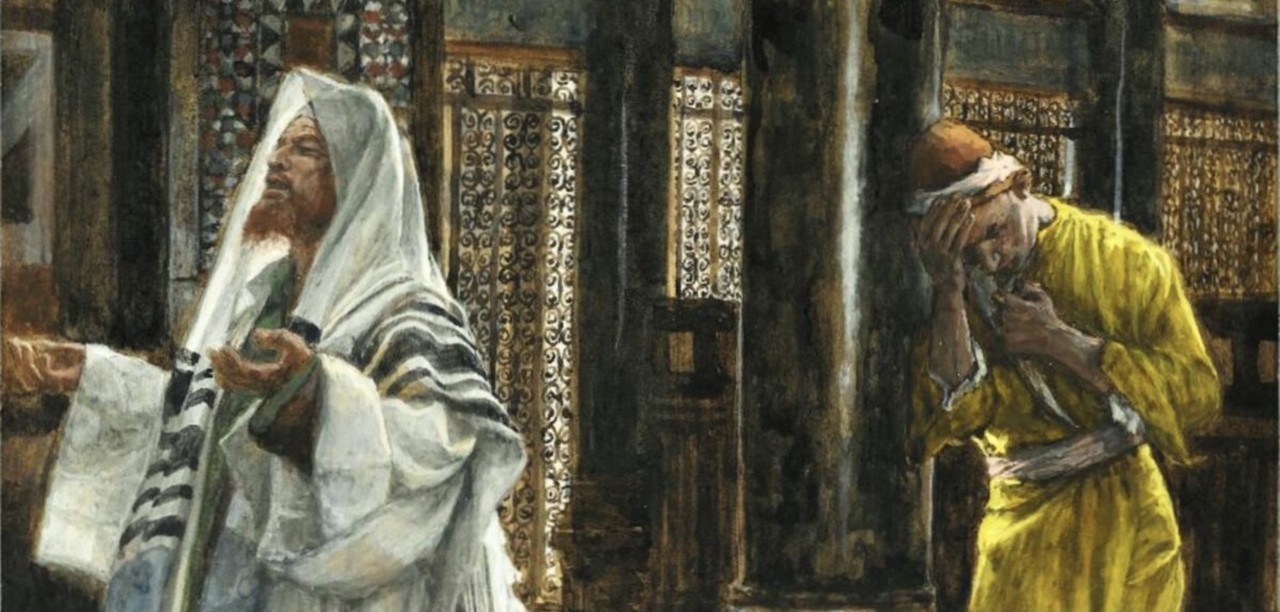
 The Pharisee in this parable stood to pray, which was a normal posture for prayer (Mark 11:25). However, in this context, it seems to indicate something more. The Pharisee saw himself as independent, able to stand on his own two feet. He prayed within himself (Luke 18:11-12), not a public prayer, but just between him and God. He was thankful, but his attitude was all wrong. The Pharisee had an “I” problem, focusing on himself rather than God. He mentioned God once at the beginning and used the word “I” five times. Instead of praising God for His goodness, he boasted about his own righteousness.

The Pharisee thanked God that he was not like others, using the wrong standard to measure himself. It was easy to look good when compared to the worst dregs of society. He listed his virtues: not an extortioner, not unjust, not an adulterer, and not like the Tax Collector. He looked down on others, showing no interest in helping them come to God. His prayer revealed his pride and self-righteousness, as if he had earned something. He missed the point of the law (Romans 3:20).

The Pharisee boasted about fasting twice a week and giving tithes of all he possessed. While the Law of Moses commanded fasting only once a year on the Day of Atonement, the Pharisees went beyond the law, being stricter and requiring more devotion. They even tithed the smallest spices and herbs (Luke 11:42). This kind of prayer, uttered in a spirit of pride, was not unknown. Somewhat later, according the Talmud, Rabbi Nehunia used to pray in a similar manner, thanking God for setting his portion with those who study Torah rather than those who engage in frivolous talk.

The Pharisee did not see himself as he truly was (Revelation 3:17). Do we see ourselves in the Pharisee? Is it okay to thank God for being born in a certain place? Are we like the Pharisee in thanking God for our superiority? Is it okay to look down on others because they are not like us? Jesus told this parable to those who trusted in themselves and despised others (Luke 18:9). Sometimes we may trust in ourselves too much or trust in others who are good people but give nothing to God. The Pharisees trusted in themselves, believing they were superior to others.

The Tax Collector

In contrast, the Tax Collector stood afar off, likely realizing he was not welcome near the Pharisee. Tax collectors were a despised class, seen as traitors for collecting taxes for the Roman Empire. They were viewed as collaborators with their oppressors. Despite this, the Tax Collector showed humility before God. He would not raise his eyes, bowing his head in sorrow. He beat his breast, a sign of ongoing sorrow and repentance. Unlike the Pharisee, he did not boast about his virtues. Instead, he acknowledged his sins and begged for God’s mercy and grace.

The Tax Collector’s prayer was short and simple, without excuses for his sins. He recognized his need for God’s forgiveness and mercy (Romans 3:23). When we come to God, it must be in humility, recognizing who He is. Consider the model prayer (Matthew 6:9-13), which praises God for His greatness, prays for His will to be done, asks for daily needs, seeks forgiveness, and prays for deliverance. It is not about us, but about God.

Conclusion

In Luke 18:14, Jesus concludes the parable by stating that the Tax Collector went home justified before God. This does not mean that God condones sin, but rather that the Pharisee was guilty of the sin of pride. The Tax Collector was justified because he humbled himself before God, acknowledging his need for God’s grace. The Pharisee exalted himself, trusting in his own righteousness and comparing himself to others. God will humble those who exalt themselves and exalt those who humble themselves.

None of us have anything to boast about before God. It is important that we do not trust in ourselves, but in God. We must not despise others, thinking we are superior. Let us be like the Tax Collector, admitting our faults and praying for forgiveness.