Can We Die Apart from How We Live?

            There is a country song by one of Knoxville’s more famous sons titled “Everybody Wants to go to Heaven,” which expresses the attitude that we can live however we want now and still go to heaven in the end.  In the song, the lyrics suggest that we can have the women and whiskey and all the worldly pleasures we want, as long as we put some extra money in the collection plate on Sunday.  Is that how God operates?

            The thought is nothing new.  Around 1400 BC, there was a prophet of God named Balaam who basically wanted to do the same thing.  Balaam was eager to go with the men that the king of Moab sent to him in order that he might come and curse the children of Israel, who had exited Egypt 40 years prior and were now encamped on the plain hear Moab (Num. 22-24; 2 Pet. 2:15).  You may remember that God did not want Balaam to go and even placed the Angel of the Lord in his way.  Balaam wanted to go and be ‘honored’ by the king of Moab, but he still wanted to die the death of the righteous (Num. 23:10).  Can we live wickedly and still die the death of the righteous?

            How we live matters!  We cannot live like the devil and die like an angel.  God says that we are to strive for holiness in how we live (1 Pet. 1:13-16).  Indeed, Paul wrote to the Ephesians, “I, therefore, the prisoner of the Lord, beseech you to walk worthy of the calling with which you were called” (Eph. 4:1).  We cannot live in disobedience and think that we can somehow buy our way into heaven.  It didn’t work for Balaam, who died with those who caused Israel to stumble by his counsel (Num. 31:8, 16), and it will not work for us.  If we want to die the death of the righteous, we must live in obedience to God!

God’s Family

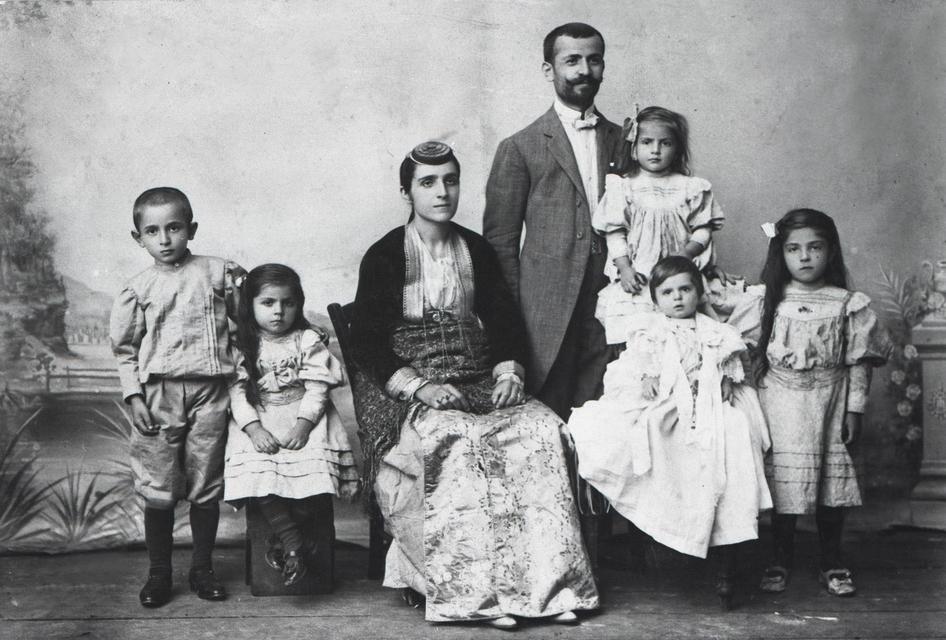
Pontus_Greek_family     If we are like most people, somewhere amongst all of our belongings there is a family photo album or two. From time to time we like to take out that photo album and relive the memory of lost loved ones or special times and events in our life. Maybe we gather around with others in our family and share stories from the past. Family is important and makes us feel like we belong to a group with a common background, common experiences, and a shared heritage. Just imagine for a moment what it would be like if God had a family photo album. Whose pictures would be in that album?

     We see that family was important to Jesus, but maybe not in the way that we think. There was an occasion where Jesus was teaching His disciples, and while He was still speaking to them He was told that his physical mother and brothers were waiting outside to speak with Him (Mark 3:31-2). Then Jesus said, “’Who is My mother, or My brothers?’  And He looked around in a circle at those who sat about Him, and said, ‘Here are My mother and My brothers!  For whoever does the will of God is My brother and My sister and mother’” (Mark 3:33-35 NKJV). Jesus stated that His spiritual family was more important to Him than His physical family.

     If we want to be a part of God’s family, if we want for our pictures to be in His “photo album,” then we need to do what Jesus says to do. Notice He said “whoever does the will of God” is His family. It is important then, that we do the will of God. Compare this to what Jesus said in the Sermon on the Mount, “Not everyone who says to Me, ‘Lord, Lord,’ shall enter the kingdom of heaven, but he who does the will of My Father in heaven” (Matthew 7:21). It is not enough for us to just call Him Lord, we must be willing to do the will of the Father to be in the family of God and to enter into the kingdom of heaven. Have you obeyed God’s will? Is your picture in God’s photo album? We invite you to come and see what God’s word has to say about the will of the Lord, so that all of us can be in God’s family!

Instant Messaging

Texting     Have you ever prayed for God to take care of some problem that you had, and then wondered what the answer to that prayer would be? It is especially difficult for us as Americans to be patient in waiting for a response. We are so accustomed to fast food, microwave ovens, and instant messaging that we expect immediate results. Additionally, it may be that the answer to our prayer is “not now,” and so we have to wait awhile for the result. This is a normal situation, but during the time of Hezekiah, he received an instant response to one of his prayers.
     As 2 Kings 20 opens Hezekiah is sick to the point of death. Isaiah the prophet comes to him to instruct him to put his house in order, for he will soon die. This leads to Hezekiah’s prayer, and the text tells us that he prayed with such fervor that he wept bitterly (2 Kings 20:2). His prayer was heard and his tears were seen by the Lord. Before Isaiah could even exit Hezekiah’s house, he was told to return to Hezekiah with an updated message (2 Kings 20:4-5). Hezekiah was not going to die yet. Instead the Lord granted him another 15 years on this earth. God was prepared for Hezekiah’s prayer, because God knows all things even before they occur.

     Likewise when we pray to the Lord, He already knows what it is that we will say and what it is that we need (Matthew 6:8). Still, He wants for us to come to Him in prayer. We are no different than Hezekiah in that respect. God knew that He would heal Hezekiah, but yet He waited for Hezekiah’s prayer. God has the power to answer all our prayers in an instant. Whether the answer comes instantly or over the course of time, our part is to pray with the earnest expectation that God will hear and answer our prayers (James 1:6-8).

The Apple of God’s Eye

Apple of His Eye     There is an old Stevie Wonder song where he sings about someone being the apple of his eye. The descriptive “apple of his eye” is used to denote that person who is most precious to him. The one that he cannot do without. We might consider how we look at God, and whether He is the apple of our eye, but instead let us consider who or what is the apple of God’s eye.

     In the book of Zechariah, God was encouraging His people, who had returned from exile and were in the process of rebuilding the temple. As they were building, they were concerned with the lack of walls around the city for protection. To ease their minds, God instructed them through the prophet, “For thus says the Lord of hosts: ‘He sent Me after glory, to the nations which plunder you; for he who touches you touches the apple of His eye.  For surely I will shake My hand against them, and they shall become spoil for their servants. Then you will know that the Lord of hosts has sent Me’” (Zechariah 2:8-9 NKJV). God was basically telling them that He would protect them from their enemies, for they are the apple of His eye. This means that God’s people are precious in His sight.

     Over 600 years later, God would also give comfort to His people who were suffering under the persecution of the Roman Empire. At that time John wrote the book of Revelation to the church in order to encourage them to hang in there in the face of persecution and death. God was going to deal with the Roman Empire, because when they went after His people, the apple of His eye, they were basically going after Him.

     We as God’s people are still precious to Him today. It is you and me as Christians, the members of His church, who are special in His sight. We are the apple of His eye. Thinking about this and thinking about how He has cared for His people and continues to care for His people should give us pause in how we deal with our brothers and sisters in the Lord. Are we treating our Christian family as the apple of God’s eye? In light of the fact that God is greatly displeased when any of His children are mistreated, we should all consider how we are treating one another and realize that all of His children are precious in His sight.

Do You Love Jesus?

Love     If someone were to ask you if you love Jesus, what might your response be? Some may want to know who Jesus is. Others may inquire as to what is meant by “love.” There might be those who would want to know why such a question is being asked of them. Yet it is likely that many would say that, yes, they love Jesus. How many of those who say that they love Jesus would also say that they are obeying His commands?

     There is a false dilemma that occurs when one begins asking if you are a lover of God and Jesus or if you are a commandment keeper, as if you cannot be both. They might refer to God’s word and state that the keeping of the law is no longer our basis for justification, but that justification comes through the grace of God. “For by grace you have been saved through faith, and that not of yourselves; it is the gift of God, not of works, lest anyone should boast” (Ephesians 2:8, NKJV). That is certainly true with regards to the Mosaic Law of the Old Testament. However, there is a law of Christ that we are to adhere to. Paul, who penned the Ephesian letter, also says in the Galatian letter, “Bear one another’s burdens, and so fulfill the law of Christ” (Galatians 6:2).

     Perhaps we can understand this best by looking at what the Bible actually says about love and commandments. “Therefore you shall love the Lord your God, and keep His charge, His statutes, His judgments, and His commandments always” (Deuteronomy 11:1). Jesus said, “If you love Me, keep My commandments. . . He who has My commandments and keeps them, it is he who loves Me. And he who loves Me will be loved by My Father, and I will love him and manifest Myself to him” (John 14:15, 21).

     If we love the Lord Jesus Christ, we will follow and obey His commandments. That includes His commands to love one another, to put God first in our lives, to seek first His kingdom, to be baptized for the remission of our sins, and to assemble with the saints upon the first day of the week. So, do you love Jesus?

Cutting of the Scroll

Jehoiakim_Burns_the_Word_of_God_(Bible_Card)     Near the end of the kingdom of Judah, the word of the Lord came to the prophet Jeremiah and he was told to put all the accusations against Israel in Judah into a scroll. The hope of the Lord was that the people in Judah would hear about all the wrong things that were done, which offended God, and that they would repent before it was too late. The scroll was dictated by Jeremiah and written by the hand of Baruch, who was a scribe. After being read in the temple, the scroll was taken to king Jehoiakim, the son of Josiah (Jeremiah 36:1-4, 16).

     To say the least, Jehoiakim did not appreciate the things that were written on the scroll. He did not like that God was criticizing his practices, nor did he like that God was telling him through Jeremiah that the Babylonians were going to invade and conquer Judah if they did not repent. Jehoiakim made a choice to ignore and disbelieve the prophecies of Jeremiah. In objection to the scroll, the king cut it up and threw it into the fire (Jeremiah 36:23).

     It is interesting to wonder how many times in the many years since this event that others have tried to cut out the parts of God’s word that they did not want to hear, and metaphorically cast God’s word into the fire. Many have a tendency to approach religion as if it were a buffet table. They take what they like, but ignore or cut out those parts of scripture that do not agree with their lifestyle.

     In the case of Jehoiakim, he was not successful in ignoring God. God commanded Jeremiah to write another scroll, so God’s word was not to be defeated or destroyed. Additionally, Jehoiakim’s son lost the path to the throne, and Jehoiakim’s body found no rest after death by not receiving a proper burial (Jeremiah 36:27-30). For a king, this is a grievous insult. Let us think for a moment about what our fate will be if we attempt to do the same as Jehoiakim. We cannot ignore God’s will if we want to lay hold of eternal life. If we want rest after our physical death, we must adhere to the entirety of God’s law for us (Matthew 7:21ff). To cut away the parts of the scroll we don’t personally like is to cut away our own soul.

Right In Their Own Sight

chinese-traffic-chaos-small     Is it acceptable for each of us to do that which is right in our own sight? Are we free to make our own rules for what is right and wrong? Toward the latter section of the book of Judges, we find that there are two phrases that that are oft repeated for emphasis. The first of these is a reminder that there was no king in Israel in those days, and the second is that everyone did what was right in their own sight (Judges 17:6; 18:1; 19:1; 21:25). In these examples we can find the answer to our questions.

     In the book of Judges we see a repeated pattern of the Israelites falling away from God, being oppressed by a foreign power, crying out for deliverance, and being rescued by a judge or deliverer. The latter section of the book shows us just how depraved they were and how far they had wandered from God. Yes, there was no king in the land, but God was supposed to be their king. There was no king in the land, because they had rejected God, and so each man did what was right in his own eyes. This led to them doing that which was evil, for the most part.

     When we look at our own lives and at our own nation, what do we see? We are subject to the kingdom of God and the law of Christ in the same manner that those Israelites were subject to God. Rejecting God and his Lordship over our lives will lead to disastrous results, just as it did for those who fell away in the period of the Judges.

     The lesson for us is that we need to follow God if we want to receive our eternal reward and avoid punishment. God punished those Israelites with oppression when they wandered from Him. God will punish us if we are not making Him our king, and if we are each doing whatever is right in our own sight regardless of the law of Christ. Our punishment may not come in this lifetime, but God warns us that His punishment for those who do not know him or do not obey His commandments will last for all eternity (2 Thessalonians 1:7-9). Thus we need to follow the king, and not what we think or feel is right or wrong.

Choosing Our Choice

20268595946_58bfb01361_o     Americans across the country are beginning to gather in coffee shops, local burger joints, and neighborhood hangouts and discussing who our next president will be. Those in Iowa, New Hampshire, and other early primary states have made, or are making their choices now. We see it as a great privilege within our political system that we are allowed to choose our choice candidate to be our next leader. While democracy in politics and government is a great system, we must be sure to recognize that we do not get to choose when it comes to the one who is our ultimate ruler.

     The Bible teaches us that, “The LORD is King for ever and ever: The heathen are perished out of his land” (Psalm 10:16, KJV). “The LORD sat enthroned at the Flood, And the LORD sits as King forever” (Psalm 29:10). Also, “For the LORD Most High is awesome; He is a great King over all the earth” (Psalm 47:2). God is the King. He will be the Ruler forever and ever. He is over all of the earth. Thus, we do not get to choose who our King will be. God is it. Jesus told a parable about a man who went away to receive his kingdom, which is a reference to Jesus going off into heaven to receive His kingdom after His ascension from this earth (Hebrews 1:1-4; Psalm 110:1). Even though there were those in the parable who did not want to be ruled by this man, they could not prevent him from coming into his kingdom (Luke 19:11-27). We can choose to follow Him or not. We do have that free will. However, He is the Lord, the Ruler, and the King whether we accept Him or not.

     Therefore, seeing that these things are so, let us come and acknowledge Him as the King of kings and Lord of lords (1 Timothy 6:15; Revelation 17:14). Let us choose Him as our choice to rule in our lives. If He is to be our Lord and Master, then we need to obey what He says to do. He is coming back some day to judge the living and the dead (Ecclesiastes 12:14; John 12:48; Acts 17:31; Matthew 25:31-32). Those who are obedient will be ushered in to their eternal reward. Those who refuse Him will be punished. He is the Lord whether you “vote” for Him or not. That cannot be changed. So as we exercise our choice for the next president, let us also think about exercising our free will to choose to serve God while we still have the time and opportunity to do so!

Who Is To Blame?

JManziel     When things go wrong it seems that the one thing we never run short of is blame. Just take the Cleveland Browns, for instance. When things go wrong in Cleveland, as they often do, everyone looks for who is to blame for this year’s fiasco. From the ownership, to the general manager, to the head coach, to the assistants, to whomever played the most games at quarterback that year there is always plenty of blame to go around.

     How is it with us when things do not go as planned? When we fall short of the mark, or we do the wrong thing, are we also playing the blame game? The blame game is nothing new. Indeed we do not have to read much in the Bible before seeing the “it’s not my fault” principle play out. In Genesis 3 Adam is hiding from God in the garden, because he has eaten from the forbidden fruit and realizes that he is naked (Genesis 3:8-11). God asks, “Have you eaten from the tree of which I commanded you that you should not eat?” (Genesis 3:11b, NKJV). Notice that Adam first blames Eve for his sin. “The woman whom You gave to be with me, she gave me of the tree, and I ate” (Genesis 3:12). Adam also accuses God, since Eve is the woman whom God gave to him.

     Instead Adam should have realized the need to take responsibility for his actions. The same is true with us today. When we sin it is not the fault of someone else who “made us do it.” The Devil does not make us do it, as Flip Wilson used to humorously state. Nor can we blame God for our sin. “Let no one say when he is tempted, ‘I am tempted by God’; for God cannot be tempted by evil, nor does He Himself tempt anyone.  But each one is tempted when he is drawn away by his own desires and enticed” (James 1:13-14). What causes us to sin is the same thing that has caused mankind to sin throughout all of history. It is our own desires that lead us to sin. It is “the lust of the flesh, the lust of the eyes, and the pride of life,” in our own hearts which leads us astray (1 John 2:16). Let us look to ourselves and take responsibility for our actions. Let us confess our sins and be forgiven of them instead of playing the blame game (1 John 1:9).

Who Do You Trust?

3254678299_5c69afdc60_o    According to horoscope.com for a certain day, my outlook says, “A close friend or your partner could propose an impromptu trip and you might decide to go. You’re restless for adventure. . .” Many people may read that and become excited and think that they are going on a grand adventure! However, do the stars actually know anything about my destiny for today?

     The Bible tells us much about in whom and/or where we should place our trust, and the bodies of the cosmos are clearly not the answer. In the kingdom of Judah the kings who were good and pleased God placed their trust in Him. Manasseh was not one of these kings. Scripture tells us that Manasseh did evil in the sight of the Lord, much like the surrounding nations that the Lord removed from Palestine (2 Chron. 33:2). He built altars to other gods, he made idols, he worshiped the host of heaven (the moon, sun, starts, etc.), he practiced soothsaying and witchcraft, and he consulted with mediums and astrologers (2 Chron. 33:3, 5-6).

     Manasseh’s poor example led others astray in Israel, so that they did “more evil than the nations whom the Lord had destroyed before the children of Israel” (2 Chron. 33:9b). Because Manasseh trusted in everything imaginable besides God, and because Manasseh led the nation of Israel astray in so doing, God was going to punish the kingdom of Judah. Due to God’s wrath, they were going to have to suffer in Babylonian captivity for a period of 70 years. The transgressions that were committed under Manasseh made this a certainty, so that even when a good king like Josiah came along, the fate of Israel was sealed (Zeph. 1:2-6). God was going to wipe out “those who worship the host of heaven” from Israel (Zeph. 1:5a). Their trust in the stars was misplaced. They should have trusted in the Lord.

     Where and in whom are we placing our trust? Is it in our daily horoscope, to see what the stars have in store for us? Or do we place our trust in the Almighty God? Having our trust placed firmly in God is the only way that man can be pleasing to Him (Psalm 4:5; 9:10; 18:30; Prov. 3:5). There is no need for us to ‘hedge our bet’ by trying to trust God, but also consulting mediums, soothsayers, and astrologers. Trusting in the cosmos caused Israel much harm, caused God much grief, and caused God to be angry with them. We certainly don’t want God to be angry with us, regardless of what the stars may say.