Kingdom Come?

Left Behind CageMany of us are looking forward to Jesus’ return with great anticipation. Regarding that return, there are many who expect Christ to set up an earthly kingdom and reign from Jerusalem for 1,000 years. Indeed, later this week a new movie based on the popular “Left Behind” series opens in theaters, which espouses this idea of Jesus’ coming kingdom. Is this really what the Bible teaches, or is it just good fiction?  Let us look at just a few scriptures to ascertain the answer to that question.

Long ago Joel prophesied that in the last days God would pour His Spirit upon mankind (Joel 2:28ff). In Acts 2, Peter makes mention of Joel’s prophecy and says that they were living in those last days that Joel was referring to (Acts 2:16-21).  So we know from this that the last days began some 2,000 years ago on that day of Pentecost.  Additionally, we see that Jesus told those who were listening to Him that some of them would not experience death until they had seen the kingdom come with power (Mark 9:1).  Just prior to Jesus’ ascension He told His disciples to tarry in Jerusalem until they received power from the Holy Spirit (Acts 1:4-5).  About a week later, they received the Holy Spirit on the day of Pentecost in Acts 2.  Therefore, they received the power when the Spirit fell upon them.  When the power came the kingdom came.

Furthermore, in reviewing Daniel 2, and the explanation of Nebuchadnezzar’s dream, Daniel describes four earthly kingdoms. The first of these is Babylon, followed by the Medes and the Persians.  Later would be the Greeks and then the Roman Empire. Then Daniel states that in the days of those kings God would set up a kingdom that would never be destroyed (Dan. 2:44).  This is further confirmation that the kingdom would be established during the days of the Roman Empire and was also fulfilled on the day of Pentecost as described in Acts 2.  Just as Jesus told Pilot, His kingdom was not of this earth but that it was a spiritual kingdom (John 18:36).

So then, what do we learn by putting some of these scriptures together? We see that there were some who lived 2,000 years ago that were not going to die before the kingdom came with power.  We see that power came when the kingdom was established on the day of Pentecost, and we see that the kingdom is a spiritual kingdom which is the church.  Christ came to seek and save the lost and to add them to His kingdom, the church, and He was successful in that mission.  Therefore, the kingdom that we are to seek entry into has been established for the past 2,000 years, and it is the church which Jesus built (Mat.16:18).

Peace and Safety

3828960388_ebf3fe4262_z     Last week my family and I traveled to our nation’s capital on vacation.  While we were in D.C., a man jumped the fence and attempted to gain entry to the White House.  It was not me.  However, it made us think about the security measures we did see while in Washington.  At most of the museums and monuments, there were security screenings and metal detectors in an effort to make us all feel safe.

That feeling of safety is something we all crave, especially in our modern world.  News of attacks and planned attacks seem to dominate the news.  And while the extra security measures are necessary to try to prevent further attacks, do they really make us feel safe?  When the security guard is talking to his buddy about last night’s game instead of watching the x-ray monitor, do you really feel safer?

While we may never be at peace or feel that we are completely safe in a physical sense in this world, there is a peace and safety that comes from the Lord.  This peace allows us to pillow our heads at night and sleep, without having to worry about what will come in the night.  As David wrote, “I will both lie down in peace, and sleep; For You alone, O Lord, make me dwell in safety” (Psalm 4:8 NKJV).

If we are in a right relationship with God, if we are in obedience to His will and His word, if we have put our trust in Him, then we can have peace.  We have a peace of mind, even if we don’t live in a world that provides us with much hope of physical safety (John 14:27).  We can have that peace, because we know that if anything happens to this earthly body, our eternal soul will be in the hands of a God who loves us.  If you want that peace too, you can have it by seeking God and obeying what He has told us to do.

Judge Not?

judge not

Let us take a moment to consider one of the most misquoted scriptures in the entire Bible, which is in the book of Matthew.  Here we read,

 Judge not, that you be not judged. For with the judgment you pronounce you will be judged, and with the measure you use it will be measured to you. Why do you see the speck that is in your brother’s eye, but do not notice the log that is in your own eye?  Or how can you say to your brother, ‘Let me take the speck out of your eye,’ when there is the log in your own eye?  You hypocrite, first take the log out of your own eye, and then you will see clearly to take the speck out of your brother’s eye.  Do not give dogs what is holy, and do not throw your pearls before pigs, lest they trample them underfoot and turn to attack you (Matthew 7:1-6 ESV).

Many will read this passage and immediately say that we are not allowed to make any judgments, based solely on the first verse of Matthew 7 (Judge not).  Is this what Jesus is really saying?  Are we to make no judgments at all based on this?  If, however, we read the rest of the context of this passage, we will find that Jesus is instructing us to not make any rash or unrighteous judgments.  Notice that Jesus tells us to first take care of our own affairs (take the log out of your own eye first), before we take the speck out of someone else’s eye.  It is important for us to realize that He does not say that we should not remove the speck from our brother’s eye.  We need to be able to see clearly in order to do that so that we will judge with righteous judgment.  Elsewhere Jesus tells us, “Do not judge by appearances, but judge with right judgment” (John 7:24).

We should also take special notice of verse 6 of Matthew 7.  How can we be sure to not give to the dogs that which is holy, or to cast our pearls before swine, if we do not make some sort of judgment about our audience?  Perhaps we could think of it this way.  Suppose that we came upon a woman with a flat tire along side of the road, and we stop to help.  Why did we stop?  Did we make a judgment that she is not capable of fixing the problem herself?  What if we come to a dark alley and decide not to venture that way?  Did we judge ourselves as ‘better’ than that alley?  You see, we make dozens of judgments everyday, and there is nothing wrong with that as long as we are judging correctly.

Much Ado About (Next to) Nothing

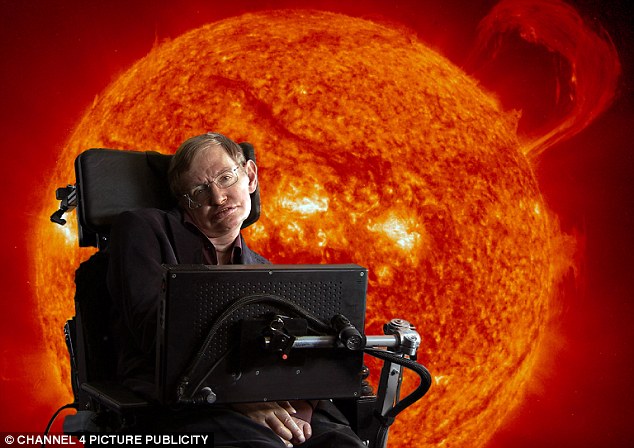
1410083904547_wps_9_Television_Programme_Step     In the news this week is a story about the “God particle” that scientists and evolutionists are eagerly anticipating will help them to understand the origin of the universe.  This surfaced in the news this week, because of the preface to a new book by famed physicist Stephen Hawking.  He warns that the experiments in particle collision to try to ‘recreate’ the God particle could lead to a cataclysmic catastrophe that we would never see coming.  Hawking warns that a vacuum caused by the particle could lead to a sudden collapse of time and space.

     Not to worry, though, as additional scientists point out that the collider to cause this catastrophe would have to be larger than the earth.  In the “current economic climate” this is seen as something that would be impossible to construct.  Really?!  One wonders where they would build this experiment that would have to be larger than the earth (anyone have a few acres they could contribute?).

     The idea of the “God particle” was first conceived by British scientist Peter Higgs in the 1960’s, and was ‘discovered’ in 2012.  Scientists believe that this particle creates an invisible energy field that causes small particles to gain mass and shape as they pass through the field.  Let’s break that down.  What they are looking for is a force that would cause small particles from the Big Bang to grow in mass (size) and that would shape them into planets, stars, comets, asteroids, etc.  Um, have you heard of God?

     What most people will fail to realize is that this does not explain the origin of the universe.  Where did the small particles come from?  Where did the initial energy and material come from to create the supposed Big Bang?  Evolutionary ‘scientists’ can kick the can down the road as far as they like, but they still cannot answer these fundamental questions about the origin of the universe and all that is in it.  True scientific laws of nature show that matter could not have been created out of nothing, without some sort of supernatural direction.  Therefore, they are arguing against science.

     In the news article the statement is made that this “God particle” has been confirmed by recent scientific discovery, but then there is a statement that scientists do not fully understand it all yet.  So which is it?  Have they really discovered something?  How can they claim to have discovered something that gives them understanding, and then turn around and say that they still don’t understand it?  Their argument would seem to beg the question.

     As for the potential destruction of the planet by the “God particle,” the question would be who is it that holds the future of the universe in their hands?  Is it the population of a small, seemingly insignificant planet when compared to the vastness of the universe, or an all knowing, all powerful God, who created it all (Gen. 1:1; Psalm 19:1; Heb. 1:3)?  God has said, “While the earth remains, Seedtime and harvest, Cold and heat, Winter and summer, And day and night Shall not cease” (Gen. 8:22 NKJV).  It is God who is in control.  It is God who has made all that is seen and unseen.  It is God who will decide when the end will come (Mat. 24:36).

Baptized in the Spirit. . . A Closer Look

the%20holy%20spirit

     In Acts 2 we see the account of the birth of the church when the Holy Spirit fell on the apostles and they were filled with power (Acts 2:1-4).  Many have looked at this passage and are not sure, however, of whether the Spirit fell only on the apostles, or if He fell on the 120 mentioned previously (Acts 1:15).  So then, who did receive the baptism of the Holy Spirit in Acts 2?  Was it the 120 who were in the upper room when the replacement for Judas was chosen, or was it just the apostles?

     First let’s examine who was given the promise of the Holy Spirit by Jesus.  When Jesus promises to send the Holy Spirit (Acts 1:5, 8) and to baptize them in it, to whom was He speaking?  In order to find the antecedent of them, we need to look back at Acts 1:2.  Here Luke tells us that the them in this context are the apostles that Jesus had chosen.  Therefore the promise of Jesus to send the baptism of the Holy Spirit was given to the apostles.  They were the ones to receive the promise and watch Jesus ascend into heaven (Acts 1:11).

     Second let’s examine the time frame with regards to the promise and the coming of the Holy Spirit upon them.  After witnessing the ascension of Jesus into heaven, the apostles traveled a ‘Sabbath day’s journey’ (fixed at 2,000 cubits or roughly 1,000 yards) back to Jerusalem.  Thus they would have arrived back in Jerusalem on the same day in which Jesus ascended and met with the others mentioned in the upper room there (Acts 1:12-17).  Since we see that Jesus was with His apostles for 40 days after His resurrection (Acts 1:3), and since we know that Jesus was in the tomb for 3 days, we can accurately calculate that it had been 43 days since the death of our Lord on the cross when this event with the 120 in the upper room takes place.  Since we also know that there are 50 days between the Passover (time of the crucifixion) and the day of Pentecost, we can see that this meeting took place one full week prior to the day of Pentecost.  The importance of the calculation of the days is that it shows that the narrative of the 120 in the upper room was not on the same day as Pentecost, when the Holy Spirit fell upon the apostles.

     Third let’s examine the event of the Holy Spirit falling upon them on the day of Pentecost.  In looking at Acts 2:1-4 the Bible tells us that they were all together in one place (it does not specify where that place is – upper room, temple, marketplace, etc.).  The Holy Spirit fell upon them and they began to speak in tongues.  Again we need to find the antecedent of them and they in this passage.  This is found by looking at the last verse of Acts 1.  Here we read that the lot fell upon Matthias and he was numbered with the other eleven apostles.  This is to whom the they at the beginning of Acts 2 is in reference.   They were the 12 apostles and it was upon them that the baptism of the Holy Spirit was given, fulfilling the promise made by Jesus in Acts 1:5, 8.

     Through the rest of the book of Acts we can see that the apostles had the ability to heal sickness, cast out demons, and transfer spiritual gifts by the laying on of their hands.  Once the apostles passed from this life, however, those spiritual gifts and that miraculous ability also passed away.  The working of miracles to confirm the word of God had accomplished the task given to them, mainly to confirm that the words spoken by the apostles and prophets were true and were from God (Mark 16:20).  We today have the written word, which we can read and examine to see that these things are so.

Sleeping On The Job

54761     One of the great joys of Sunday afternoons is having the opportunity to relax in my recliner and take a 20 minute nap.  I find that I wake up revived and energized and ready to finish the day strong.  Sometimes, however, napping is not a good thing. 

      Take, for instance, the case of a recent China Eastern Airlines flight.  As the plane approached for it’s landing, they were unable to communicate with the tower and had to abort and circle the airfield instead.  They tried twice in English and once in Chinese to contact air traffic control, but to no avail.  It seems that the two men in the tower were taking a nap when the plane was coming in.

      In the book of Revelation, we are told of a group of people who were equally asleep on the job.  Jesus says of the church in Sardis that they think they are alive but that they are dead.  They are not awake and alert.  They are not watching.  He tells them, “Remember therefore how you have received and heard; hold fast and repent. Therefore if you will not watch, I will come upon you as a thief, and you will not know what hour I will come upon you” (Rev. 3:3 NKJV).

      It is equally important that we as Christians today remain awake, alert, and on watch.  Jesus is coming back someday to judge the earth and all who are in it, based upon what we have done (Acts 17:30-31).  He will not send out notices of His coming, but will come “as a thief in the night” (1 Thes. 5:2; 2 Pet. 3:10).  A thief does not tell you at what hour he plans to break into your home.  Therefore, we need to be ready and prepared at all times.  Ask yourself, if He came back right now, would you be ready to go?

Did We Get Something From Nothing?

earth-244238_640

Evolutionary scientists have struggled to adequately explain the origin of the universe since, without an outside force (God), the beginnings of all things cannot be scientifically proven. Indeed, the first and second laws of thermodynamics, scientific laws of matter and energy, prove just the opposite conclusion that evolutionists would have us believe. In the end we see that it takes a greater amount of blind faith in the so called ‘scientific experts’ in order to believe in a God-less evolution, than the faith based on tangible evidence in God’s creation of the universe and all that is in it.

The first law of thermodynamics clearly states that matter/energy cannot be created or destroyed within the confines of nature. In accordance with this law, matter could not have created itself, or just suddenly appeared from nothing. What this means to us is that the matter in the universe could not have spontaneously appeared. The material that makes up our planet, our solar system, and the universe therefore had to come from somewhere. To suggest that matter suddenly came into being from nothing, as some evolutionists maintain, is to argue against unchangeable, natural laws.

The second law of thermodynamics states that as systems age they fall victim to entropy. This means that things tend to decline, or wear out, over time. We can certainly look around us and see that this is the case. If we do not maintain a car’s engine, for instance, how long will it be before the motor seizes up and fails to function as designed? We only need to look at our own bodies to see that over time we wear out and break down. When we compare this scientific law to the idea that life progressed and became more sophisticated over the course of time, we can see that the idea that we all evolved from a single celled organism is not in tune with the unchangeable laws of science.

Now imagine, if you will, that you drive to the shores of Lake Erie in northern Ohio. Once you arrive at the lake, you completely disassemble your vehicle and put all of the parts, the oil, the gasoline, the antifreeze, etc. into the lake. This becomes our ‘primordial soup’ if you will. Then you get a ride (since you disassembled your car) to the bottom of Niagara Falls (outside energy force/”big bang” event). Standing at the bottom of the falls, you find your car after it had come over the massive waterfall. What’s more, your car is completely assembled and the engine is running. This is the blind faith, in events that cannot be proven, that it takes to believe in the macro-evolution process that so many people have the audacity to call “science.”

In contrast, consider the only other option, which is mandated by the obvious design that we see in the universe. That other option is that the universe and all that is in it was created by God as stated in Genesis 1:1. The evidence is all around us. “The heavens declare the glory of God; and the firmament shows His handiwork” (Psalm 19:1, NKJV). When we take the time to fully consider the issue, we see that evolutionary theory cannot answer the question of the origin of the universe in the light of the scientific laws of nature designed by God.

A Longer View

Robin_Williams     Robin Williams is dead at age 63.  It was not heart disease, or cancer, or any of what we normally consider to be the ‘big’ causes of death.  By all appearances Robin just wanted out.  It is a sad thing when someone reaches that point in their life that they just don’t think that they can continue in it any longer.

Depression is a serious health issue.  Perhaps one way to battle this disease is to have a longer view on life.  Oftentimes it is easy for us to get caught up in the day to day trials of this life, where even the small things become insurmountable in our eyes.  Take Robin’s case, for instance.  Many of us would look at Robin’s career, fame, and fortune and think that he was a person who ‘had it all.’  But for Robin, the pressure to succeed and remain at the very top of his game apparently became too much for him to deal with as his career was beginning to wane (according to the news reports on the morning of August 12, 2014).

Having that longer view of life helps us to see that even though we have trials and difficult things to deal with while we are on this earth; there is a better world to come.  Understanding that there is a God who loves us, who wants us to come to Him, who wants us to obey His will for us, should give us the necessary hope to be able to tackle our daily struggles.  Paul had this longer view.  Consider all that Paul had to go through in this life,

From the Jews five times I received forty stripes minus one.  Three times I was beaten with rods; once I was stoned; three times I was shipwrecked; a night and a day I have been in the deep; in journeys often, in perils of waters, in perils of robbers, in perils of my own countrymen, in perils of the Gentiles, in perils in the city, in perils in the wilderness, in perils in the sea, in perils among false brethren; in weariness and toil, in sleeplessness often, in hunger and thirst, in fastings often, in cold and nakedness—besides the other things, what comes upon me daily: my deep concern for all the churches (2 Corinthians 11:24-28 NKJV).

And yet Paul’s attitude about all those trials was that they were but a light affliction to be endured for a short time (2 Corinthians 4:17).

Knowing that as a child of God that we have a better hope, a hope of what is to come when this life is over, can help us to navigate the troubled seas that we have to face while we are in this body, this tent as Peter calls it (2 Peter 1:13-14).  Let us always look to God for strength in times of trial and trouble.  Let us always try to keep that long view.  Let us have that goal of heaven in our mindset, in order to help us deal with life’s problems.  Let us never become discouraged to the point of thinking we have to end it all.

God Wants You!


070822-N-0807W-233

I can remember being in school gym class as sides were being chosen for a game of kick ball.  Everyone wanted to be picked first to be on the best team.  No one wanted to be picked last, because if you were last, you were not really picked.  As one of my classmates aptly pointed out, being the last player chosen meant that team ended up with you by default.  They did not choose you.

How comforting it is to know that if we are obedient to God’s word that He has chosen us for salvation.  There is no pecking order, and God has not ended up with us by default, but we were chosen by Him to be His children.  Consider what Peter writes in saying,

“Coming to Him as to a living stone, rejected indeed by men, but chosen by God and precious, you also, as living stones, are being built up a spiritual house, a holy priesthood, to offer up spiritual sacrifices acceptable to God through Jesus Christ. . . But you are a chosen generation, a royal priesthood, a holy nation, His own special people, that you may proclaim the praises of Him who called you out of darkness into His marvelous light” (1 Peter 2:4-5, 9 NKJV).

God has chosen those who will obey Him to be His own special people, a royal priesthood, a chosen generation.  He has chosen us to be His, and He has chosen us for His own special mission.  That mission is to proclaim the praises of the One who has called us out of the darkness and into His marvelous light.

God wants you, but you have to come to Him in simple obedience of His word, as a living stone or living sacrifice (Romans 12:1-2) in order to be accepted by Him.   Are you a member of that chosen generation?  Are you one of His own special people?  Are you a part of that royal priesthood?  If not, why not?

God Gets “Historical”

historical2_large

A man was talking to his friend and he said that every time he and his wife have a disagreement, she gets historical.  His friend tried to correct him by asking if he meant to say that she gets hysterical.  The man said that he did not misspeak, but that his wife gets ‘historical’ by bringing up everything that he ever did!

In 2 Kings 21 beginning in verse 10, it appears that God is getting ‘historical’ with the kingdom of Judah.  Manasseh, who committed a great deal of evil in the sight of the Lord (2 Kings 21:1-9), has caused the nation to commit the sin of idolatry.  Indeed, Manasseh is said to be worse than the Amorites that God removed from the land prior to the Israelites inheriting it (2 Kings 21:10).  Because of the sins of Manasseh and the kingdom of Judah, God is going to cause them to go off into Babylonian captivity for a 70 year period of correction.  God had a tremendous amount of patience with Israel, but now that patience is up. Israel’s winepress is just about full, and there will be no way to avert what is to come.  God says, “they shall become victims of plunder to all their enemies, because they have done evil in My sight, and have provoked Me to anger since the day their fathers came out of Egypt, even to this day” (2 Kings 21:14b-15).  God gets ‘historical’ in that He reminds them of how long their transgressions against Him have been building.

Our God is a God of patience (Romans 15:5) and of longsuffering (1 Peter 3:20).  God waits upon man to turn his life around and to come to Him (2 Peter 3:9).  However, there is a limit to God’s patience.  We only have this life in which to come to God and have our sins washed away and removed from our record through the act of baptism (Acts 2:38; 22:16).  If we want to make sure that God is not historical with us on Judgment Day, then we need to make sure that we do what He said to do.  If we will simply obey Him, God will blot out our sins and will remember them no more (Heb. 8:12; 10:17).