The Importance of Stewardship

Many preachers shy away from discussing money and giving, fearing it may seem self-serving. Yet, the Bible speaks extensively about stewardship. The word “steward” comes from Old English, meaning “house guardian” or “keeper of the hall.” Historically, stewards managed the affairs of a household or estate, overseeing servants and ensuring smooth daily operations. In essence, a steward manages what belongs to another.

It’s vital to exercise good stewardship over what God has given us. Whatever we think is ours truly belongs to God (Psalm 24:1; Psalm 50:10; 1 Chronicles 29:14). Giving to God is like buying a gift with the celebrant’s own money. From the beginning, humanity was meant to be stewards (Genesis 2:15). Our responsibility is to do well with what we’ve been given.

The Parable of the Unjust Steward

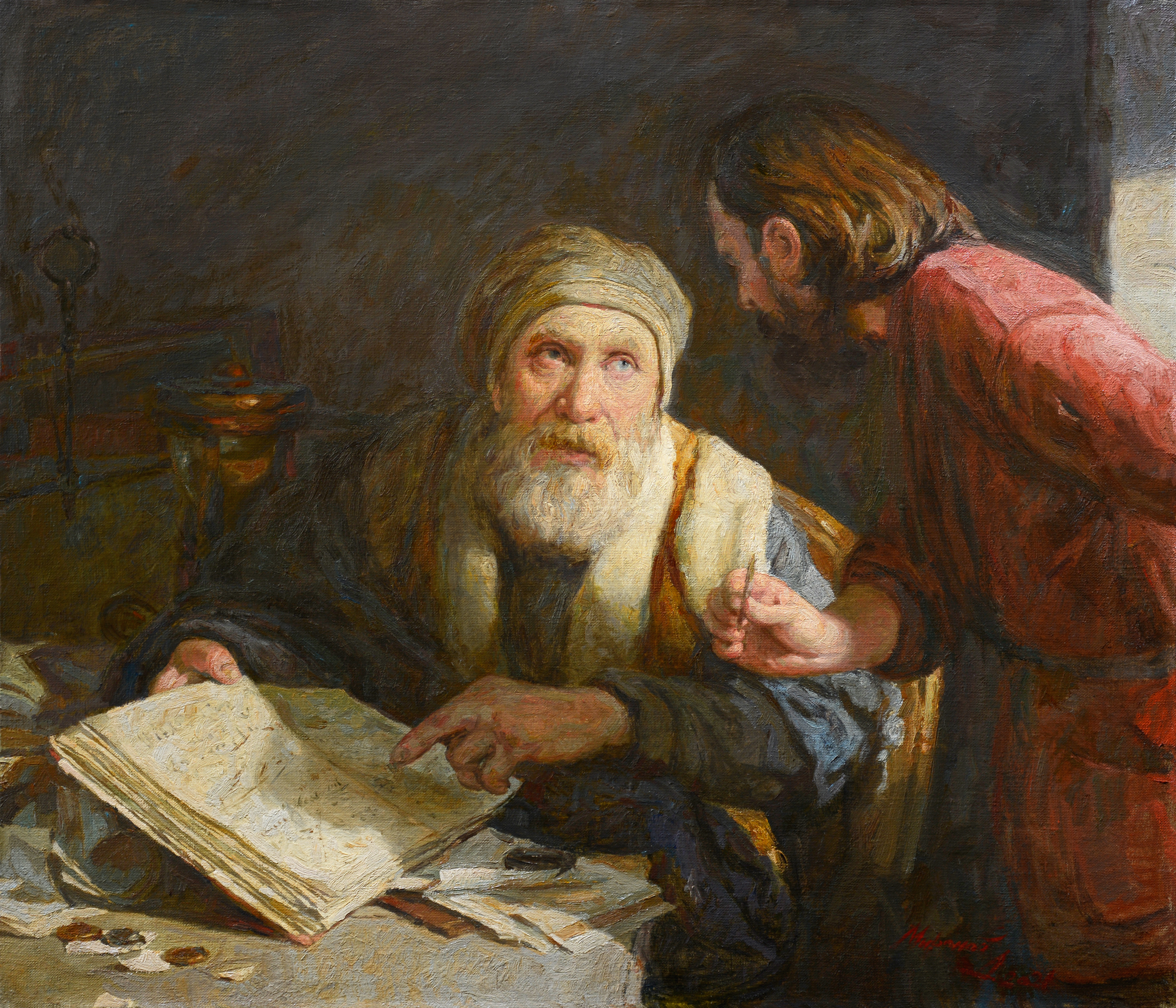
Jesus illustrates stewardship in a negative light through the Parable of the Unjust Steward (Luke 16:1-13). In this story, a steward is accused of wastefulness, in similar fashion to the prodigal son squandering his inheritance. Forced to give an account, the steward doesn’t even try to defend himself. Facing unemployment, he refuses manual labor and is too proud to beg, yet not ashamed to cheat and steal.

To secure his future, he reduces the debts of his master’s debtors, hoping they’ll help him later. These are not trivial amounts, being hundreds of gallons of oil and bushels of wheat. Would you trust someone like this? If he is willing to cheat this master, why wouldn’t he cheat you as well?

Even though the master is defrauded, he admires the steward’s shrewdness from a worldly perspective. In this parable, everyone is focused solely on wealth and possessions.

Being Focused on What Comes Next

Jesus does not commend the steward’s cunning. All the characters are unwholesome.  The steward cheats, the debtors accept the amended bills knowing the truth, and the master admires shrewdness. Jesus is highlighting how much effort people put into pursuing worldly gain (Luke 16:8b). Those chasing “mammon of unrighteousness” go to great lengths to acquire it, contrasted with the pursuit of true riches (Luke 16:11-12).

Many trust in uncertain riches rather than the eternal God (1 Timothy 6:17). If we cannot properly handle what belongs to another (all we have belongs to God), how will we receive our own reward? This becomes a salvation issue. Christians often exert less effort to “win heaven” than worldly people do to “win earth.”

Consider a professional golfer who participates in relentless practice, strategic planning, and dedication to perfecting every shot. Are we as diligent in our pursuit of the lost or in serving God? Our stewardship should focus on what comes next — our eternal home.

Jesus, perhaps with sarcasm, suggests making friends with those pursuing unrighteous mammon and asking them to care for you eternally (Luke 16:9). How will that work out? It’s like God telling Israel to call out to their idols in times of trouble.

If we are not faithful in little things, how can we be trusted with true riches? (Luke 16:10; 1 Corinthians 4:2). Faithfulness in small matters leads to faithfulness in greater ones. Our focus must be on God, not mammon (Luke 16:13). You cannot serve two masters, because eventually, you must choose one over the other. Mammon says blessing comes from gaining; God says blessing comes from giving. These cannot be reconciled. Galatians 6:6-10 and 1 Peter 4:7-11 remind us to have the right attitude and motivation: to glorify God.

Conclusion

Why did Jesus tell this parable? Some listeners loved money and were unwilling to share (Luke 16:14; 1 Timothy 6:10). They cared only for themselves, missing the bigger picture. They understood Jesus’ message and derided Him.

To be prepared for the hereafter, we must be good stewards now. Who would entrust great riches to someone who cannot handle a little? The greatest riches await us in heaven, but what we do with what we have now matters. We must behave in a way that is worthy and make our blessings count.

Me In The Middle

Happy Birthday, America! As we think about the 250 years of history that have shaped this nation, we recognize that our story is still short compared with many countries around the world. Even so, Americans deeply value independence. We appreciate the power of the people, the ability to govern ourselves, and the freedom to make our own laws, regulations, and decisions.

There is nothing wrong with loving our country. Patriotism can be honorable and meaningful. But love for country can also develop into something unhealthy when it becomes centered only on self. If we are not careful, independence can become an excuse to make everything about us—our desires, our preferences, our rights, and our will. In that way, we begin to want “me in the middle” of everything.

When it comes to who we are and what we stand for, we often discover that “me” is already in the middle. It appears in our attitudes, our focus, our priorities, and the things we consider most important. The question is not whether we will be involved in our lives; of course we will. The question is whether self will rule the center, or whether God will.

With that in mind, let us consider five things that either already have “me” in the middle or need to have “me” in the middle in the right way.

Pride

Pride is one of the clearest examples of self sitting in the center. Pride says, “I can do this by myself. I know best. I do not need correction, help, or guidance.” Scripture warns against that attitude. Proverbs 16:18-19 teaches that pride goes before destruction and that a haughty spirit comes before a fall. If we believe we can succeed entirely on our own, we are already headed toward failure. True success requires humility before the Lord.

Pride also causes us to love the wrong things. In 2 Timothy 3:1-5, Paul describes people who are lovers of self, lovers of money, proud, arrogant, disobedient, ungrateful, and without self-control. That is the attitude that says life is all about me—my money, my desires, my wishes, and my way. When self takes over, love for others and love for God are pushed aside.

To change, ignore, or dismiss what God has said takes pride. It is arrogant to live as if we control everything. James 4:13-17 reminds us that life is a vapor. We may make plans for a year, a business, or a future, but we do not have the power to guarantee even tomorrow. The proper perspective is to say, “If the Lord wills.” When we boast in our own arrogance, James says such boasting is evil. Pride does not merely make us look foolish; it leads us into sin.

Sin

Sin is missing the mark. It is failing to become what God calls us to be and refusing to do what God commands. 1 John 3:4 describes sin as transgression of God’s law. Without law, there can be no sin; but because God has spoken, we are accountable to Him.

Sin is also centered on self. Think about nearly any sin and ask what is at its heart. Again and again, the answer is selfishness: “I want what I want, when I want it, whether God approves or not.” David knew in his heart that his sin with Bathsheba was wrong, but he pursued what he wanted. For a time, he may have thought he had escaped the consequences, but Nathan confronted him, and David came to understand the seriousness of his sin. In Psalm 51:4, he confessed that his sin was ultimately against God.

We may be tempted to think our sin is no big deal. We may tell ourselves that we did not hurt anyone or that we are only doing what we like to do. But all sin harms our relationship with God. Isaiah 59:1-2 teaches that sin separates us from Him. That separation is not what God wants. He desires all people to come to repentance and salvation, as seen in 2 Peter 3:9 and 1 Timothy 2:4.

When we put our wants and desires first—when pride and arrogance rule us—we are led into sin. Yet just as these evil things can have “me” in the middle, there are also good things that require personal involvement. No one else can believe, have faith, or live faithfully for us.

Believe

To believe is to have conviction based on testimony that something is true or that someone is reliable. In this sense, “me” must truly be in the middle. No one else can believe for me. It is not enough that my parents believe, that my congregation believes, or that people around me believe. Belief must become personal.

Joshua 24:14-15 shows that each person must decide whom they will serve. It is not enough to rely on the faith of our fathers, even if they served the true God. Just as we do not inherit sin from our ancestors, we do not inherit belief from them either. Ezekiel 18:19-20 reminds us that each person is accountable for his or her own response to God.

Salvation requires personal belief. John 3:16 emphasizes that whoever believes in the Son may have eternal life. In Acts 16:30-31, the Philippian jailer was told to believe in the Lord Jesus. Even then, it was not enough for one member of the household to believe for everyone else; each person had to respond. Closely connected with belief is faith.

Faith

To have faith in God is to trust Him and take Him at His word. Faith is closely related to belief, but it goes beyond simply knowing that God exists. Hebrews 11:6 teaches that without faith it is impossible to please God. That faith must be our own. It has to have “me” in the middle—not in a selfish way, but in the sense of personal responsibility and personal trust.

Faith directs the way we live. Proverbs 3:5-7 calls us to trust in the Lord with all our heart and not lean on our own understanding. That kind of faith overcomes pride because it refuses to be wise in its own eyes. It trusts God to direct the path.

Habakkuk 2:4 says that the righteous will live by faith. Living by faith means more than saying the right words. The heroes of faith in Hebrews 11 did not merely claim to believe; they acted. Again and again, the chapter says “by faith,” and each example shows faith moving someone to obey God. Faith is not passive. It calls us to act, and no one can do that for us.

Going

One of the things I must do is be going. As I go through life, I need to ask whether I am involved in what God wants me to do. Matthew 28:19-20 gives the charge to go and make disciples. I may not be able to travel everywhere in the world, but as I am going, I can share the gospel with those I meet. For some people, I may be the only Christian they meaningfully interact with.

Going also includes going to the Lord in prayer. Matthew 6:6 reminds us of the personal nature of prayer. Others can pray for us, and we should pray for one another, but God also wants to hear from me. I need to be personally involved in going to Him.

At the same time, we must make sure we are not going astray. Hebrews 2:1 warns that it is possible to drift. Even after being saved, we can begin to move in the wrong direction if we do not pay careful attention. We must stay on the path that leads to God and go forth to Him, as Hebrews 13:13 urges. If we are going to heaven, we must remain faithful to Him.

Conclusion

We love independence. We appreciate freedom, the ability to make choices, and the opportunity to take responsibility for our lives. Freedom is a great blessing. But we must also understand our dependence upon God. We need Him for everything.

We can find ourselves in the middle of pride, living only to fulfill our own desires. We can find ourselves in the middle of sin, doing wrong and refusing to accept responsibility. But we also need to be in the middle of believing, because no one else can believe for us. We need to be in the middle of our faith, because our trust in God must be personal, active, and growing.

So the invitation is simple: where do you find yourself in the middle this day? Is self at the center in pride and sin, or are you personally placing yourself in the middle of belief, faith, and faithfully going with God?

The Parable of the Sower: Lessons in Seeking and Sowing

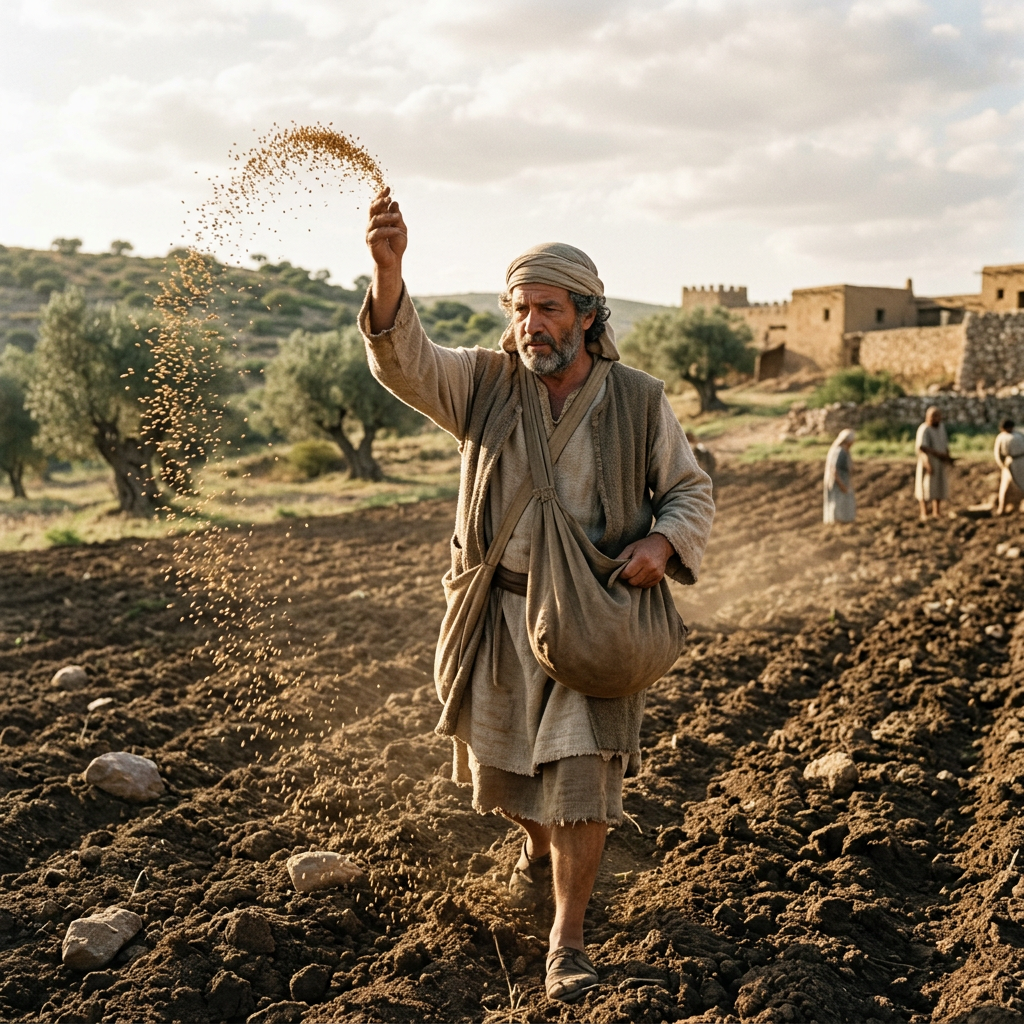
Man sowing seeds manually on prepared soil in a rural landscape

The Parable of the Sower, as told by Jesus in Matthew 13, gives us profound insight into the nature of spiritual understanding and the responsibility of sharing God’s Word. Through familiar imagery and everyday experiences, Jesus uses the parable not only to teach but to challenge listeners to become seekers of truth. Let’s explore what this story means both in its ancient context and for us today.

Jesus often spoke in parables; simple, earthly stories drawn from the culture and daily life of His audience. These stories, while easy to understand on the surface, carried deeper, heavenly meanings that weren’t always immediately clear. The purpose of the parable was to separate the casual listener from the true seeker: those who would inquire further and ask the Lord for understanding. This principle was true in Jesus’ time and remains true today.

Matthew 13:10-17 records Jesus explaining why He spoke in parables. He notes that some hearts have grown dull, ears have become hard of hearing, and eyes have closed. Without a desire to seek, people will not understand and will miss out on healing and transformation. While the parable was told to the crowd (Matthew 13:2), its explanation was reserved for the disciples (Matthew 13:10-11a), underscoring the importance of pursuing the truth of God’s Word.

The Parable Told

In Matthew 13:1-9, Jesus describes the process of sowing in ancient times, which was by casting seed by hand across an unfenced plot of ground. The seed fell on various types of soil, not just the good soil. Each type of ground represents a different response to God’s Word:

  • The Wayside: Hardened paths where the seed cannot penetrate. It sits atop the surface until birds eat it, and so it is quickly snatched away.
  • Stony Places: Rocky areas with little soil. The seed sprouts quickly but withers when the sun gets hot because it lacks deep roots.
  • Among Thorns: Weedy and thorny ground where the seed is choked out by competing plants.
  • Good Soil: Fertile ground where the seed produces a crop, yielding more than what was sown.

When Jesus says, “He who has ears to hear,” it’s a call to look beyond the surface and seek the deeper meaning.

The Parable Explained

In Matthew 13:18-23, the disciples ask Jesus to explain the parable. He doesn’t chastise them for not understanding; instead, He is pleased to reveal the heavenly meaning to those who seek. The seed represents the Word of God, sown into the hearts of men. The condition of the soil represents how people receive the message:

  • The Wayside: Some hear the Word but do not understand or pursue it further. Where understanding is absent, growth cannot begin. Each Gospel describes the one who snatches away the seed: Satan, the Devil, or the Wicked One.
  • Stony Places: These people receive the Word enthusiastically but without depth. When difficulties or persecution arise, their shallow commitment falters.
  • Among Thorns: Here, the Word is crowded out by other concerns and desires, especially the pursuit of wealth. Jesus warns that serving God and chasing after material things are incompatible.
  • Good Ground: True fruitfulness comes from hearing, understanding, and committing to the Word. Such people bring others to Christ and fulfill the purpose of the seed.  Results vary, but this is the outcome Jesus desires—fruitful lives that share in His purpose.

Our Role: We Need to Sow

The parable is not a call to judge who is “good soil” and who is not; rather, it challenges us to sow the Word everywhere. The sower doesn’t just target the fertile ground but broadcasts the seed broadly. The same seed is sown on all types of soil.  God’s message doesn’t change based on the audience.

Scripture urges us to share the Gospel with all people, not just those we deem worthy (Matthew 28:18-20; Mark 16:15-16). Biblical examples like Rahab, Mary Magdalene, and even modern figures who turned to faith remind us that God’s power can reach anyone, regardless of their past. We are not to limit the reach of God’s Word or decide who should hear it; instead, we sow to all and trust God for the results.

Conclusion

Our responsibility is to be sowers.  The mission is not to share our own ideas, but the powerful seed of God’s Word. The effectiveness of our work doesn’t rely on us, but on the seed itself. We may hesitate, feeling inadequate, but it is God’s message that brings transformation.

We are not guaranteed universal success, nor was anyone in Scripture from Noah to Jesus to Paul. Sometimes, only a fraction of those who hear will respond, but even that is a victory. Our task is simply to plant the seed, help truth-seekers find answers, and trust God for the growth.

Why Do The Wicked Prosper?

It’s a question that has troubled people for generations: Why does it seem like those who do wrong often get away with it, while those who strive to do right face hardship? Whether it’s seeing others break the rules on the road or watching the wealthy escape justice with the help of top lawyers, the apparent prosperity of the wicked can be confusing. This dilemma is not new, it was pondered by Asaph, a musician appointed by King David, as recorded in Psalm 73. Asaph’s honest struggle with this question provides us with valuable insight.

Asaph observed that the wicked seemed to live lives of luxury and ease, free from the troubles that plagued others. In Psalm 73:2-12, he admits his own envy and discouragement, feeling as though his commitment to God was pointless when the boastful thrived. The wicked appeared to avoid consequences, buying their way out of trouble and living in comfort. Their arrogance and pride were on full display, yet they continued to prosper. This led Asaph—and can lead us—to question whether devotion to God is in vain, especially when suffering seems to be the reward for righteousness.

It’s easy to become discouraged when the world’s values seem upside down. The temptation to envy those who disregard God’s ways is real, especially when their lives look so appealing. Asaph’s pain was not just intellectual; it was emotional, making him question the very purpose of his faith.

However, Asaph’s perspective shifts when he considers the bigger picture—eternity (Psalm 73:17-20). He realizes that the prosperity of the wicked is fleeting. Their foundation is slippery, and their end is destruction. Wealth and abundance, while desirable, can become obstacles to following God if they become the ultimate goal. The laughter and comfort of the wicked will not last; judgment awaits.

In contrast, the destiny of the righteous is secure (Psalm 73:21-26). Asaph admits his own ignorance and grief, but he remembers that God is always with him, guiding and ultimately welcoming him into glory. The true value lies not in temporary success, but in an eternal relationship with God. Jesus is described as our advocate, the ultimate “legal dream team” for eternity (1 John 2:1).

It’s easy to be blinded by the world’s definition of success and comfort. The apparent lack of justice can make us question our values and choices. But Psalm 73 reminds us that the story isn’t over—the wicked will face judgment, and the righteous will be rewarded for their faithfulness. Sometimes, being caught when we do wrong is a blessing, steering us back to the right path.  The real question is: How shall we live? What will we value? The invitation is clear, don’t be on the outside looking in. Trust in God’s testimony and remember that true prosperity is found not in what we gain in this world, but in what awaits us in eternity.

Taste and See That the Lord is Good

In times of crisis, we often find ourselves relying on our own strength until we can no longer manage. We might turn to first responders like the police, fire department, or even the National Guard in severe situations. However, as children of God, we have the best responder in any crisis. He is our refuge, our strength, our shield, and our defender. He is the One who can deliver us, not just physically but spiritually as well. This is a truth that Daniel’s friends understood (Daniel 3:16-18) and that David also comprehended, as seen in Psalm 34.

Give Thanks With Me

David, in his time of trouble, did not rely on himself for deliverance. He knew it was the Lord who heard him and delivered him (Psalm 34:1-10). David is committed to ceaseless praise, praising the Lord at all times, in both good and bad times. Even while in the clutches of Achish and his men, David’s first response was to praise God. His soul boasted not in himself but in the Lord. The humble and afflicted would hear and be glad. David shared his story for God’s glory, magnifying the Lord and exalting His name together. David’s prayer was answered with total deliverance, and he knew that when we look to the Lord, we will not be ashamed or disappointed. The Lord saved David from all his troubles, anxieties, and distress.

Learn From Me

What is truly good is to be in league with God, to be on His side (Psalm 34:11-22). David reveals three secrets in this passage:

  1. The Secret of the Good Life (Psalm 34:11-14): David invites us to learn from him, emphasizing the importance of fearing the Lord. He was not afraid of Goliath or Saul because he put his fear and trust in the Lord. To receive the Lord’s blessings, protection, and deliverance, we must keep our tongue from evil, depart from evil, and do good. We should use our tongue to speak well and seek peace.
  2. The Secret of Facing Trouble (Psalm 34:15-18): When we face trouble, our first line of defense should be to cry out to the Lord in prayer. We must strive to be righteous, as the Lord’s eyes are upon the righteous, and He hears their cries. The Lord delivers us from all our troubles, anxieties, and distress. He is near to those who are afflicted, broken-hearted, and crushed in spirit.
  3. The Secret of Deliverance (Psalm 34:19-22): Because of the kinship we share as part of the family of God, the Lord can deliver us. He safeguards us, sides with us against our opponents, and offers Himself as an available refuge.

Oh, taste and see that the Lord is good. Only He can redeem our souls. Only through His grace and the blood of Christ can we be bought back from sin. We need to give thanks to God for His great deliverance, just as David did. We need to learn from David, putting God first in our response to crisis, leaning upon Him, trusting Him, and fearing Him. We must understand that we have to do our part to receive the blessings and the great gift of God. He is near, He is our Father, and Jesus is our Brother. We are part of the family of God if we are Christians. Don’t you want some of that? Taste and see.

If The Foundations Be Destroyed

In times of crisis, we often face the dilemma of whether to fight or flee. The fight or flight response is a natural reaction that occurs when we are faced with a threat. As a child growing up in a tough neighborhood, the decision to fight or flee might depend on the number of antagonists. In Psalm 11 David’s trust in the Lord is highlighted. The Lord will protect His own, regardless of what is happening in the world. Even if society breaks down, the righteous must remain upright and rely on the Lord. It’s easy to run, but sometimes God needs us to take a stand.

Flee as a Bird

Presented as the only choice, Psalm 11:1-3 discusses the idea of fleeing when the foundations are destroyed. David, who had great faith in God, was advised to run during times of danger. There were instances in David’s life when he had to flee, such as when Saul wanted to kill him, and he ran to Nob, the wilderness, the stronghold, Moab, and Philistia. Similarly, when Absalom tried to take the throne, David was advised to flee as a bird to the mountains. Birds don’t stand and fight when threatened; they flee and fly away, making it difficult to track them in the mountain forests.

This advice might have been insincere and not in David’s best interest, similar to the advice given in Luke 13:31-32. The wicked bend their bow, and the imagery of an assassin waiting in the dark to shoot is used in Psalm 11:2. Psalms are poetic and often use figurative language, with arrows and shooting referring to the tongue and harsh words, as seen in Psalm 64:3-4. David is told to flee, but he hears the wicked wagging their tongues against the upright.

How does it make us feel when others speak against God or His holy word? Do we want to run away? Are we afraid of them? If the foundations are destroyed, will we tell the truth even if it is labeled as hate speech by society? David is told that the righteous can do nothing but flee in such situations. This psalm might not refer to a specific instance in David’s life, but it brings to mind the Philistines and Goliath in Samuel 17. David was sent to take supplies to his brothers, who had been arrayed in battle against the Philistines for 40 days. He was told to flee back home, as the battlefield was no place for a young shepherd boy. However, David heard Goliath wagging his tongue against the armies of Israel, speaking against God. David saw this as a test, and he had faith in the God who had always delivered him.

Stand and Fight

David could fight because the foundation of God is sure and steadfast. Rather than fleeing to the mountains, David put his trust in the Lord, as seen in Psalm 11:4-7. The Lord is in His holy temple, not on earth, as the temple had not been built yet. His throne is in heaven, and He sees everything, knowing if we are men or mice. God makes a careful examination of us during our lifetime. He wants to see if we will trust in Him. We should count it all joy when tested, as the Lord tested Abraham, Moses, and Israel. David’s battle with Goliath was a test, and while Saul and the rest of the army failed, David had faith in God.

God hates the wicked and those who love violence. David didn’t rush into battle because he loved violence, but to defend the glory of the Lord. The wicked will be punished, as seen in Psalm 11:6, and will not stand in the day of Judgment. The Lord is righteous and just, loving what is right and executing judgment. He looks with favor upon the upright, and the foundations of the Lord are strong and everlasting. We should desire to see His face and do what is right to receive His favor.

We must decide whether to fight or flee when the moment comes. We are not told to flee from the devil but to resist him, and he will flee from us. God has not given us a spirit of timidity but wants us to put on the armor of God and stand, placing our trust in Him like David did. Even if the world collapses, the foundation of God is solid and reliable. The Lord examines us and wants to see us doing what is right, passing the test, and receiving His favor. The final exam is coming, and we must be prepared to stand and fight, relying on the strength of the Lord.

Now I Lay Me Down to Sleep

People sometimes fear the dark, especially kids. This fear can make it hard to get them to bed. They might need a night light, or a parent to check the closet, or under the bed. Similarly, David had a dark chapter in his kingship when his throne was being usurped by Absalom, his son (2 Sam. 15:13-14). David had to flee from Jerusalem, and he might have wondered if this was punishment for his sin with Bathsheba. He was told that because of his sin the sword would not depart from his house (2 Sam. 12:10-11). David was in despair, questioning if the Lord had departed from him, but he continued to show resolve. He sent the ark back into Jerusalem, saying that if God was happy with him, he would return (2 Sam. 15:26). Even though we might have dark times, God still rules, and there is peace in God. With God, we can pillow our heads and sleep.

Surpassed by Enemies

David had become outnumbered and surpassed by his enemies (Psalm 3:1-2). Absalom had worked on the people and stole their hearts, even getting one of David’s trusted allies to join him (2 Sam. 15:12). David’s enemies increased, and they rose up against him, declaring Absalom to be king. It may have looked to both these enemies and David that God was not going to help him (Psalm 71:10-11). In 2 Sam. 16:5-8, a man from Saul’s kin, Shimei, mocked David, saying that God was punishing him for seizing the throne from Saul. David did not seize the kingdom from Saul; God made David king once Saul was dead. One of David’s nephews wanted to take Shimei’s head off, but David was in distress and had enough (2 Sam. 16:10-12). It may have looked like this was part of his punishment, but that was not the case. We can feel in despair when the world and worldly people keep increasing, and it might look like a dark hour for us. We need to remember who is in charge.

Protected by God

Things may have looked bleak, but David realized that God was still with him (Psalm 3:3-4). He had God’s protection, as if a shield was around him (Psalm 5:12, Psalm 28:7). The Lord was David’s glory, and David correctly ascertained that it was not all about himself.  He wanted to glorify the Lord. He knew that if he glorified the Lord, the Lord would glorify him and lift up his head (2 Sam. 15:30). David’s head would indeed be lifted up again, meaning that Absalom would not be victorious. David was still God’s king, and God heard him from His holy hill (Psalm 2:6). God had made David king, not Absalom. When things look bleak for us, we should remember who is ruling in heaven. He is the one who will save us and lift our heads.

Peace of Mind

David was on the run, but he could lay down and sleep, confident that the Lord had heard him (Psalm 3:5-6). He had peace of mind that allowed him to pillow his head at night and sleep, knowing that God had his back. Even if not physically, if he should die before he wakes, he knew that the Lord sustained him and kept him safe. The Lord lifted his head in the morning and gave him life. We should not say we are going to go here or there, make a year happen, and make a profit. Instead, if the Lord wills, we will live. The Lord allowed us to wake up this morning, and we should not be afraid even if surrounded. We can have peace of mind even if we are surrounded in this world, knowing that the Lord is with us if we are doing His will. If we are in a good relationship with God, we don’t need to worry and can lay down and go to sleep. If we are not right with God, we might have a hard time resting, and it is something that would need to be rectified..

Salvation in the Lord

David called on the Lord to arise and take care of business (Psalm 3:7-8). The battle belongs to the Lord, and He is not going to allow someone to overthrow His king. David trusted in the Lord to save him, as no one else could. God had struck David’s enemies in the past, and thus David could have faith and trust in the Lord. David’s foes had become “toothless” and powerless since salvation belongs to the Lord. He is the only option (John 14:6, Acts 4:12). We must be humble and glorify Him, and He will lift us up. There is no victory worth having that is not rooted in the Lord. The Lord is a blessing not just to David and Israel, but to all His people, including us. The Lord blesses us so we can be a blessing to others.

David was on the run and surrounded, but even so, he could pillow his head and sleep, having peace from the Lord. We can lay down and sleep knowing we belong to the Lord and have peace of mind, even if outnumbered in the world or scared of the dark. None of that matters if we are on the Lord’s side. David was on the Lord’s side, and God sustained him and lifted his head. God can take care of us and lift our heads too. If we are not on His side, we might have trouble sleeping, as our conscience may be bothering us. Soon we will go home and lay down to sleep. What kind of sleep do you want? Will your soul be safe in the arms of Jesus? If not, fix that.

Resistance is Futile

The phrase “Resistance is futile” is often associated with the Borg from the Star Trek Next Generation series, but it also carries a profound spiritual message. We can explore the futility of resistance in the context of Psalm 2, drawing parallels between the unstoppable force of God and the foolishness of opposing His will.

The Nations Rage

Psalm 2:1-3 highlights the age-old struggle of humanity against God. From the rebellion of Satan in the Garden of Eden to the defiance of nations against King David, biblical history has many examples of futile resistance. The plans of those who oppose God are ultimately in vain, as they battle against the Almighty and His Anointed. In the immediate context, this refers to David, anointed by Samuel and recognized as king by his tribe and all of Israel. However, this resistance is even more significant when directed against Jesus, the ultimate Anointed One, who faced opposition and crucifixion.

God’s King Reigns

Despite the raging of nations, God’s response is one of derision. Psalm 2:4-9 depicts God laughing at the arrogance of those who plot against Him. He holds them accountable for their actions, emphasizing that the battle belongs to the Lord. David, as God’s chosen king, was invincible against his enemies, and this is even more true for Jesus, God’s Son. Jesus’ reign is unassailable, as He rules with a rod of iron, as can be seen in Revelation 12:5 and 19:15.

Choose Wisely

Psalm 2:10-12 serves as a warning to the nations and their rulers. The path to wisdom and success lies in serving the Lord with fear and submitting to His authority. Victory comes through surrender, and true allegiance is shown by “kissing the Son,” a gesture of reverence and submission. This call to embrace Jesus is not just for the rulers of nations but for all individuals. Trusting in Him is the only way to be blessed and secure.

Conclusion

In conclusion, the message of Psalm 2 is clear: resistance against God is futile. Throughout history, many have tried to oppose Him, but God’s power and authority are undefeated. We are invited to place our trust in Him, recognizing that He will ultimately be victorious. Embracing Jesus is our only hope.  It is Jesus who leads us to a path of true victory and eternal life.

The Blessed Man of Psalm 1

Blessed is the man

Who walks not in the counsel of the ungodly,

Nor stands in the path of sinners,

Nor sits in the seat of the scornful;

But his delight is in the law of the LORD,

And in His law he meditates day and night.

These are the opening verses of Psalm 1.  This Psalm is sort of the introduction to the whole Book of Psalms.  It sets the stage for the ongoing discussion of what the righteous man is like, what he does, what he thinks about, and what he avoids.

This psalm kicks off by telling us what a truly blessed life doesn’t look like. It’s an important warning: watch where you’re walking, who you’re listening to, and what you’re settling into. There’s a kind of slide that can happen:

  • First, you just walk alongside the wrong crowd.
  • Then you stop and linger where trouble hangs out.
  • Before you know it, you’re sitting down, totally comfortable with scoffing and cynicism.

It’s subtle. And that’s the danger. The path away from God rarely feels dramatic—it’s usually slow and sneaky.

Then we have the flip side.  The person who’s truly blessed loves the things God says. They’re not just checking the Bible off a reading list. They delight in it. They chew on it, mull it over, carry it in their minds during quiet moments or busy days.  They spend time meditating on the word of God.  God’s Word becomes like a favorite song stuck in your head.  It becomes a guide for our lives.

This kind of person, someone who chooses God’s wisdom over the world’s noise, is like a strong tree planted near water (Psalm 1:3). Even when life gets tough, their soul doesn’t dry up. Their life shows purpose and their faith continues to grow, season after season.  The person who has God’s word at the center of their life is able to truly prosper in what they do.  It may not look like what the world considers success, but it is a life that is pleasing to God.

In today’s world, it’s easy to be swept along by whatever’s trending. But Psalm 1 reminds us that where we walk, stand, and sit—who we listen to and what we value—shapes our life more than we think.  So here’s a simple challenge.  Take a moment today to ask yourself, “What voices am I letting shape me?” And maybe crack open your Bible—not just to read it, but to let it shape you into the person God wants you to be.

Isn’t That Convenient

In today’s fast-paced world, convenience has become a significant aspect of our daily lives. The definition of convenience often involves little trouble or effort, and we tend to favor it because it allows us to avoid going out of our way and makes it easier to be lazy. However, convenience is not always beneficial.

While convenience can make our lives easier, it can also lead to negative consequences. For instance, it can cause us to overspend. Imagine needing something that costs $10, but you end up spending $50 to get free shipping, thinking you saved $4.99 in shipping fees. Additionally, convenience can lead to loneliness. With apps that allow us to order food and complete transactions without speaking to anyone, our electronic devices have made things easier but at what cost?

There was a time in the history of Israel when convenience became a significant problem. Solomon’s sins, as mentioned in 1 Kings 11:29-33, led to the division of the kingdom into Israel and Judah. Jeroboam took ten tribes to the North and, in an attempt to make worship easier for his subjects, he built and fortified a new capital city, Shechem, in the tribal area of Ephraim. He was more concerned about maintaining his power than the well-being of his subjects, fearing they would return to the house of David if they went to Jerusalem to offer sacrifices.

Jeroboam’s solution was to make worship easy for his subjects by setting up two golden calves, with one in Bethel and one in Dan. This act was reminiscent of the golden calf incident in Exodus 32. The people, preferring the convenience, accepted this new form of worship. However, this was not the worship the Lord desired. It was in the wrong place, in the wrong manner, with the wrong priests, and directed towards the wrong subject.

Choosing convenience over what God wants can lead to dire consequences. Jeroboam’s actions led to punishment in the days of Josiah, as prophesied in 1 Kings 13:1-2 and fulfilled in 2 Kings 23:15-16. Amos was sent to Israel with a message that they would be led away captive, as mentioned in Amos 7:10-13. If we choose convenience over God’s commands, our worship becomes vain and useless.

God desires what He wants, and it might not always be convenient for us. It may not be a convenient time or place, and there may be other things we would rather be doing. However, convenience does not please the Lord. Our heart and desire must be for Him, and we should want to do what pleases the Lord, even if it requires effort. Choosing convenience over God’s commands can lead to consequences we do not want to face. Instead, we should desire to be with Him in eternity.