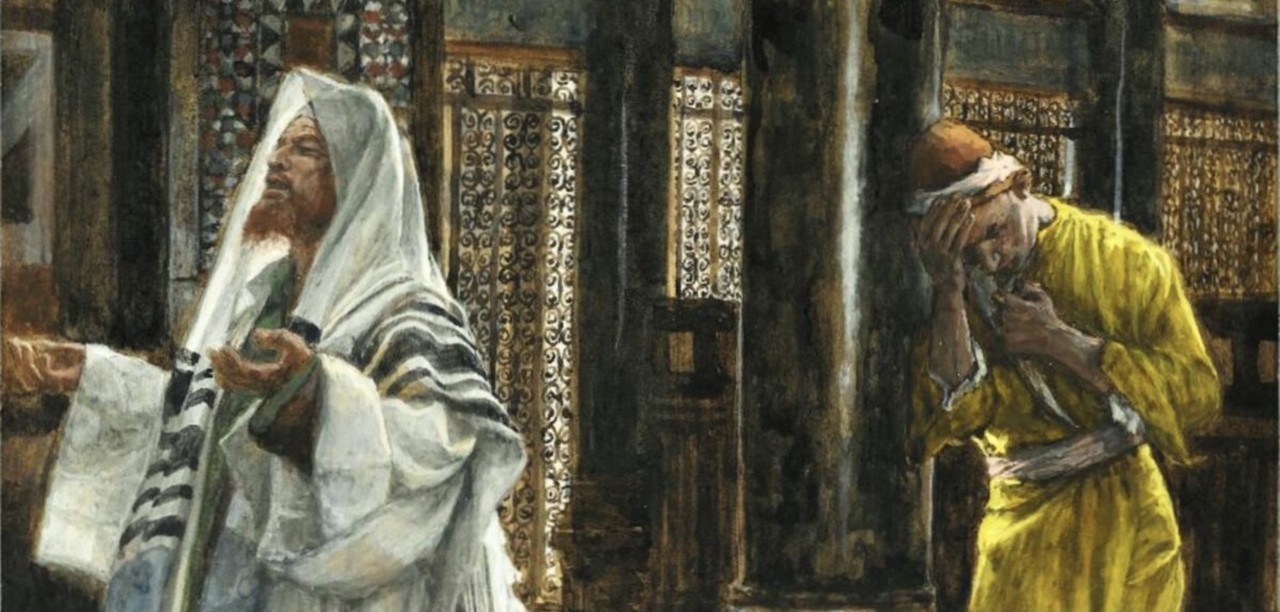
Can we earn our way to heaven? Is it enough to just be a good person in the world? Will we be saved by our good deeds alone? These are questions that have puzzled many throughout history. Some of the Jews believed they could earn their way to heaven through their actions. The Law was supposed to lead them to Christ, but it was not going to bring them salvation by their own merit.
In this parable, Jesus illustrates the truth by contrasting two people: a Pharisee and a Tax Collector. The Pharisees were a sect of the Jews who became organized in the intertestamental period. They were very orthodox in their religious practices and very demanding of the Jewish people at that time. Dedicated as they were, they soon became so caught up with their desire to be righteous that they began to add their own requirements to the law rather than learning from the law that they needed a Savior.
Some religious groups today still teach works-based salvation, but salvation doesn’t work that way. It is not based on works of merit. This parable looks at the prayers of these two men, focusing on their hearts and intentions. We, like them, must put our trust in the right place.
The Pharisee
The Pharisee in this parable stood to pray, which was a normal posture for prayer (Mark 11:25). However, in this context, it seems to indicate something more. The Pharisee saw himself as independent, able to stand on his own two feet. He prayed within himself (Luke 18:11-12), not a public prayer, but just between him and God. He was thankful, but his attitude was all wrong. The Pharisee had an “I” problem, focusing on himself rather than God. He mentioned God once at the beginning and used the word “I” five times. Instead of praising God for His goodness, he boasted about his own righteousness.
The Pharisee thanked God that he was not like others, using the wrong standard to measure himself. It was easy to look good when compared to the worst dregs of society. He listed his virtues: not an extortioner, not unjust, not an adulterer, and not like the Tax Collector. He looked down on others, showing no interest in helping them come to God. His prayer revealed his pride and self-righteousness, as if he had earned something. He missed the point of the law (Romans 3:20).
The Pharisee boasted about fasting twice a week and giving tithes of all he possessed. While the Law of Moses commanded fasting only once a year on the Day of Atonement, the Pharisees went beyond the law, being stricter and requiring more devotion. They even tithed the smallest spices and herbs (Luke 11:42). This kind of prayer, uttered in a spirit of pride, was not unknown. Somewhat later, according the Talmud, Rabbi Nehunia used to pray in a similar manner, thanking God for setting his portion with those who study Torah rather than those who engage in frivolous talk.
The Pharisee did not see himself as he truly was (Revelation 3:17). Do we see ourselves in the Pharisee? Is it okay to thank God for being born in a certain place? Are we like the Pharisee in thanking God for our superiority? Is it okay to look down on others because they are not like us? Jesus told this parable to those who trusted in themselves and despised others (Luke 18:9). Sometimes we may trust in ourselves too much or trust in others who are good people but give nothing to God. The Pharisees trusted in themselves, believing they were superior to others.
The Tax Collector
In contrast, the Tax Collector stood afar off, likely realizing he was not welcome near the Pharisee. Tax collectors were a despised class, seen as traitors for collecting taxes for the Roman Empire. They were viewed as collaborators with their oppressors. Despite this, the Tax Collector showed humility before God. He would not raise his eyes, bowing his head in sorrow. He beat his breast, a sign of ongoing sorrow and repentance. Unlike the Pharisee, he did not boast about his virtues. Instead, he acknowledged his sins and begged for God’s mercy and grace.
The Tax Collector’s prayer was short and simple, without excuses for his sins. He recognized his need for God’s forgiveness and mercy (Romans 3:23). When we come to God, it must be in humility, recognizing who He is. Consider the model prayer (Matthew 6:9-13), which praises God for His greatness, prays for His will to be done, asks for daily needs, seeks forgiveness, and prays for deliverance. It is not about us, but about God.
Conclusion
In Luke 18:14, Jesus concludes the parable by stating that the Tax Collector went home justified before God. This does not mean that God condones sin, but rather that the Pharisee was guilty of the sin of pride. The Tax Collector was justified because he humbled himself before God, acknowledging his need for God’s grace. The Pharisee exalted himself, trusting in his own righteousness and comparing himself to others. God will humble those who exalt themselves and exalt those who humble themselves.
None of us have anything to boast about before God. It is important that we do not trust in ourselves, but in God. We must not despise others, thinking we are superior. Let us be like the Tax Collector, admitting our faults and praying for forgiveness.