The Lord and Me, We Have a Deal

Photo by Pixabay on Pexels.com

            Perhaps you have tried to share the gospel with someone or encouraged them to come to the worship service of the church, only to have them quote the title above as if they are separate from God’s requirements.  Don’t get me wrong, we can have a covenant relationship with the Lord, but that relationship can only be had according to His stipulations and requirements.  Let’s explore . . .

            In the Old Testament covenant that God made with the nation of Israel, God gave all of the stipulations and requirements to Moses on Mt. Sinai.  Moses then relayed the information to the children of Israel.  “So Moses came and told the people all the words of the LORD and all the judgments. And all the people answered with one voice and said, ‘All the words which the LORD has said we will do’” (Exodus 24:3 emphasis added).   Notice the ‘all’ that they said they would do.  The covenant was not negotiable.  The Lord set the stipulations and the people could either accept it or refuse it.  They couldn’t say that they had a special or different deal with the Lord.  Part of those stipulations were that they had to keep three specific feast days to the Lord (Exodus 23:14).  They couldn’t just decide to roll those three into one day for convenience.  The covenant was unilateral and non-negotiable.

            In the New Testament there is a new covenant.  Jeremiah prophesied that this new covenant was coming (Jer. 31:31-34).  The new covenant is the agreement that we can have with the Lord today, however, this deal is also based upon the commandments and stipulations of the Lord.  We can either accept the deal or deny it.  We do not get to negotiate our own deal individually.  Jesus basically says that if we follow Him, we can have the remission of our sins and live with Him forever (Mark 16:16; Mat. 28:19-20; Acts 2:38).  Notice especially in the Matthew passage that in order to be a disciple of Christ that one must be baptized and taught to observe all things that Jesus has commanded.

   Both the Hebrew and Greek words that are used for covenant in the Bible mean a contract or agreement of some kind.  So, we can have an agreement with God.  That agreement or covenant relationship can only be had, however, if we will accept all that God has told us to do.  God’s salvation is not a buffet where we get to pick and choose.  We must do all that He commands us to do!

Can We Die Apart from How We Live?

            There is a country song by one of Knoxville’s more famous sons titled “Everybody Wants to go to Heaven,” which expresses the attitude that we can live however we want now and still go to heaven in the end.  In the song, the lyrics suggest that we can have the women and whiskey and all the worldly pleasures we want, as long as we put some extra money in the collection plate on Sunday.  Is that how God operates?

            The thought is nothing new.  Around 1400 BC, there was a prophet of God named Balaam who basically wanted to do the same thing.  Balaam was eager to go with the men that the king of Moab sent to him in order that he might come and curse the children of Israel, who had exited Egypt 40 years prior and were now encamped on the plain hear Moab (Num. 22-24; 2 Pet. 2:15).  You may remember that God did not want Balaam to go and even placed the Angel of the Lord in his way.  Balaam wanted to go and be ‘honored’ by the king of Moab, but he still wanted to die the death of the righteous (Num. 23:10).  Can we live wickedly and still die the death of the righteous?

            How we live matters!  We cannot live like the devil and die like an angel.  God says that we are to strive for holiness in how we live (1 Pet. 1:13-16).  Indeed, Paul wrote to the Ephesians, “I, therefore, the prisoner of the Lord, beseech you to walk worthy of the calling with which you were called” (Eph. 4:1).  We cannot live in disobedience and think that we can somehow buy our way into heaven.  It didn’t work for Balaam, who died with those who caused Israel to stumble by his counsel (Num. 31:8, 16), and it will not work for us.  If we want to die the death of the righteous, we must live in obedience to God!

Why Was God Pleased to Injure Christ?

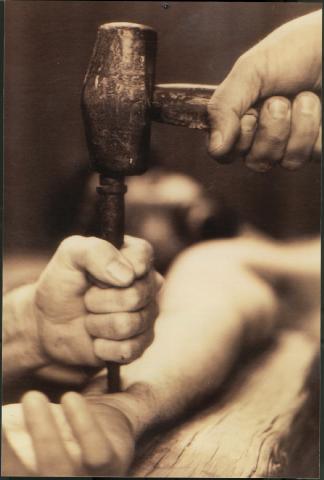
nails     During this time of the year when many people are thinking about the death, burial, and resurrection of Jesus, many might read from Isaiah 53, which predicts the Christ’s ordeal on the cross. Have you ever read that account, however, and wondered about just what it says? In verse 4 we read that Christ was, “Smitten by God, and afflicted” (Isaiah 53:4, NKJV). Later it declares, “And the Lord has laid on Him the iniquity of us all” (Isaiah 53:6). “He was cut off from the land of the living; For the transgressions of My people He was stricken” (Isaiah 53:8). On and on we read within Isaiah’s prophecy about how Jesus was going to be mistreated by mankind. But then we read the statement, “Yet it pleased the Lord to bruise Him; He has put Him to grief” (Isaiah 53:10, emphasis added). Just how could this bloody sacrifice of His one and only unique Son be pleasing to God?

     There are many events recorded in the Bible, with which God was not pleased. He was not pleased with the idolatry of the Israelites. Whether at the base of Mount Sinai during their exodus from Egypt, in the high places during the time of the divided kingdom, or in the temple during the reign of Manasseh, God was not pleased with idolatry. There were times when the Israelites did not offer their best in sacrifice to God, but instead brought the lame and sick as a sacrifice (Malachi 1:8; 3:8-9). In this God was not pleased, because their heart was not in what they were doing, and they were not showing God the proper respect. “Therefore, when He [Jesus] came into the world, He said: ‘Sacrifice and offering You did not desire, But a body You have prepared for Me. In burnt offerings and sacrifices for sin You had no pleasure’” (Hebrews 10:5-6). Here Jesus is saying to the Father that the Father did not desire or have pleasure in burnt offerings and sacrifices.

     So what are we to make of this? God did not have pleasure or desire for burnt offerings and sacrifices, which He commanded, but it pleased the Lord to bruise Christ. Even though God commanded the children of Israel to make burnt offerings and sacrifices, He did not take pleasure in them. Their sacrifices represented failure on their part to keep His law. They were required because of the sins of the people. They were necessary because mankind will always fall short. God takes no pleasure in man’s sin. This is why God through the prophet Samuel says, “Has the Lord as great delight in burnt offerings and sacrifices, As in obeying the voice of the Lord? Behold, to obey is better than sacrifice” (1 Samuel 15:22). God would rather that man obey Him than to make the best animal sacrifice he could offer. God also did not have pleasure in burnt offerings and sacrifices because they could not get the job done. Just before stating that God has no desire for nor pleasure in those offerings, the Hebrew account tells us plainly, “For it is not possible that the blood of bulls and goats could take away sins” (Hebrews 10:4). Those animal sacrifices could not take sin away and could not make those who offered them perfect with regards to the conscience (Hebrews 9:9; 10:1-3). There was still a remembrance of those sins, and so year after year the High Priest would enter the Most Holy Place with the blood of the sacrifice (Hebrews 9:7). God was not pleased because the reconciliation between God and man was not complete.

     By contrast then, God was pleased with the sacrifice of Christ. Because of what Jesus did for mankind by dying on the cross as our perfect offering, there is a cleansing of the conscience and the sins of man are remembered no more (Jeremiah 31:31-34; Hebrews 8:12). The sacrifice of Jesus was perfect and complete. There no longer remains a need for another sacrifice, because Jesus offered Himself for us once for all (Hebrews 9:11-15). Because of the redemptive work of Christ, man and God are reconciled to one another (Ephesians 2:16). In this the Lord is pleased. This is how God can say that He was pleased to bruise Jesus for our transgressions. It is not that He was pleased by Christ having to endure the cross and the pain and the shame. But God was pleased in the result in that mankind has a path back to the Father. Will you follow God’s Path to Salvation? Will you take the only way that we can go to find eternal life (John 14:6)? God has done His part by offering His one and only unique Son for our behalf (John 3:16). In this He was pleased. Will you do your part to accept His sacrifice and apply the blood to cover your sins through simple obedience to the Gospel? If you want to be pleasing to God, you will.

Cutting of the Scroll

Jehoiakim_Burns_the_Word_of_God_(Bible_Card)     Near the end of the kingdom of Judah, the word of the Lord came to the prophet Jeremiah and he was told to put all the accusations against Israel in Judah into a scroll. The hope of the Lord was that the people in Judah would hear about all the wrong things that were done, which offended God, and that they would repent before it was too late. The scroll was dictated by Jeremiah and written by the hand of Baruch, who was a scribe. After being read in the temple, the scroll was taken to king Jehoiakim, the son of Josiah (Jeremiah 36:1-4, 16).

     To say the least, Jehoiakim did not appreciate the things that were written on the scroll. He did not like that God was criticizing his practices, nor did he like that God was telling him through Jeremiah that the Babylonians were going to invade and conquer Judah if they did not repent. Jehoiakim made a choice to ignore and disbelieve the prophecies of Jeremiah. In objection to the scroll, the king cut it up and threw it into the fire (Jeremiah 36:23).

     It is interesting to wonder how many times in the many years since this event that others have tried to cut out the parts of God’s word that they did not want to hear, and metaphorically cast God’s word into the fire. Many have a tendency to approach religion as if it were a buffet table. They take what they like, but ignore or cut out those parts of scripture that do not agree with their lifestyle.

     In the case of Jehoiakim, he was not successful in ignoring God. God commanded Jeremiah to write another scroll, so God’s word was not to be defeated or destroyed. Additionally, Jehoiakim’s son lost the path to the throne, and Jehoiakim’s body found no rest after death by not receiving a proper burial (Jeremiah 36:27-30). For a king, this is a grievous insult. Let us think for a moment about what our fate will be if we attempt to do the same as Jehoiakim. We cannot ignore God’s will if we want to lay hold of eternal life. If we want rest after our physical death, we must adhere to the entirety of God’s law for us (Matthew 7:21ff). To cut away the parts of the scroll we don’t personally like is to cut away our own soul.

Choosing Our Choice

20268595946_58bfb01361_o     Americans across the country are beginning to gather in coffee shops, local burger joints, and neighborhood hangouts and discussing who our next president will be. Those in Iowa, New Hampshire, and other early primary states have made, or are making their choices now. We see it as a great privilege within our political system that we are allowed to choose our choice candidate to be our next leader. While democracy in politics and government is a great system, we must be sure to recognize that we do not get to choose when it comes to the one who is our ultimate ruler.

     The Bible teaches us that, “The LORD is King for ever and ever: The heathen are perished out of his land” (Psalm 10:16, KJV). “The LORD sat enthroned at the Flood, And the LORD sits as King forever” (Psalm 29:10). Also, “For the LORD Most High is awesome; He is a great King over all the earth” (Psalm 47:2). God is the King. He will be the Ruler forever and ever. He is over all of the earth. Thus, we do not get to choose who our King will be. God is it. Jesus told a parable about a man who went away to receive his kingdom, which is a reference to Jesus going off into heaven to receive His kingdom after His ascension from this earth (Hebrews 1:1-4; Psalm 110:1). Even though there were those in the parable who did not want to be ruled by this man, they could not prevent him from coming into his kingdom (Luke 19:11-27). We can choose to follow Him or not. We do have that free will. However, He is the Lord, the Ruler, and the King whether we accept Him or not.

     Therefore, seeing that these things are so, let us come and acknowledge Him as the King of kings and Lord of lords (1 Timothy 6:15; Revelation 17:14). Let us choose Him as our choice to rule in our lives. If He is to be our Lord and Master, then we need to obey what He says to do. He is coming back some day to judge the living and the dead (Ecclesiastes 12:14; John 12:48; Acts 17:31; Matthew 25:31-32). Those who are obedient will be ushered in to their eternal reward. Those who refuse Him will be punished. He is the Lord whether you “vote” for Him or not. That cannot be changed. So as we exercise our choice for the next president, let us also think about exercising our free will to choose to serve God while we still have the time and opportunity to do so!

Why Did He Do That?

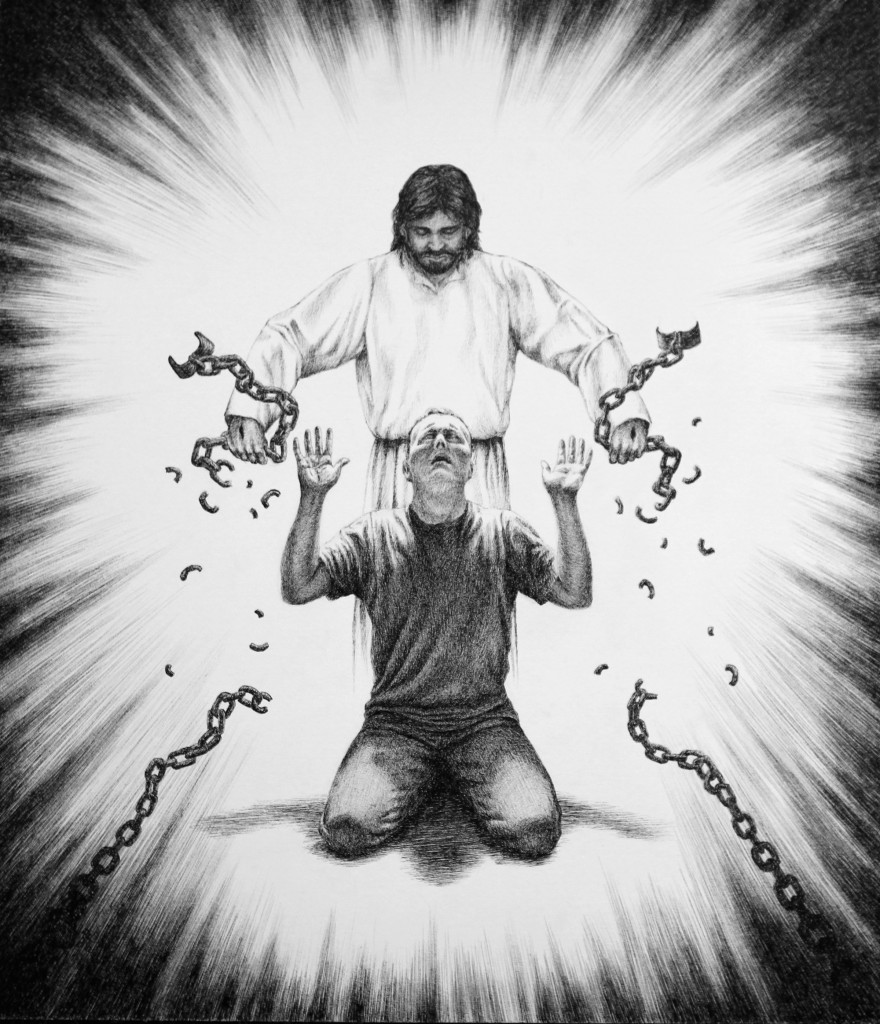
Set-Free     Have you ever wondered just why Jesus came to earth, especially at this time of the year when the world is thinking about Him? Consider for a moment what Jesus already knew before He ever left heaven. He knew that men would seek to kill Him as a toddler (Mat. 2:16). He knew that He would not be received by His own people (John 1:10-11). He knew that He would be rejected by men (Isaiah 53:3-5). He knew that He would be put to death on the cross, not for any wrong that He had done, but for the sins of mankind (Isaiah 53:9; 2 Pet. 2:22-25). And, yet, He came anyway. Why?

     Jesus left the beauties of heaven to come to earth below for one main reason. He came because He loves us all. A very popular scripture tells us that God loved us so much that He gave us His one and only unique Son, so that we might believe in Him, obey Him, and have everlasting life (John 3:16)! Because He loves us, He wants for all of mankind to be saved. The Lord is “not willing that any should perish but that all should come to repentance” (2 Peter 3:9b, NKJV). While we were yet sinners and undesirable, He came and died for us (Romans 5:8).

     Thereto is another part of the reason that Jesus came to earth. We are sinners. As human beings no matter how hard we try, we are not able to be perfect in obedience to God’s word. In Romans 3:23 we read, “for all have sinned and fall short of the glory of God.” Farther along we read, “For the wages of sin is death” (Romans 6:23a). Our sins bring us death, because they separate us from God (Isaiah 59:1-2). Since we all have sinned and separated ourselves from God, and since the just payment of our sins is death, Jesus came to take that penalty away and to reconcile us to back to God. Jesus came so that we might live.

     All Jesus asks for in return is that we believe in Him and obey Him. That is all He wants in return for His great sacrifice. If we claim to love Him, this we will do. Jesus said, “If you love Me, keep My commandments” (John 14:15).

How Do You “Feel” About That?

2269421     I recently read a blog article by someone who claims to be a Christian about what it takes to be a Christian.  I am sure that there are many blogs out there that address this issue in one way or another, but what was interesting about this particular post is what the author claimed he believed.  Or, to be more accurate, what he claimed to not believe.  The author stated that he does not believe that Jesus is God.  He does not believe that Jesus walked on water, healed the sick, raised Lazarus from the grave, was born of a virgin, was raised Himself after three days in the grave, or that He died for the sins of mankind.  So we may ask the question, why does he consider himself to be a Christian?  Reading on in the article, the author’s beliefs were based purely on what he “feels” about God.

     If the basis of religious truth is nothing more than how we feel about something, how could you ever prove what is true?  I may feel that one thing is true and someone else may feel that the opposite is true, so which one is correct?  Truth has to be based on facts.  I may feel that the water is cold.  Someone else may feel that the water is hot.  But if we take a thermometer and measure the temperature of the water, now we have established the facts.  Now we can know if the water is really cold or hot.

     If we are going to follow Jesus.  If we are going to be one of His.  If we are going to call ourselves Christians (meaning that we belong to Christ).  Then we need to pay attention to what He said and what He did.  Jesus established the basis of truth in His prayer to the Father, “Sanctify them by Your truth. Your word is truth” (John 17:17, NKJV).  What are the facts in this case?  What is it that we are to believe?  Let us look into the truth of God’s word for that answer, for without God’s word we would have no facts at all about who God is, what He is like, or what He desires for us to do.

     Jesus said that He was God. “And He said to them, ‘You are from beneath; I am from above. You are of this world; I am not of this world.  Therefore I said to you that you will die in your sins; for if you do not believe that I am He, you will die in your sins’” (John 8:23-24).  In this particular passage Jesus says that unless you believe that “I am” you will die in your sins.  That “I am” statement should take us back to Moses and the burning bush, where God told Moses to tell the Israelites that I AM had sent him (Exodus 3:14).  If we are going to claim to be followers of Jesus, should we not believe what He said?

     Why claim to follow Jesus if He was not raised from the dead?  This does not make any logical sense.  If He was not raised from the dead then there is no basis for the Christian religion.  Without the resurrection of Christ, there is no foundation for Christianity.  Consider what the apostle Paul wrote by inspiration:

Now if Christ is preached that He has been raised from the dead, how do some among you say that there is no resurrection of the dead?  But if there is no resurrection of the dead, then Christ is not risen.  And if Christ is not risen, then our preaching is empty and your faith is also empty.  Yes, and we are found false witnesses of God, because we have testified of God that He raised up Christ, whom He did not raise up—if in fact the dead do not rise.  For if the dead do not rise, then Christ is not risen.  And if Christ is not risen, your faith is futile; you are still in your sins!  Then also those who have fallen asleep in Christ have perished.  If in this life only we have hope in Christ, we are of all men the most pitiable (1 Corinthians 15:12-19, emphasis added).

If Jesus was just another man, why follow Him rather than anyone else?

     The reason that Christians follow Jesus Christ is because He was not just a man.  Jesus is God (John 1:1-5, 14).  Jesus arose from the dead and was seen by many witnesses, which the people in that day and age were unable to discredit (1 Corinthians 15:3-8).  Because He rose from the grave, His apostles and disciples had a newfound courage to be able to go to martyrdom and not worry about losing their physical lives.  Now they understood that there was something more beyond the grave, and so they no longer turned away or deserted their Savior in times of trouble.  If Jesus had not been resurrected, this would not have been the case.

     If we are going to call ourselves Christians, it would seem logical to suppose that we are going to believe what Jesus said, and that we are going to do what Jesus said to do.  We can claim all day long to be one of His, but if we are not doing what He said, then that claim is false.  I can claim to be the King of Morocco, but claiming it does not make it so.  What is the truth of the matter?  Jesus said,

Not everyone who says to Me, ‘Lord, Lord,’ shall enter the kingdom of heaven, but he who does the will of My Father in heaven.  Many will say to Me in that day, ‘Lord, Lord, have we not prophesied in Your name, cast out demons in Your name, and done many wonders in Your name?’  And then I will declare to them, ‘I never knew you; depart from Me, you who practice lawlessness!’ (Matthew 7:21-23).

We had better know what the will of the Lord is, which is based upon the truth of His word and not upon our feelings.  “And do not be conformed to this world, but be transformed by the renewing of your mind, that you may prove what is that good and acceptable and perfect will of God” (Romans 12:2).  You cannot prove it, if you do not know it!  However, we can know for sure what the Lord requires of us.  Paul wrote in Ephesians, how that by revelation He made known to me the mystery (as I have briefly written already, by which, when you read, you may understand my knowledge in the mystery of Christ)” (Ephesians 3:3-4).  When we read God’s word, we can understand what He requires.  We can know what His will is.  Come and see what God’s word has to say on this subject and many others.  The Holy Bible can help us to cut through the fog of confusion and see the truth for what it really is!

Jesus Is Better

Jesus Footprints     In a good news article the four ‘W’s are usually brought out in the first paragraph.  At least that’s what I remember from my very brief education on journalism from a long ago English course.  Writers want to let the reader know who, did what, when, and where.  In looking at the beginning of the book of Hebrews, we might call the writer a good journalist. “God, who at various times and in various ways spoke in time past to the fathers by the prophets, has in these last days spoken to us by His Son, whom He has appointed heir of all things, through whom also He made the worlds” (Hebrews 1:1-2, NKJV).

     Notice with me some of what is in these two little verses of scripture.  First, in verse one, God is the who.  Spoke is what He did.  The when is in times past, and the where was to the fathers.  The verse also tells us how God did that.  It was at various times and in various ways and through the mouth of the prophets that God spoke to mankind in times past.  Second, in verse two, God is still the one speaking, so the who and the what are the same.  However, now that speaking has been done in these last days, and it has been spoken to us by His Son, Jesus Christ.

     There are many lessons that we can learn from the old law and the Old Testament (Romans 15:4).  However, now we are told to hear God’s Son and pay the more earnest heed to His words (Matthew 17:5; Hebrews 2:1-4).  Indeed the message that comes from the entire book of Hebrews is that Christ is better.  He is better than the angels.  He is better than Moses.  He is better than the human high priests.  He mediates a better covenant, established on better promises, with a better hope (Hebrews 7:19; 8:6).

     It is Jesus Christ, the one and only unique Son of God, who has brought salvation to mankind.  We need to hear what He has to say.  We need to obey His commands.  Otherwise, how shall we escape the punishment for our sins that we deserve? “How shall we escape if we neglect so great a salvation, which at the first began to be spoken by the Lord, and was confirmed to us by those who heard Him” (Hebrews 2:3).

Independence

Washington-DC     Independence is something that most Americans desire.  We want to be our own boss.  We do not like being told what to do.  We want to be the ones in charge of our life and our decisions.  When we go to 7-11, we want the 44 ounce Mountain Dew, and we do not want someone telling us we cannot have it.

     In the time of Jesus there were a good many Jews who also longed for their independence.  They did not like it that Rome was in charge and they had no say over their political affairs.  A faction of the Jews known as the Zealots tried to make things difficult on the Romans.  They assassinated leaders and revolted against Rome, which led to the Roman destruction of Jerusalem in 70 A.D. and the Zealot’s last stand at Masada (Josephus, Wars of the Jews).

   While political independence is something to be desired, we need to realize that we will never be totally independent.  We cannot create our own food out of nothing.  We cannot create the air we breathe in by speaking it into existence.  We cannot make our hearts stop and start beating.  We need to recognize our dependence upon God.

     God, through the pen of Paul, lets us know that we are all slaves to someone.  We are either slaves/servants of God, or we are slaves of the evil one. “Do you not know that to whom you present yourselves slaves to obey, you are that one’s slaves whom you obey, whether of sin leading to death, or of obedience leading to righteousness?” (Romans 6:16 NKJV).  We may think that we are being independent when we choose to walk away from God, but we are only making ourselves slaves to someone/something else.

     If we want true freedom from sin, if we want a reward in heaven when this life is over, then we need to realize our total dependence upon God.  We need to learn of His will, and we need to obey Him (Matthew 7:21ff; 2 Thessalonians 1:7-9).  Jesus said that we could know the truth, and that the truth would make us free from sin (John 8:32).  Thus, we can have independence from the evil one, but only by being dependent upon God!  God will not force us to choose Him.  That is our independent choice.  Who will you choose to depend upon?

Why Can’t I Use Any Wood?

Gopherwood     In today’s modern culture there is an emphasis on self sufficiency. That is, man believes that he is to be the ultimate judge and determiner of his own destiny. He does not need to rely on any one else. In such a spirit, we can imagine a modern day Noah asking the title question when God instructed him to make an ark.

     In the story of Noah, we see that God specified that Noah was to use a particular type of wood for the ark. God said, “Make yourself an ark of gopherwood; make rooms in the ark, and cover it inside and outside with pitch” (Genesis 6:14 NKJV). While we do not know today just exactly what gopherwood was, it is clear that this is the wood that God specified that Noah was to use. It would not do for Noah to use any type of wood. When God specifically told him to use one kind of wood, He expressly eliminated all other types of wood. We see Noah’s righteousness in that he did just what God had commanded him to do (Genesis 6:22). Noah would not have been blessed had he not obeyed what God told him to do and used another type of wood.

     God did not need to provide Noah with a list of all the types of wood that were forbidden. He only needed to specify which wood was acceptable for the task. Today, many want to take the pages of Scripture and say that they are allowed to do whatever God has not specifically condemned. However, this is a misapplication of God’s Holy Word. For instance, God did not command us to make music, but instead told us to sing (Col. 3:16; Eph. 5:19). Had He told us to simply make music, we could do whatever we wished. Instead, He commands us to sing. That command to sing eliminates all other forms of music. He does not need to list all that is forbidden, since He has specified what is acceptable. It is the same as a sign on the restroom that specifies “Men.” That sign does not need to list who is not allowed, since it only authorizes men to enter.

     There are many other examples that can be used to show the same line of reasoning.  The fire that Nadab and Abihu used would be another indication that God specified what He wanted, and it eliminated all other types of fire (Lev. 10:1-3).  Just as Noah could not use any wood that he saw fit to use, we cannot be of the opinion that we can wander from what God has specified with regards to our worship to Him in our singing.  Let us not be guilty of going beyond what God has commanded!