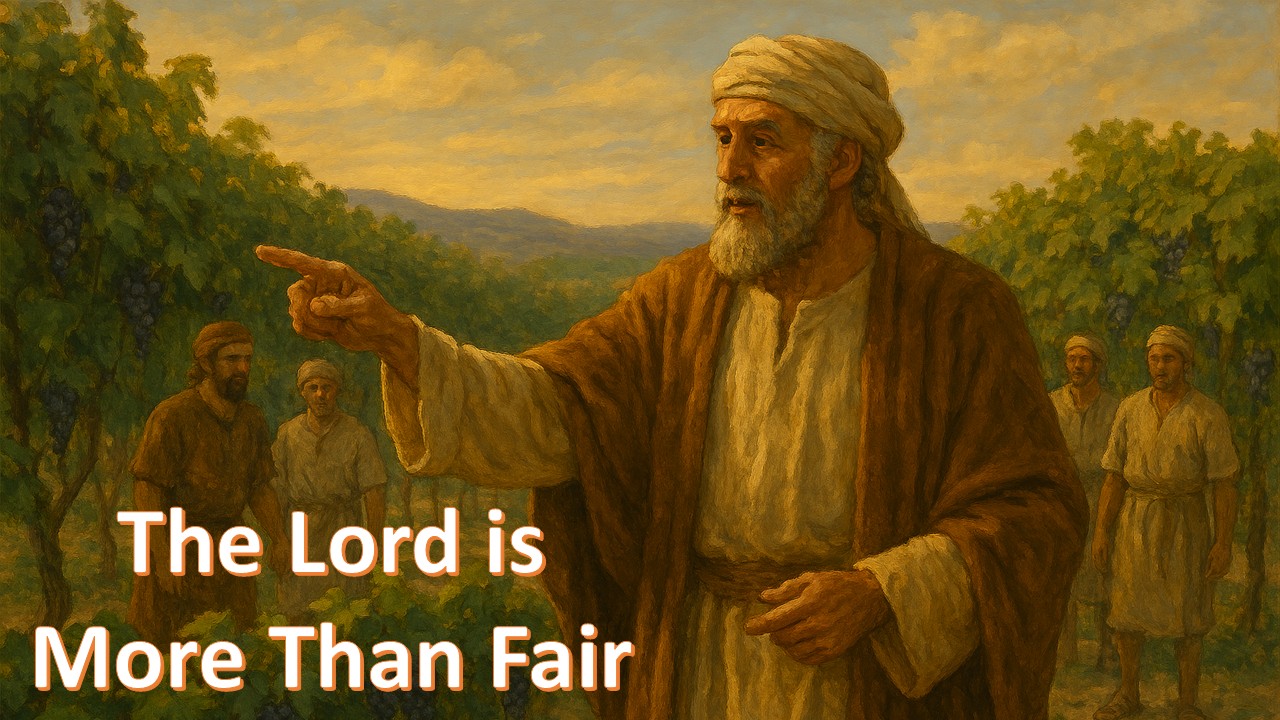
The Lord is More Than Fair

Fairness is a concept that often sparks debate and discontent. People sometimes grumble about perceived injustices, even when their complaints lack real merit. Consider situations where individuals receive generous compensation for minimal effort—like getting paid millions not to coach. Many might wish for such “mistreatment”! This theme of fairness is central to several parables of Jesus, especially the parable of the landowner and the laborers in the vineyard (Matthew 20:1ff). At first glance, the landowner’s actions seem unfair: those who worked hardest received the same as those who worked little. But a deeper look reveals profound lessons about the kingdom of heaven, the workers, their compensation, and the eccentric generosity of the landowner.

The Workers

The workday in biblical times began early, around 6 am, and ended at 6 pm. During harvest, there was a rush to find enough workers. Laborers were hired at various times: the third hour (9 am), sixth hour (noon), and even the eleventh hour (5 pm). Some stood idle not out of laziness, but because no one had hired them. In those days, if you didn’t work, you didn’t eat.

The first group of workers negotiated their wages—a denarius for a day’s work. This group can be seen as representing the Jews, who entered into a covenant with God, agreeing to follow His commands. Later workers, likely representing the Gentiles, did not negotiate; they simply trusted the landowner to “give what is right.” Their willingness to work without a set wage highlights the importance of attitude over entitlement.

Jesus’ parables often challenge hard-heartedness, as seen in the questions: “Why eat with sinners?” “Why help Samaritans?” “Who is my neighbor?” The story prompts us to consider whom we trust to care for us: a doctor focused only on pay, a security team obsessed with bonuses, or a preacher more concerned with free time than service. The first workers expected more, but the story sets up a lesson about grace and generosity.

The Compensation

At the end of the day, the law required that workers be paid promptly (see Leviticus 19:13 and Deuteronomy 24:14-15). Each laborer received a denarius, regardless of hours worked. The early hires assumed they’d get more when they see the others pay. Instead, everyone received equal pay.

The first workers felt devalued and unappreciated. “We worked all day in the hot sun,” they complained. “You have made us equal with those who only worked an hour.” Such situations would likely upset politicians and labor unions today. Discussing salary among coworkers often breeds resentment. Though the workers accepted their pay, they grumbled about perceived unfairness. But is their complaint justified?

The Eccentric Landowner

The landowner responds: “Is this not what you agreed to?” The early workers were happy with their wage at the start—three times what they might expect for vineyard work. The master was more than fair. His generosity extended to the latecomers, not out of obligation, but from the goodness of his heart. “Is he not entitled to do what he wants with what is his?” he asks.

The parable introduces the concept of the “evil eye,” a metaphor for envy and resentment, especially regarding money (see Matthew 6:22-23). Jesus teaches that “the last will be first, and the first last.” Those who put themselves first may end up last, or even left out, as illustrated by the rich young ruler who couldn’t give up his possessions. Peter’s question, “What is in it for us?” is met with assurance: “The Lord will be more than fair with you.” The parable is told to reinforce this point, followed by the sons of Zebedee seeking special treatment. The conclusion is clear: to be first, one must be willing to be last. The Lord’s grace exceeds fairness; He gives more than we have earned to those who trust in Him.

Conclusion

Many stand idle in the marketplace, not working in the vineyard. The landowner does not reward inactivity; the workers trust Him to do what is right. God is gracious with what belongs to Him. In the Christian life, it doesn’t matter how many years one has served—there is no hierarchy or seniority. Both lifelong believers and newcomers will share in heaven. Jealousy and resentment are misplaced; whatever we receive from the Lord is better than we deserve. The invitation remains: “Why are you standing idle?”
The Parable of the Sower: Lessons in Seeking and Sowing

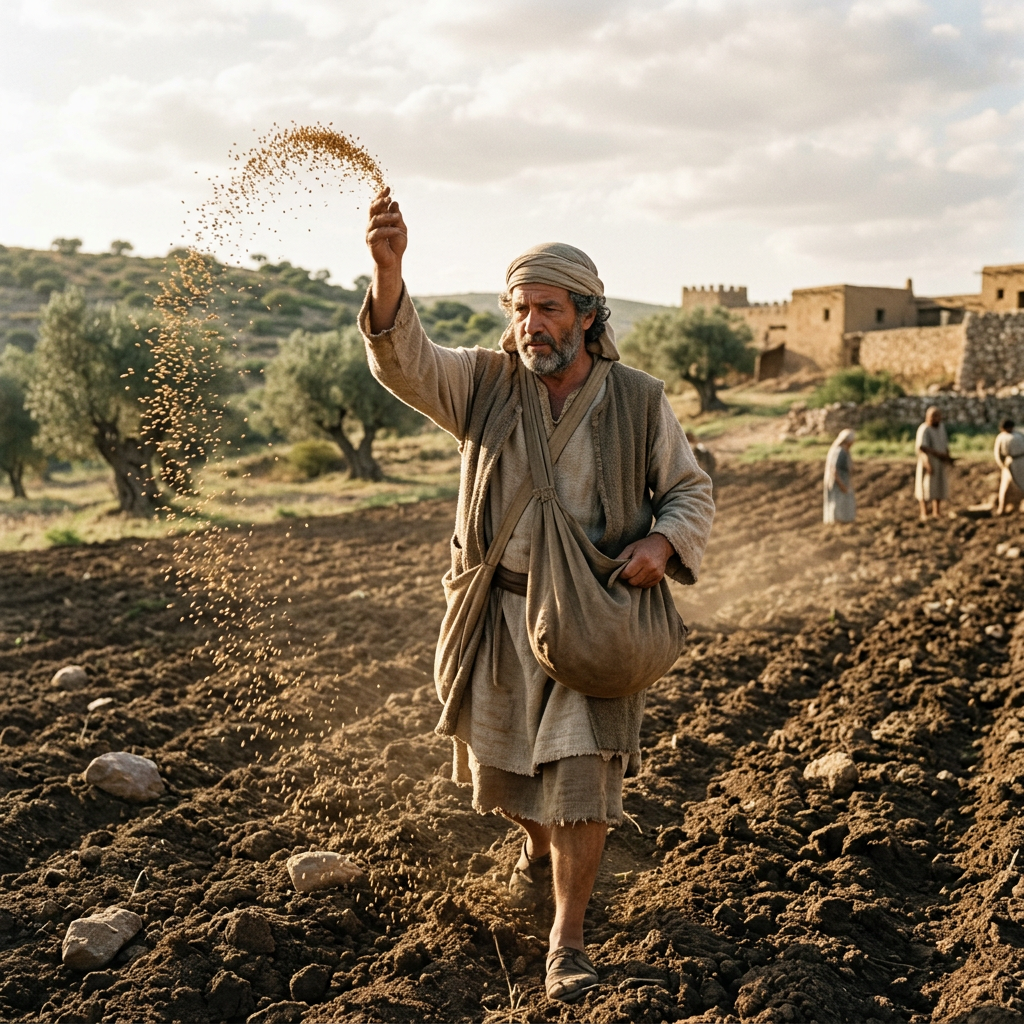
Man sowing seeds manually on prepared soil in a rural landscape

The Parable of the Sower, as told by Jesus in Matthew 13, gives us profound insight into the nature of spiritual understanding and the responsibility of sharing God’s Word. Through familiar imagery and everyday experiences, Jesus uses the parable not only to teach but to challenge listeners to become seekers of truth. Let’s explore what this story means both in its ancient context and for us today.

Jesus often spoke in parables; simple, earthly stories drawn from the culture and daily life of His audience. These stories, while easy to understand on the surface, carried deeper, heavenly meanings that weren’t always immediately clear. The purpose of the parable was to separate the casual listener from the true seeker: those who would inquire further and ask the Lord for understanding. This principle was true in Jesus’ time and remains true today.

Matthew 13:10-17 records Jesus explaining why He spoke in parables. He notes that some hearts have grown dull, ears have become hard of hearing, and eyes have closed. Without a desire to seek, people will not understand and will miss out on healing and transformation. While the parable was told to the crowd (Matthew 13:2), its explanation was reserved for the disciples (Matthew 13:10-11a), underscoring the importance of pursuing the truth of God’s Word.

The Parable Told

In Matthew 13:1-9, Jesus describes the process of sowing in ancient times, which was by casting seed by hand across an unfenced plot of ground. The seed fell on various types of soil, not just the good soil. Each type of ground represents a different response to God’s Word:

  • The Wayside: Hardened paths where the seed cannot penetrate. It sits atop the surface until birds eat it, and so it is quickly snatched away.
  • Stony Places: Rocky areas with little soil. The seed sprouts quickly but withers when the sun gets hot because it lacks deep roots.
  • Among Thorns: Weedy and thorny ground where the seed is choked out by competing plants.
  • Good Soil: Fertile ground where the seed produces a crop, yielding more than what was sown.

When Jesus says, “He who has ears to hear,” it’s a call to look beyond the surface and seek the deeper meaning.

The Parable Explained

In Matthew 13:18-23, the disciples ask Jesus to explain the parable. He doesn’t chastise them for not understanding; instead, He is pleased to reveal the heavenly meaning to those who seek. The seed represents the Word of God, sown into the hearts of men. The condition of the soil represents how people receive the message:

  • The Wayside: Some hear the Word but do not understand or pursue it further. Where understanding is absent, growth cannot begin. Each Gospel describes the one who snatches away the seed: Satan, the Devil, or the Wicked One.
  • Stony Places: These people receive the Word enthusiastically but without depth. When difficulties or persecution arise, their shallow commitment falters.
  • Among Thorns: Here, the Word is crowded out by other concerns and desires, especially the pursuit of wealth. Jesus warns that serving God and chasing after material things are incompatible.
  • Good Ground: True fruitfulness comes from hearing, understanding, and committing to the Word. Such people bring others to Christ and fulfill the purpose of the seed.  Results vary, but this is the outcome Jesus desires—fruitful lives that share in His purpose.

Our Role: We Need to Sow

The parable is not a call to judge who is “good soil” and who is not; rather, it challenges us to sow the Word everywhere. The sower doesn’t just target the fertile ground but broadcasts the seed broadly. The same seed is sown on all types of soil.  God’s message doesn’t change based on the audience.

Scripture urges us to share the Gospel with all people, not just those we deem worthy (Matthew 28:18-20; Mark 16:15-16). Biblical examples like Rahab, Mary Magdalene, and even modern figures who turned to faith remind us that God’s power can reach anyone, regardless of their past. We are not to limit the reach of God’s Word or decide who should hear it; instead, we sow to all and trust God for the results.

Conclusion

Our responsibility is to be sowers.  The mission is not to share our own ideas, but the powerful seed of God’s Word. The effectiveness of our work doesn’t rely on us, but on the seed itself. We may hesitate, feeling inadequate, but it is God’s message that brings transformation.

We are not guaranteed universal success, nor was anyone in Scripture from Noah to Jesus to Paul. Sometimes, only a fraction of those who hear will respond, but even that is a victory. Our task is simply to plant the seed, help truth-seekers find answers, and trust God for the growth.