
Happy Birthday, America! As we think about the 250 years of history that have shaped this nation, we recognize that our story is still short compared with many countries around the world. Even so, Americans deeply value independence. We appreciate the power of the people, the ability to govern ourselves, and the freedom to make our own laws, regulations, and decisions.
There is nothing wrong with loving our country. Patriotism can be honorable and meaningful. But love for country can also develop into something unhealthy when it becomes centered only on self. If we are not careful, independence can become an excuse to make everything about us—our desires, our preferences, our rights, and our will. In that way, we begin to want “me in the middle” of everything.
When it comes to who we are and what we stand for, we often discover that “me” is already in the middle. It appears in our attitudes, our focus, our priorities, and the things we consider most important. The question is not whether we will be involved in our lives; of course we will. The question is whether self will rule the center, or whether God will.
With that in mind, let us consider five things that either already have “me” in the middle or need to have “me” in the middle in the right way.
Pride
Pride is one of the clearest examples of self sitting in the center. Pride says, “I can do this by myself. I know best. I do not need correction, help, or guidance.” Scripture warns against that attitude. Proverbs 16:18-19 teaches that pride goes before destruction and that a haughty spirit comes before a fall. If we believe we can succeed entirely on our own, we are already headed toward failure. True success requires humility before the Lord.
Pride also causes us to love the wrong things. In 2 Timothy 3:1-5, Paul describes people who are lovers of self, lovers of money, proud, arrogant, disobedient, ungrateful, and without self-control. That is the attitude that says life is all about me—my money, my desires, my wishes, and my way. When self takes over, love for others and love for God are pushed aside.
To change, ignore, or dismiss what God has said takes pride. It is arrogant to live as if we control everything. James 4:13-17 reminds us that life is a vapor. We may make plans for a year, a business, or a future, but we do not have the power to guarantee even tomorrow. The proper perspective is to say, “If the Lord wills.” When we boast in our own arrogance, James says such boasting is evil. Pride does not merely make us look foolish; it leads us into sin.
Sin
Sin is missing the mark. It is failing to become what God calls us to be and refusing to do what God commands. 1 John 3:4 describes sin as transgression of God’s law. Without law, there can be no sin; but because God has spoken, we are accountable to Him.
Sin is also centered on self. Think about nearly any sin and ask what is at its heart. Again and again, the answer is selfishness: “I want what I want, when I want it, whether God approves or not.” David knew in his heart that his sin with Bathsheba was wrong, but he pursued what he wanted. For a time, he may have thought he had escaped the consequences, but Nathan confronted him, and David came to understand the seriousness of his sin. In Psalm 51:4, he confessed that his sin was ultimately against God.
We may be tempted to think our sin is no big deal. We may tell ourselves that we did not hurt anyone or that we are only doing what we like to do. But all sin harms our relationship with God. Isaiah 59:1-2 teaches that sin separates us from Him. That separation is not what God wants. He desires all people to come to repentance and salvation, as seen in 2 Peter 3:9 and 1 Timothy 2:4.
When we put our wants and desires first—when pride and arrogance rule us—we are led into sin. Yet just as these evil things can have “me” in the middle, there are also good things that require personal involvement. No one else can believe, have faith, or live faithfully for us.
Believe
To believe is to have conviction based on testimony that something is true or that someone is reliable. In this sense, “me” must truly be in the middle. No one else can believe for me. It is not enough that my parents believe, that my congregation believes, or that people around me believe. Belief must become personal.
Joshua 24:14-15 shows that each person must decide whom they will serve. It is not enough to rely on the faith of our fathers, even if they served the true God. Just as we do not inherit sin from our ancestors, we do not inherit belief from them either. Ezekiel 18:19-20 reminds us that each person is accountable for his or her own response to God.
Salvation requires personal belief. John 3:16 emphasizes that whoever believes in the Son may have eternal life. In Acts 16:30-31, the Philippian jailer was told to believe in the Lord Jesus. Even then, it was not enough for one member of the household to believe for everyone else; each person had to respond. Closely connected with belief is faith.
Faith
To have faith in God is to trust Him and take Him at His word. Faith is closely related to belief, but it goes beyond simply knowing that God exists. Hebrews 11:6 teaches that without faith it is impossible to please God. That faith must be our own. It has to have “me” in the middle—not in a selfish way, but in the sense of personal responsibility and personal trust.
Faith directs the way we live. Proverbs 3:5-7 calls us to trust in the Lord with all our heart and not lean on our own understanding. That kind of faith overcomes pride because it refuses to be wise in its own eyes. It trusts God to direct the path.
Habakkuk 2:4 says that the righteous will live by faith. Living by faith means more than saying the right words. The heroes of faith in Hebrews 11 did not merely claim to believe; they acted. Again and again, the chapter says “by faith,” and each example shows faith moving someone to obey God. Faith is not passive. It calls us to act, and no one can do that for us.
Going
One of the things I must do is be going. As I go through life, I need to ask whether I am involved in what God wants me to do. Matthew 28:19-20 gives the charge to go and make disciples. I may not be able to travel everywhere in the world, but as I am going, I can share the gospel with those I meet. For some people, I may be the only Christian they meaningfully interact with.
Going also includes going to the Lord in prayer. Matthew 6:6 reminds us of the personal nature of prayer. Others can pray for us, and we should pray for one another, but God also wants to hear from me. I need to be personally involved in going to Him.
At the same time, we must make sure we are not going astray. Hebrews 2:1 warns that it is possible to drift. Even after being saved, we can begin to move in the wrong direction if we do not pay careful attention. We must stay on the path that leads to God and go forth to Him, as Hebrews 13:13 urges. If we are going to heaven, we must remain faithful to Him.
Conclusion
We love independence. We appreciate freedom, the ability to make choices, and the opportunity to take responsibility for our lives. Freedom is a great blessing. But we must also understand our dependence upon God. We need Him for everything.
We can find ourselves in the middle of pride, living only to fulfill our own desires. We can find ourselves in the middle of sin, doing wrong and refusing to accept responsibility. But we also need to be in the middle of believing, because no one else can believe for us. We need to be in the middle of our faith, because our trust in God must be personal, active, and growing.
So the invitation is simple: where do you find yourself in the middle this day? Is self at the center in pride and sin, or are you personally placing yourself in the middle of belief, faith, and faithfully going with God?


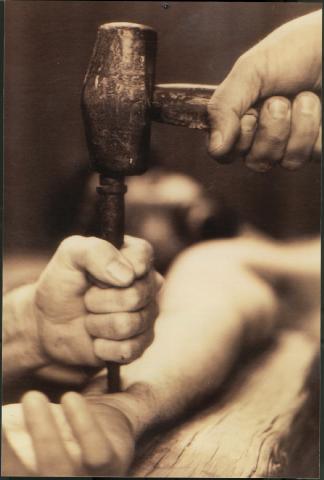 During this time of the year when many people are thinking about the death, burial, and resurrection of Jesus, many might read from Isaiah 53, which predicts the Christ’s ordeal on the cross. Have you ever read that account, however, and wondered about just what it says? In verse 4 we read that Christ was, “Smitten by God, and afflicted” (Isaiah 53:4, NKJV). Later it declares, “And the Lord has laid on Him the iniquity of us all” (Isaiah 53:6). “He was cut off from the land of the living; For the transgressions of My people He was stricken” (Isaiah 53:8). On and on we read within Isaiah’s prophecy about how Jesus was going to be mistreated by mankind. But then we read the statement, “Yet it pleased the Lord to bruise Him; He has put Him to grief” (Isaiah 53:10, emphasis added). Just how could this bloody sacrifice of His one and only unique Son be pleasing to God?
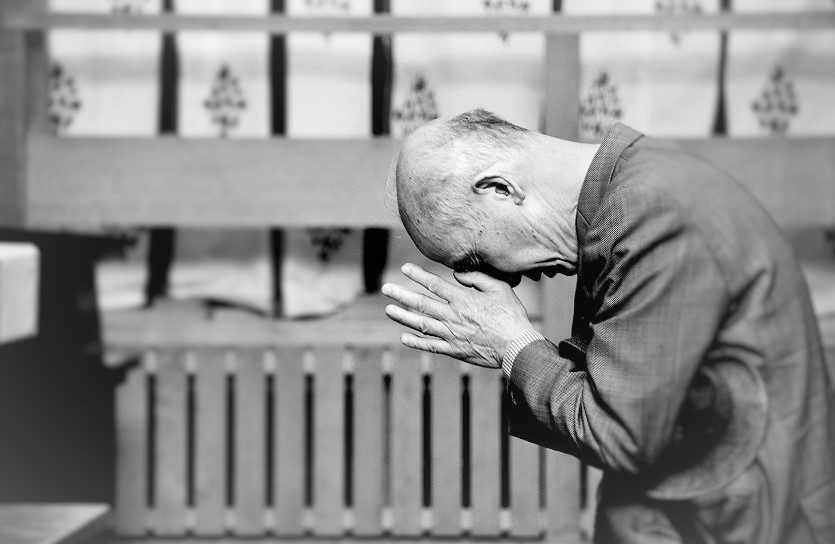 Many times we may hear those in the world refer to salvation by simply praying Jesus into our hearts, or by reciting the ‘sinner’s prayer.’ Is this really all there is to salvation? Is this all that God requires of man for accepting His grace? While there are many places in scripture we could look for the answer to this question, let us consider just one example.
 When things go wrong it seems that the one thing we never run short of is blame. Just take the Cleveland Browns, for instance. When things go wrong in Cleveland, as they often do, everyone looks for who is to blame for this year’s fiasco. From the ownership, to the general manager, to the head coach, to the assistants, to whomever played the most games at quarterback that year there is always plenty of blame to go around.
 There is a song that we sing in our assemblies that speaks of being resolved no longer to linger, charmed by the world’s delight. Instead, the song says that I will hasten to Him. It is a song about being resolute in leaving the world’s charms behind and pressing on to be with the Lord. As we look out upon another year ending and a new one just beginning, what resolutions are we making for the New Year? What are we leaving behind in 2015, and what are we pressing on towards?
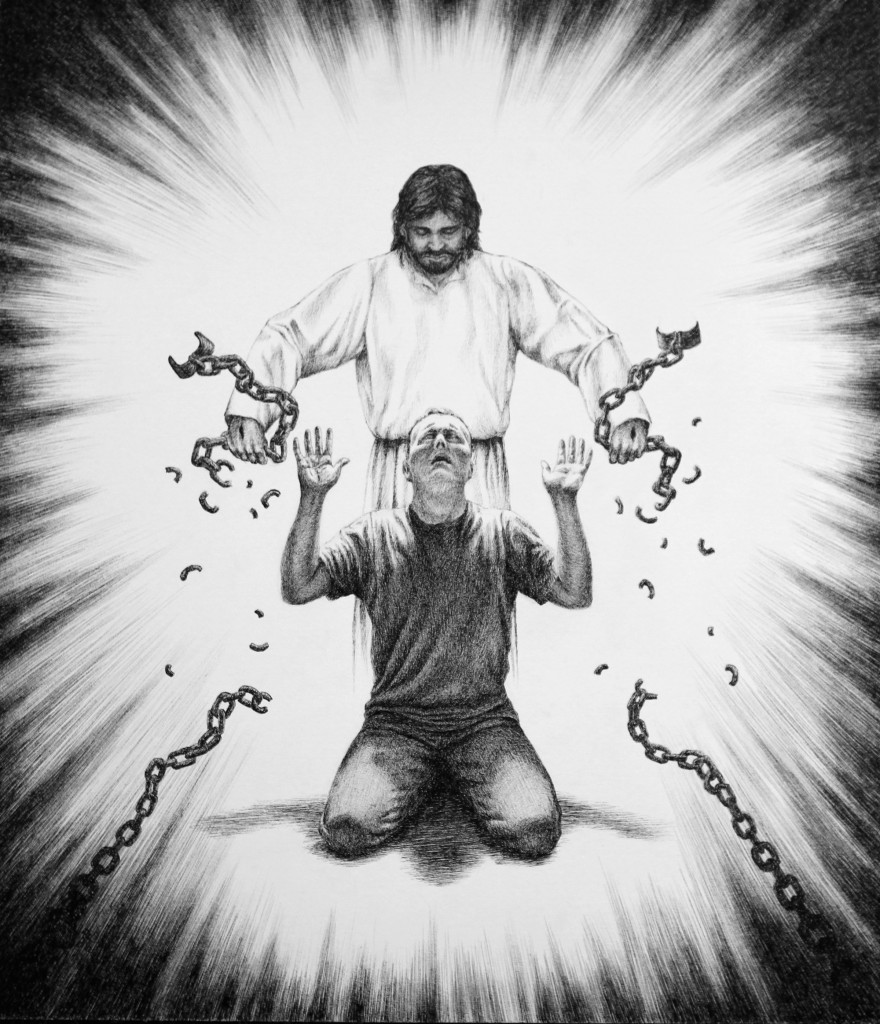 Have you ever wondered just why Jesus came to earth, especially at this time of the year when the world is thinking about Him? Consider for a moment what Jesus already knew before He ever left heaven. He knew that men would seek to kill Him as a toddler (Mat. 2:16). He knew that He would not be received by His own people (John 1:10-11). He knew that He would be rejected by men (Isaiah 53:3-5). He knew that He would be put to death on the cross, not for any wrong that He had done, but for the sins of mankind (Isaiah 53:9; 2 Pet. 2:22-25). And, yet, He came anyway. Why?
