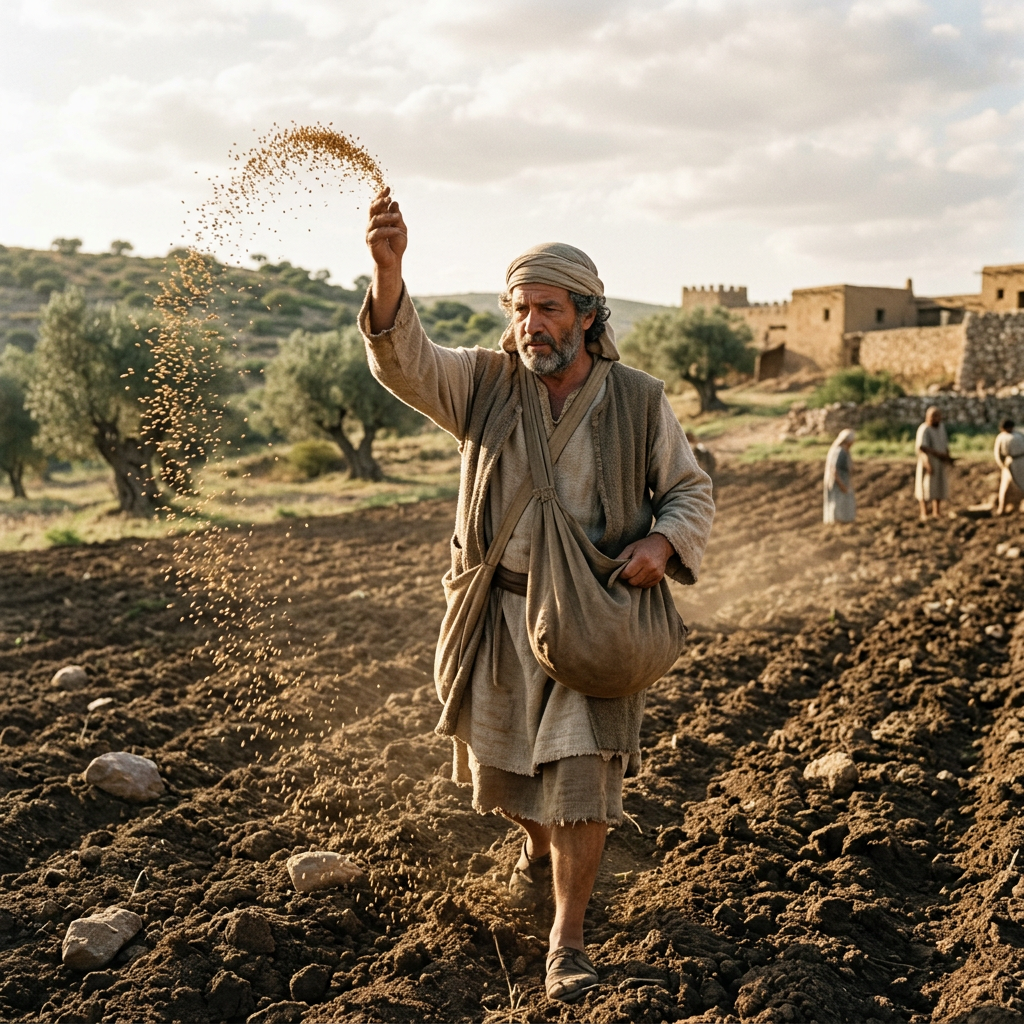
The Parable of the Sower, as told by Jesus in Matthew 13, gives us profound insight into the nature of spiritual understanding and the responsibility of sharing God’s Word. Through familiar imagery and everyday experiences, Jesus uses the parable not only to teach but to challenge listeners to become seekers of truth. Let’s explore what this story means both in its ancient context and for us today.
Jesus often spoke in parables; simple, earthly stories drawn from the culture and daily life of His audience. These stories, while easy to understand on the surface, carried deeper, heavenly meanings that weren’t always immediately clear. The purpose of the parable was to separate the casual listener from the true seeker: those who would inquire further and ask the Lord for understanding. This principle was true in Jesus’ time and remains true today.
Matthew 13:10-17 records Jesus explaining why He spoke in parables. He notes that some hearts have grown dull, ears have become hard of hearing, and eyes have closed. Without a desire to seek, people will not understand and will miss out on healing and transformation. While the parable was told to the crowd (Matthew 13:2), its explanation was reserved for the disciples (Matthew 13:10-11a), underscoring the importance of pursuing the truth of God’s Word.
The Parable Told
In Matthew 13:1-9, Jesus describes the process of sowing in ancient times, which was by casting seed by hand across an unfenced plot of ground. The seed fell on various types of soil, not just the good soil. Each type of ground represents a different response to God’s Word:
- The Wayside: Hardened paths where the seed cannot penetrate. It sits atop the surface until birds eat it, and so it is quickly snatched away.
- Stony Places: Rocky areas with little soil. The seed sprouts quickly but withers when the sun gets hot because it lacks deep roots.
- Among Thorns: Weedy and thorny ground where the seed is choked out by competing plants.
- Good Soil: Fertile ground where the seed produces a crop, yielding more than what was sown.
When Jesus says, “He who has ears to hear,” it’s a call to look beyond the surface and seek the deeper meaning.
The Parable Explained
In Matthew 13:18-23, the disciples ask Jesus to explain the parable. He doesn’t chastise them for not understanding; instead, He is pleased to reveal the heavenly meaning to those who seek. The seed represents the Word of God, sown into the hearts of men. The condition of the soil represents how people receive the message:
- The Wayside: Some hear the Word but do not understand or pursue it further. Where understanding is absent, growth cannot begin. Each Gospel describes the one who snatches away the seed: Satan, the Devil, or the Wicked One.
- Stony Places: These people receive the Word enthusiastically but without depth. When difficulties or persecution arise, their shallow commitment falters.
- Among Thorns: Here, the Word is crowded out by other concerns and desires, especially the pursuit of wealth. Jesus warns that serving God and chasing after material things are incompatible.
- Good Ground: True fruitfulness comes from hearing, understanding, and committing to the Word. Such people bring others to Christ and fulfill the purpose of the seed. Results vary, but this is the outcome Jesus desires—fruitful lives that share in His purpose.
Our Role: We Need to Sow
The parable is not a call to judge who is “good soil” and who is not; rather, it challenges us to sow the Word everywhere. The sower doesn’t just target the fertile ground but broadcasts the seed broadly. The same seed is sown on all types of soil. God’s message doesn’t change based on the audience.
Scripture urges us to share the Gospel with all people, not just those we deem worthy (Matthew 28:18-20; Mark 16:15-16). Biblical examples like Rahab, Mary Magdalene, and even modern figures who turned to faith remind us that God’s power can reach anyone, regardless of their past. We are not to limit the reach of God’s Word or decide who should hear it; instead, we sow to all and trust God for the results.
Conclusion
Our responsibility is to be sowers. The mission is not to share our own ideas, but the powerful seed of God’s Word. The effectiveness of our work doesn’t rely on us, but on the seed itself. We may hesitate, feeling inadequate, but it is God’s message that brings transformation.
We are not guaranteed universal success, nor was anyone in Scripture from Noah to Jesus to Paul. Sometimes, only a fraction of those who hear will respond, but even that is a victory. Our task is simply to plant the seed, help truth-seekers find answers, and trust God for the growth.


