Following the Pack

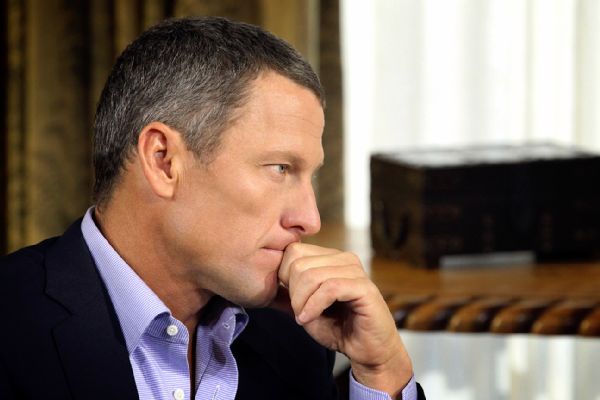
end_a_armstrong_d1_600x400     In a recent interview, Lance Armstrong has reiterated that he would cheat again if he had a chance to do it all over.  Lance Armstrong was revered as one of the greatest cyclists ever.  He won seven consecutive Tour de France titles from 1999 to 2005.  However, all the while Lance was winning those titles; he was also guilty of taking performance enhancing drugs (PEDs).

     Once it became known that Armstrong had been doping, his titles were stripped from him.  After years of denials that he was taking PEDs, he finally came clean in 2013 and admitted to the doping during his illustrious career.  He states in his recent interview that he would do it again to be competitive, because everyone was doing it.  His only regret is that he was put in a place where he had to make the decision to take PEDs, not that he actually gave in and doped to improve his performance.

     So, Lance would make the decision to run with the pack again.  Do you ever remember your mother asking you if you were going to jump off of the bridge just because everyone else was doing it?  Is that a legitimate excuse?  Lance Armstrong’s philosophy reeks of situational ethics.

     What do the words of Scripture have to say about situational ethics?  Is there ever a right time to do a wrong thing?  Paul writes, “Do not be deceived, God is not mocked; for whatever a man sows, that he will also reap.  For he who sows to his flesh will of the flesh reap corruption, but he who sows to the Spirit will of the Spirit reap everlasting life.  And let us not grow weary while doing good, for in due season we shall reap if we do not lose heart” (Galatians 6:7-9 NKJV).  Armstrong has allowed bad company to influence him to also do that which is wrong (1 Corinthians 15:33).  He has given in to running with the pack, rather than standing for what is right and good (competing according to the rules).  In his constant lying about his drug use, he has not let his yes be yes and his no, no (Matthew 5:37; James 5:12).

     Furthermore, James says, “Therefore, to him who knows to do good and does not do it, to him it is sin” (James 4:17).  Lance knew what he was doing was wrong.  He circumvented the rules to gain an advantage.  Many might say they understand.  Who wants to work in a bicycle shop in Plano, Texas when they can be on top of the world?  The problem is that if we do that which is wrong, and say that we would do the same thing again, we show no repentance for our sins.  It does not matter if everyone else is doing it.  Jesus said there was a broad and easy road, that many were traveling, and that this road leads to destruction (Matthew 7:13-14).

     God wants us to follow Him, not the pack.  He wants for all men to come to repentance (2 Peter 3:9).  There is never a right time to do a wrong thing.  Ethics are not situational.  Truth is absolute.  Cheating and lying are always wrong.  Will we be like Lance, and do whatever it takes to achieve fame and fortune in this life, only to lose our own souls (Matthew 16:26)?  Or will we be like Jesus and keep our focus on doing right so we can join Him for eternity, even if we have to struggle in a bicycle shop in the meantime?  Who will you follow?

Speaking in Tongues – Part III

7  Simple  RulesIn the first two lessons of this series we examined the purpose of speaking in tongues and the limited duration of this spiritual gift.  Finally, we want to consider what rules for the use of this particular spiritual gift were put into place by God.  In this lesson, we will answer the question of what rules were to govern the use of the gift of tongue speaking.  Once again we will turn to Paul’s first epistle to the Corinthians for an answer to our question about the rules for tongue speaking.

            Rule #1 – If one speaks in tongues and there is no one to interpret, he is only speaking to God (1 Cor. 14:2).  This is not to be desired in the worship assembly as the church is not edified by the tongue speaker (1 Cor. 14:3-5).  It does no benefit to others if I preach the greatest sermon in the world in Latin and no one can understand what has been said.

            Rule #2 – Tongues could be interpreted (1 Cor. 14:5).  This means that the tongue speaker does not speak some unknown gibberish, but a known language that could be interpreted by others.  Like a missionary to Africa who only can speak English, without one to interpret the message into Swahili, his words will be meaningless to the crowd.  This point is illustrated by Paul in the passage that follows (1 Cor. 14:6-12).  Notice here that Paul makes reference to the many languages of the world, which supports the fact that the tongues being discussed are known languages of the world.

            Rule #3 – Without an interpreter, speaking in tongues was useless (1 Cor. 14:13-19, 27).  Paul asks how anyone can say ‘Amen’ to our blessing if they cannot understand the words of our public prayer (1 Cor. 14:16).  Again, if I pray in Latin and no one can understand what is said, it does them no benefit and they have no opportunity to share in the blessing by being able to say ‘amen’ to the prayer.  We are told to sing and pray with understanding, so to do either without being understood by others does them no benefit.  Paul would rather speak 5 words that are understood than 10,000 words in a foreign tongue that are unknown to the listener (1 Cor.14:19).

            Rule #4 – All things in the worship service were to be done for the edification of the whole body (1 Cor. 14:26).  Once again, we have seen that speaking in a foreign tongue does nothing to edify the rest of the congregation who cannot understand what is said without an interpreter.  All things are to be ruled by the edification that is created for the hearers.

            Rule #5 – Tongue speakers were limited to 2 or 3 per service (1 Cor. 14:27).

            Rule #6 – Tongue speakers were to speak one at a time and not all at once (1 Cor. 14:27).  This comes back to the need for there to be an understanding of what has been said.  One cannot understand if everyone is speaking at the same time.

            Rule #7 – If there was no one to interpret the tongue, the speaker was to keep silent (1 Cor. 14:28).  This means that the tongue speaker had control over their gift.  They did not fall into some sort of a trance.   They were not forced to speak.  They fully had the option to keep silent if they were going to speak in Latin (or any other language that the listeners would not understand) and no one would be able to tell what had been spoken.

            In reviewing the purpose, duration, and rules for use with regards to the spiritual gift of speaking in tongues, we can draw a few conclusions.  First, the purpose of tongue speaking was to confirm the word.  Second, the duration of tongue speaking was limited until the completion of the New Testament writings.  Third, the rules for the use of tongues shows us that tongues were not unknown gibberish, but known languages of the world and there were at least 7 rules for the use of the spiritual gift of tongues.  This can be a difficult subject to understand, but by reviewing God’s holy word we can arrive at the truth of the matter.

How Many Are There?

one-finger    Have you ever looked around and wondered why there are so many different religious organizations or churches in the world?  It seems that there are new religions popping up everyday in most places around our country.  What is even more confusing is that most of these religious groups are all teaching and preaching a different message.  In many ways the message of one group is a directly opposed to the message of another.  Can all of these be true to the directions of God?  Is God’s message to man really full of oppositions and contradictions?  Is truth relative?

     Consider what we find written in God’s word in Ephesians 4:4-6, “There is one body and one Spirit, just as you were called in one hope of your calling; one Lord, one faith, one baptism; one God and Father of all, who is above all, and through all, and in you all (NKJV).”  Notice in this passage that there are many faiths (one) and as many bodies (one) as there are Lords and Gods (also just one).  We can also see that the body is the church by reading further in the Ephesian letter (Ephesians 5:23) and in the book of Colossians (Colossians 1:18, 24).

     Since we see in God’s word that there is just one body – just one church – then we should do all that we can to make sure that we are in that one church.  This is the church that Jesus promised to establish (Matthew 16:16-19).  This is the church that was established on that day of Pentecost in Jerusalem (Acts 2).  Back in the first century there was only one church that the believers were a part of.  There were not different denominations on every corner or on every street.  Let us strive to belong to that church that was built by God!